

Zinc Diethylphosphinate Manufacturer: What to Look for in a Reliable Supplier
2026-11-18
Choosing a zinc diethylphosphinate manufacturer often comes down to paperwork, but real reliability shows up in thermal stability, particle consistency, and trace impurity levels—details that only surface during production. X.X.F.R treats these as non-negotiables, and the sections below lay out what to verify before committing to a supplier.
What the Supply Chain Reveals Before You Sign
A supplier's logistics footprint often tells you more than their sales deck ever will. Before the contract lands on your desk, trace the actual movement of components—where they pause, who handles them, and how long inventory sits in limbo. A clean, well-documented chain rarely hides surprises; a fragmented one almost always does.
Look closely at how they manage exceptions. Every chain hits weather delays, port congestion, or a supplier that misses a shipment. The real signal is not whether problems occur, but how quickly they surface and who owns the fix. If you cannot get a straight answer about a recent disruption before signing, you will not get one after.
Finally, check for quiet consistency rather than impressive claims. Call a second-tier supplier without warning. Ask a warehouse manager how long trucks typically wait. These unscripted details often contradict polished forecasts—and that gap is exactly what you need to price into the deal.
How Consistent Particle Size Changes Handling and Performance
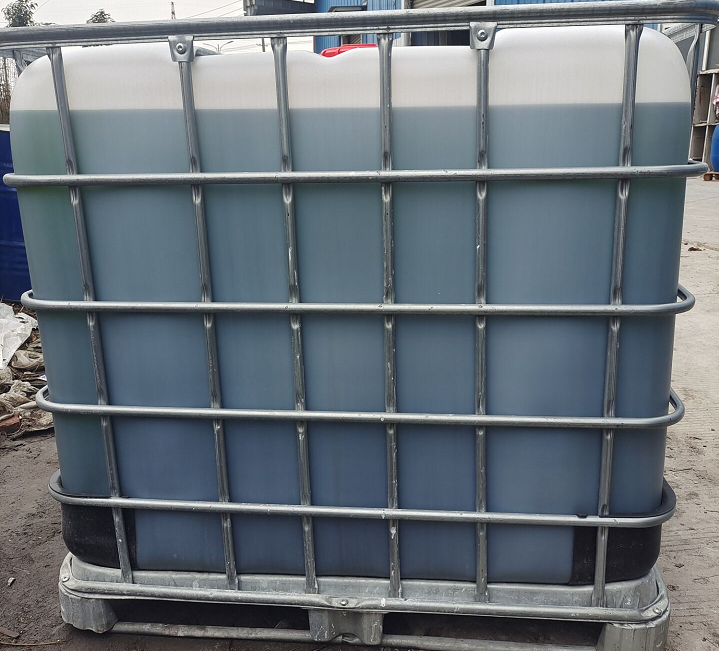
Particle size is rarely the first thing a formulator considers, yet it quietly dictates how a powder behaves at every stage—from hopper to final blend. Coarse particles tend to flow freely but segregate easily, while very fine ones cling to surfaces, bridge in feed systems, and create dust clouds. The practical sweet spot is almost never a single number on a spec sheet; it is a distribution that matches the stresses the material will actually encounter. When the spread is too narrow, minor shifts in humidity or storage time can turn a predictable stream into a sticky mess. When it is too broad, fines migrate through voids between larger grains, leaving an uneven composition downstream.
Handling changes are the first signal that particle size has drifted out of the working range. Bin discharge may become erratic, rotary valves may start to leak air, and dosing screws may compensate with wider pulse cycles. Performance follows the same fault line. A tablet press might run smoothly for an hour, then suddenly produce weight variation because fines have concentrated near the bottom of the hopper. In suspension or dispersion products, oversized particles settle before the stabilizer can act, while undersized particles raise viscosity beyond the target curve. Observing these patterns matters more than chasing a lab-grade average diameter.
The most robust approach treats particle size as a moving variable, not a fixed identity. Small, deliberate shifts—removing a few percent of the largest fraction, adding a controlled amount of fines, or adjusting the milling gap—can reset flow behavior and performance without reformulating the entire system. Often the biggest gain comes from matching the measurement method to the failure mode: a dry dispersion laser result may hide agglomeration that only appears under shear, while a sieve analysis may miss fines that dominate surface area. In practice, teams that track particle size alongside torque, fill weight, or dissolution time develop an intuitive feel for when a modest change will pay off before the line stops.
When Technical Support Extends Into Your Production Line
It usually starts with something small. A barcode scanner near the packing station keeps dropping its connection, or a torque driver on line four starts logging values that make no sense. Instead of a phone ticket and a promise to look into it, the person who shows up is the same one who has already seen the machine's firmware before lunch. That shift changes the conversation from "when can you fix it" to "what is this data telling us."
Support that reaches the floor stops being a separate department. It becomes part of the rhythm of shift changes, preventive maintenance, and the unplanned three a.m. call when a label printer refuses to wake up. The most useful technicians learn the line's habits: the vibration pattern of a conveyor, the pause between pallet loads, the operator who always hears the odd click first. They do not just restore a setting; they help the team see which setting was drifting long before it failed.
That kind of presence shows up in quieter ways too. A support engineer might stand with a new operator to explain why a barcode is rejected in low light, or leave a short note on a machine cart about the sensor that needs cleaning more often. The line keeps moving, but the support is no longer something you wait for. It has already walked onto the floor, learned the noise, and made itself useful.
Documentation as a Reflection of Manufacturing Discipline
A shop floor's paperwork often says more about its true discipline than any score awarded during a formal review. When operators record measurements, batch numbers, and deviations without being prompted, the habit has already become part of the work culture. Documents filled in at the end of a shift, signed just to keep the file complete, or left with empty fields usually point to weaker control further upstream.
The format matters less than the upkeep. A simple logbook kept current can signal more control than an elaborate system that nobody updates. The gap between what is written and what is performed narrows only when supervisors treat documentation as part of the build process, not as a chore attached after the fact.
Reliable records also give teams a way to retrace decisions after a failure. Thin documentation turns root cause analysis into guesswork. Honest, timely records usually come from the same discipline that extends to tooling setup, material handling, and final inspection.
Capacity Commitments That Hold Up Under Pressure
Most capacity commitments look reassuring until a supplier misses a date or a downstream order spikes. The ones that hold up under pressure are built on conservative cycle times and named buffers, not on the assumption that every operation will run at its best rate.
When production tightens, teams that keep their promises shift to short-interval control. They watch constrained steps hour by hour, pre-approve overtime or alternate routing, and keep a small set of backup lines ready. That preparation lets them hold a date instead of renegotiating after the gap has already appeared.
A dependable commitment also has an early tripwire. The moment actual output drops below the planned pace, the right person is expected to raise it, not wait for a weekly report. That early warning is what allows extra shifts, rebalanced orders, or honest customer updates before a small slip becomes a broken commitment.
Why Impurity Profiles Deserve a Closer Look
A routine purity number can hide more than it reveals. Two batches that meet the same specification can differ sharply in what traces are present, and those differences often show up later as stability failures, unexpected side effects, or supply disruptions. Looking closely at impurity profiles turns the focus from 'is it clean enough?' to 'what exactly is in here, and why?'
The profile acts as a process fingerprint. Shifts in a minor degradation product or a low-level residual solvent are rarely random; they usually point to something concrete — a change in starting material quality, a column that is aging, a drying step that has drifted from its validated range. Catching those weak signals early is far less costly than investigating an out-of-spec result months later.
There is also a patient-safety argument that goes beyond known toxicology. Individual impurities may fall below reporting thresholds, yet combinations of structurally similar impurities can matter, especially for sensitive populations or long-term use. A deeper read helps separate harmless background noise from the kind of subtle drift that deserves follow-up before it becomes a real problem.
FAQ
It usually comes down to consistency in particle size and purity, backed by documented batch testing. A reliable producer will also be open about raw material sourcing and can explain how they keep contaminants like residual solvents or heavy metals under control.
Ask for a certificate of analysis for the specific lot, a material safety data sheet, and ideally a technical data sheet that covers assay, moisture content, particle size distribution, and residual phosphorus content. If they hesitate to share these, treat that as a warning sign.
Very important. Zinc diethylphosphinate is often used in flame-retardant polymer formulations, so variations in particle size or purity can shift processing behavior and final fire performance. A supplier should be able to provide historical batch data or samples from multiple production runs.
Vague or recycled documentation, unwillingness to send a small trial sample, unclear production capacity, or inconsistent answers about storage and shelf life. Also watch for prices that seem far below market without a technical explanation.
Yes. The material can be sensitive to moisture, so proper drying, sealed packaging, and clear storage guidance matter. A good supplier will specify recommended storage conditions and may offer moisture-resistant packaging rather than generic bags.
A manufacturer that understands how zinc diethylphosphinate behaves in different polymers can help troubleshoot dosing, dispersion, or compatibility issues. That kind of support often prevents costly reformulation later.
Request third-party audit reports, recent customer references, or a live video tour of the production line and quality lab. Some manufacturers also provide samples from current production campaigns rather than old stock.
Conclusion
Choosing a zinc diethylphosphinate supplier rarely comes down to a single certificate or a competitive quote. The supply chain itself often tells you more before you sign than any sales conversation will. Ask where the raw materials actually come from, how secondary suppliers are vetted, and what happens when a shipment fails inspection. If those answers are vague, downstream problems tend to surface quietly. At the same time, particle size consistency deserves more weight than it usually gets. A narrow, repeatable distribution changes how the powder feeds, disperses, and performs in flame-retardant compounds, and it can reduce the adjustments your line operators make from batch to batch.
Reliability also shows up in the less obvious places. Technical support should not stop at a datasheet; it should extend into your production line when dosing, dusting, or thermal stability questions arise. Documentation is another signal: complete, traceable lot records and honest impurity profiles reflect a manufacturing culture that controls processes rather than simply reacting to them. Impurity levels matter because certain trace metals or residual phosphorus species can influence color, corrosion, or long-term aging in ways a general assay misses. Finally, pressure-tested capacity commitments matter more than a large stated tonnage. A supplier that has demonstrated steady output during raw material shortages or demand spikes is far more valuable than one that only promises flexibility on paper.
Contact Us
Contact Person: Guohua Wang
Email: [email protected]
Tel/WhatsApp: 8613003442895
Website: https://www.xxflameretard.com