
Top Taekwondo Uniform Company for Quality Doboks and Gear
2026-09-22
Finding the right dobok isn’t just about fabric and stitching—it’s about how you feel the moment you step onto the mat. For serious practitioners, quality gear means confidence, durability, and a fit that moves with you. That’s where PandaWin Sports stands out. As a top taekwondo uniform company, they’ve built a reputation on precision-cut doboks and reliable training equipment that hold up through countless sessions. But what really sets them apart? Let’s take a closer look at what makes their gear a favorite among instructors and students alike.
What Actually Makes a Dobok Feel High-Quality
Many practitioners mistake heaviness for quality, but a truly high-grade dobok reveals itself in the fabric's texture and rebound. Look for a tight cross-weave or twill blend that feels slightly grainy yet smooths under your fingers—not stiff or sandpapery. When you sweat, the cloth shouldn't cling to your back; instead, it should hold its shape and snap softly during fast movements, a sign that the fibers are dense enough to dry quickly and resist stretching out.
Cut matters more than most people realize. In a well-made dobok, the underarm and crotch gussets are cut wider and deeper, so a high axe kick or a low stance never pulls at the shoulders or binds the hips. The collar isn't just a flat strip of cloth; it has a gently curved V-reinforcement with a slightly raised edge. That keeps it from chafing your neck during long sessions and lets it lie flat under your belt without bunching.
Small finishing details separate a mediocre uniform from a great one. Check the stitching: straight, dense, and at least eight to ten stitches per inch, with no loose threads or hard ridges on the inside seams. Cuffs and hems should be double-folded so they don't twist or fray after repeated washes. On higher-end models, you'll often find a hidden silicone grip strip or an internal drawstring channel at the waist—little touches that stop the jacket from riding up during a rapid combination of kicks.
The Fabric Choices That Hold Up to Daily Kicking Drills
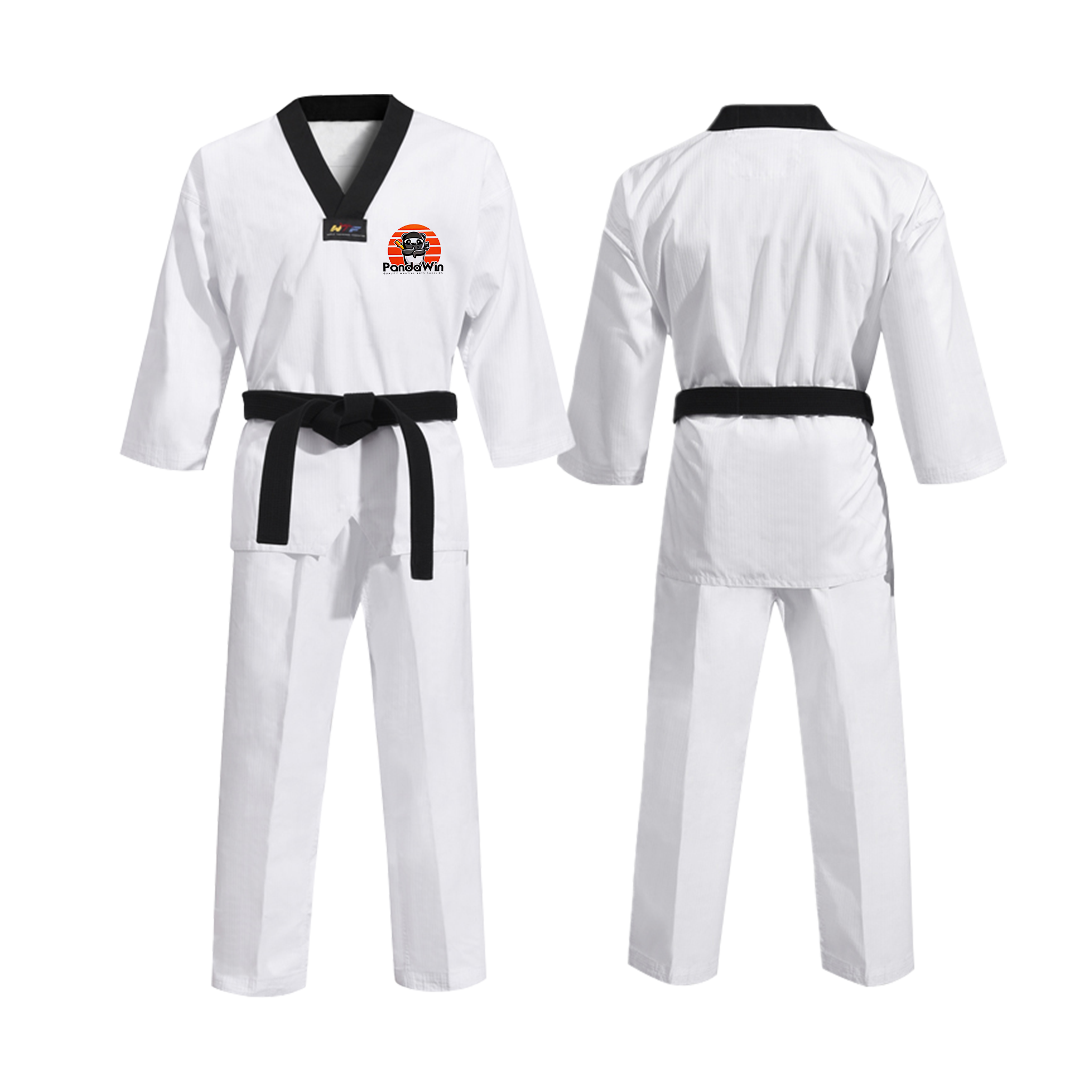
Daily kicking drills chew through average athletic wear faster than most people expect. The inner thigh and knee areas take constant friction from repeated extension, and any fabric with a loose weave will start thinning within weeks. A tight, high-density cotton twill might hold up reasonably well at first, but it tends to bag out after sessions of sweat and stretching. If you want real longevity, look for a poly-cotton ripstop that adds a grid of thicker threads to stop small tears from spreading. The slight crispness of the ripstop also helps the pants slide over themselves instead of catching during roundhouse kicks.
Weight matters more than most buyers realize. Lightweight nylon feels great for a single class, but its thin fibers degrade quickly under daily stress. A mid-weight blend around 7 to 8 ounces per square yard strikes a better balance: dense enough to resist abrasion, yet breathable enough for long training blocks. Some manufacturers blend in a small amount of elastane—usually 5 to 8 percent—to give the fabric four-way stretch. That stretch prevents the crotch seam from straining when you throw high side kicks or axe kicks, which is exactly where cheaper pants blow out first.
Reinforcement details also separate gear that lasts from gear that doesn't. Double-stitched inseams and a diamond-shaped crotch gusset reduce stress concentrations, letting the fabric flex without pulling against weak points. A brushed inner face on the fabric adds comfort against skin during repeated leg lifts, but it does trap a bit more heat. For hotter climates, stick with a smooth-faced ripstop or a cotton-polyester twill with a slight mechanical stretch. Whatever you choose, avoid anything labeled "fashion stretch"—that usually means a thin elastic weave that loses recovery after a few washes.
Getting the Right Cut for Both Forms and Sparring
Cutting weight for martial arts is rarely about chasing a number on the scale. It's about finding the balance where your forms still snap with precision and your sparring doesn't leave you gasping halfway through the round. A lot of fighters make the mistake of dropping calories too hard, losing muscle along with fat, and then wondering why their kicks feel hollow and their reaction time is shot.
The smart approach starts weeks out, not days. Trim the excess gradually while keeping protein high enough to protect lean tissue. For forms, a slightly lighter frame can improve explosiveness and make those long stances feel less taxing. For sparring, though, you still need glycogen in the tank and steady energy. That means timing carbohydrates around your hardest sessions instead of cutting them entirely, and staying on top of hydration even when the scale tempts you to skip water.
Test your cut by doing both in the same week. Run through a full form after a hard sparring round and see how your body responds. If your balance is off or your combinations feel sluggish, adjust your intake rather than pushing through. The right cut should leave you quick enough for crisp techniques and durable enough for exchanges, without making either feel like a compromise.
Small Gear Upgrades That Improve Every Session
A fresh pair of bar tape or grips might seem like the last thing worth your attention until you notice how much less your hands slide around once the sweat really starts. That small change alone can keep your wrists aligned and your upper body relaxed far longer than a tired set of stock pads ever would.
Even the humble water bottle cage matters more than most people admit. A snug, side-entry design lets you grab and return it without breaking your rhythm, while a rattling old cage forces you to glance down and lose half a pedal stroke. Same goes for swapping in a pair of thin merino socks or using a slightly firmer foam roller before you warm up—these tweaks don't look impressive, but they quietly erase the little annoyances that stack up over an hour.
You don't need to overhaul your entire setup to feel the difference. Start with the pieces you actually touch or adjust every single time, like your saddle height tool, your earbud tips, or the strap on your gym bag. When the small stuff stops demanding your attention, the whole session feels smoother, even if you can't point to any single upgrade as the hero.
How Reinforced Stitching Extends the Life of Your Uniform
Uniforms take a beating—constant movement, frequent washing, and the daily grind of demanding work environments. The first place they usually fail is at the seams. Standard stitching can unravel or snap under stress, leaving you with torn pockets, split shoulders, or gaping side seams. Reinforced stitching changes that equation by adding extra rows of high-tenacity thread at all major stress points. This isn't just a cosmetic upgrade; it's a structural one. The doubled or tripled thread lines distribute tension more evenly, so when you bend, lift, or stretch, the fabric flexes without the thread giving way. Over time, that means fewer trips to the tailor and fewer replacements coming out of your uniform budget.
Think about the last uniform you had to retire early. Chances are the fabric itself was still fine—it was the stitching that let go. Reinforced seams act like a shock absorber. Every time a seam is pulled, the multiple thread lines share the load instead of one thread bearing all the force. This is especially critical in areas like the crotch, underarms, and pocket corners, where movement is constant and directional. A single line of stitching in those spots is like a single rope holding a hammock; it works until it doesn't, and then it fails suddenly. Reinforced stitching behaves more like a net—if one thread frays, the others hold long enough for you to notice and repair it, rather than suffering a catastrophic blowout in the middle of a shift.
There's also a less obvious benefit: reinforced stitching actually protects the fabric around the seams. When a seam starts to pull apart, the fabric near the stitch line gets distorted and weakened. You'll see tiny holes or stretched-out areas that eventually turn into tears. By keeping the seams tight and stable, reinforced stitching prevents that micro-damage from happening in the first place. Your uniform doesn't just last longer—it looks better for longer, maintaining a crisp, professional appearance instead of sagging or puckering at the joints. For anyone who wears a uniform daily, that combination of durability and neatness is worth far more than the small extra cost upfront.
Picking a Supplier That Understands Martial Arts Wear
Most uniform manufacturers treat martial arts gear like generic sportswear, but the cut, fabric, and stitching requirements are wildly different. A gi that binds at the shoulder during a high kick or a rashguard that rides up in grappling isn't just uncomfortable—it can affect performance and safety. That's why you need a supplier who actually trains or works closely with practitioners, someone who understands why reinforced lapels matter for judo, why tapered sleeves are essential for Brazilian jiu-jitsu, and why lightweight ripstop fabric might be great for summer karate sessions but a poor choice for kendo.
A supplier with real martial arts knowledge will ask about your discipline's specific movement patterns before recommending anything. They'll know that a taekwondo dobok needs a V-neck and a longer jacket to accommodate dynamic kicking, while a kung fu uniform traditionally features frog buttons and a mandarin collar. They won't try to sell you a one-size-fits-all solution. Instead, they'll guide you through fabric weights, weave types, and reinforcement zones based on how your students actually train—not just what looks good in a catalog photo.
Look for evidence of this expertise in their product lines and communication. Do they offer specialty cuts like women's gis with proper hip room, or competition-approved uniforms for specific federations? Can they explain the difference between pearl weave and gold weave without reading from a script? A supplier who understands martial arts wear will also be honest about trade-offs—such as why a thicker cotton gi lasts longer but takes forever to dry, or why sublimated graphics may fade faster with frequent washing. That level of practical insight saves you from costly ordering mistakes and keeps your students training comfortably.
FAQ
It usually comes down to fabric density, reinforced stitching at stress points, and a fit that doesn't restrict kicks. Brands that listen to athletes and update their patterns over time also tend to produce uniforms that feel better during long sessions.
Think about how often you train and how much you sweat. A lighter poly-cotton blend dries quickly and stays comfortable for daily classes, while a heavier cotton-rich fabric gives that crisp snap and traditional feel but takes longer to dry.
Start with a dobok that fits your training intensity, then add hand wraps or gloves, shin guards, and a mouthguard if you spar. A good chest protector also matters for contact drills, but the uniform is the foundation since you wear it every session.
Often yes, if you train several times a week. Higher-end doboks use tighter weaves that resist tearing, hold their shape after washing, and feel less scratchy during movement. A basic uniform works fine for beginners, but the upgrade becomes noticeable once you start sweating through classes regularly.
Measure your height and weight, then check the company's size chart instead of relying on your t-shirt size. Look at sleeve and pant length rather than just the numeric size, and read reviews from people with a similar build. Some brands run larger in the shoulders or longer in the legs, so those details matter.
Check the stitching around the collar, armpits, and crotch area, those are the first places to tear. A quality dobok has double or triple stitching there, a reinforced tie closure, and fabric that doesn't feel paper-thin. Also look for neat hems without loose threads.
Yes, many now have a sparring-specific line made from breathable mesh panels or lighter weaves that don't cling when you sweat. These versions sacrifice a bit of the traditional snap but make a big difference in mobility during fast exchanges.
Wash it in cold water and hang it to dry whenever possible. Avoid bleach and high heat, since hot dryers shrink the fabric and weaken the fibers over time. If it gets stained, treat the spot gently instead of scrubbing hard, and turn it inside out before washing to protect the outer surface.
Conclusion
A genuinely high-quality dobok isn’t just about looking crisp on the training floor. It comes down to how the fabric breathes during endless poomsae repetitions, whether the weave resists the friction of repeated kicking drills, and if the cut allows clean, full-range motion without bunching at the shoulders or hips. The best uniforms use tightly woven cotton-polyester blends that hold their shape after dozens of washes while staying light enough for fast sparring. A well-designed cut matters more than most people realize: roomier through the chest and thighs for forms, but streamlined enough to avoid giving an opponent anything to grab. That balance is what separates a uniform you tolerate from one you actually look forward to wearing.
Beyond the dobok itself, smaller upgrades make a noticeable difference. Reinforced stitching along the collar, cuffs, and side seams prevents the slow unraveling that kills most uniforms after a season of hard use. Quality suppliers reinforce stress points without making the fabric stiff or uncomfortable. The same attention to detail shows up in gear like shin guards, forearm protectors, and belts that don't fade or fray after a few weeks. Choosing a supplier who understands martial arts wear means you're not just buying products off a generic shelf—you're getting items that account for how taekwondo athletes actually move, sweat, and train. That kind of practical, no-nonsense quality keeps your uniform and gear performing session after session, from first bow to last round.
Contact Us
Contact Person: Fei Xu
Email: [email protected]
Tel/WhatsApp: +8618631245578
Website: https://www.pandawinsports.com/