Top Skiing Socks Supplier Guide to Choosing the Perfect Pair
2026-10-14
If your last ski day ended with numb toes and damp socks, you already know that not all ski socks are created equal. The challenge is figuring out which of the many options actually deserve a spot in your boot bag. In this guide, we look past the marketing hype and focus on what really matters—fit, fabric, and moisture control—so you can choose with confidence. And when it comes to reliable performance on the slopes, Fuli Socks is one supplier worth paying attention to.
The Real Difference Between $15 and $40 Ski Socks
Most skiers assume a higher price tag means better warmth, but that's rarely the whole story. The real gap comes down to material blends, targeted cushioning, and how well the sock manages moisture over a full day on the slopes. A $15 pair often uses a basic merino-nylon mix with uniform padding, while a $40 pair typically layers merino with synthetic fibers like Primaloft or silk, placing denser knit zones only where boots create pressure. That precision reduces bulk without sacrificing protection, so your foot sits closer to the liner instead of swimming in fabric.
Durability plays a bigger role than most people expect. Cheaper socks tend to thin out at the heel and shin after a dozen wash cycles, losing their loft and turning boot rub into a daily nuisance. Premium versions reinforce those high-wear areas with tighter stitching and sometimes add a seamless toe closure, which eliminates the tiny ridge that can dig into your foot during aggressive carving. Over a season, that translates to fewer mid-day adjustments and less time spent retying boots at the lift line.
There's also the matter of compression and recovery. Higher-end ski socks are often knit with graduated pressure along the calf, which helps push blood back toward the heart while you're locked into a forward stance. You'll notice it most on long groomer days or when you're skiing back-to-back weekends. A $15 sock gives you basic coverage and maybe a fun pattern; a $40 sock gives you a tool that works with your boot, not against it. Neither is universally 'better'—it depends how many days a year you actually ski.
What Your Boot Fitter Never Tells You About Sock Thickness
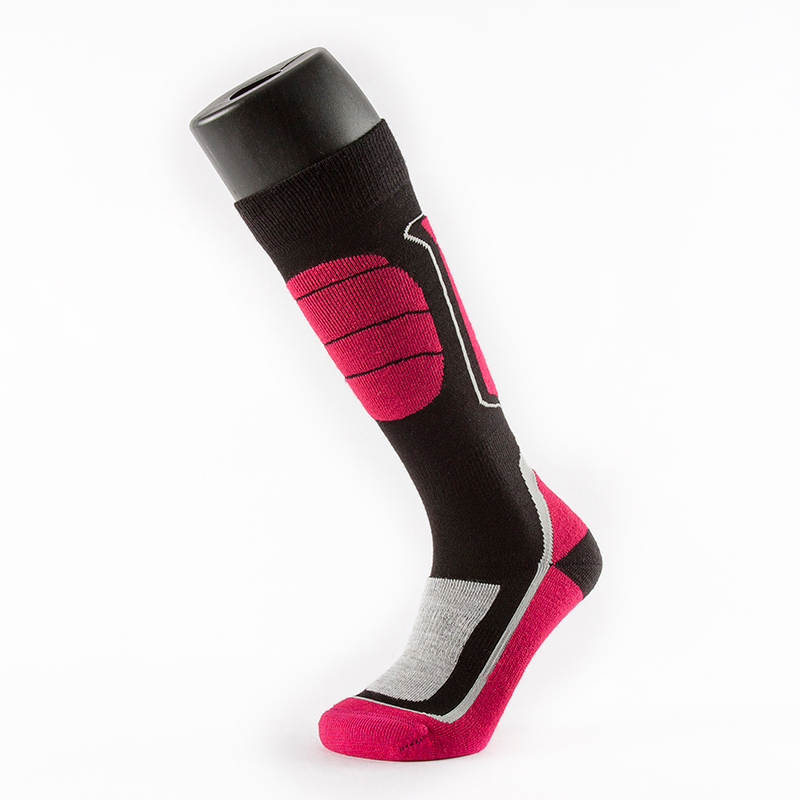
Most skiers assume a thicker sock equals a warmer day on the hill. Boot fitters quietly disagree. A bulky sock bunches inside the shell, compressing the foot's natural circulation and creating pressure points that turn into cold, numb toes by mid-morning. The truth is that a thin, dense sock made of merino or a synthetic blend often keeps feet warmer because it allows blood to move freely and lets the boot's liner do its job.
Another thing fitters rarely say out loud: your sock choice changes how the boot fits. A thick sock can lift your heel, push your arch into the wrong place, and even make your toes curl. That's why the custom footbed you paid for feels off after lunch. Fitters will often test a boot with a specific sock thickness in mind, but they don't always mention that swapping socks at home undoes their work.
If you want the real answer, go thin. Look for a sock with no seams over the toes, a bit of compression through the midfoot, and just enough loft to wick moisture without adding bulk. Bring the exact socks you plan to ski in to your next fitting. That small step does more for comfort and control than any amount of boot heaters or fancy footbeds.
Merino Wool Hype: When It Works and When It Fails
Merino wool genuinely shines when you need to wear the same base layer for days without it turning sour. On a week-long trek or a carry-on-only trip, that natural odor resistance beats any synthetic I’ve tried. It also handles temperature swings better than expected—warm when you pause, breathable when you push uphill.
Where the hype collapses is durability. Scrambling over rock, shouldering a loaded pack, or even repeated friction from a backpack strap can chew through fine merino faster than you’d believe. And if you’re sweating heavily in humid heat, merino turns clingy and takes ages to dry, leaving you chilly the moment you stop moving.
The real story is context. Merino works best as a next-to-skin layer in cooler, drier conditions or as low-odor travel wear. For high-abrasion activities or muggy climates, a synthetic blend or targeted reinforcement will serve you better than the hype suggests.
The Ankle and Shin Padding Map You Actually Need
Most generic padding charts treat the ankle and shin as if they were flat, uniform surfaces. They are not. The shin starts as a sharp ridge near the knee, softens into a curved face mid-shaft, then narrows again before flaring into the ankle's bony outcrops. A useful map has to respect these transitions. For the shin, the real impact zone runs in a slight diagonal band from the upper outer edge down toward the inner mid-calf, not straight down the center. This is where stray kicks and low shin-to-shin contact actually land. Padding placed only on the front-center line often misses the worst of the clash.
The ankle needs a different logic. The lateral malleolus and the front of the talus take most of the abuse, but they cannot be wrapped in thick foam without killing mobility. The trick is to use thinner, denser padding over the bony prominences and leave the soft tissue pockets behind them uncompressed. Think of it as a ring of protection that follows the joint's natural contour rather than a solid sleeve. If you press your fingers around your ankle and find the hollows just above the heel and below the shin bone, those are the spots where even low-profile padding can sit without restricting flex or extension.
So the map you actually need is not a drawing of a leg with a rectangle labeled "pad here." It is a set of instructions: follow the shin's diagonal impact path, cap the two ankle bones with dense but thin layers, and leave the Achilles and the front ankle crease free. Test it by shadow-kicking and rolling the ankle through all ranges. If the padding stays in place and you forget it is there after two minutes, the map is right. If it bunches or rubs, redraw it.
Why Sock Height Can Make or Break Your Day
The wrong sock height can turn a simple walk into a slow burn of irritation. Too short, and your heel slips below the shoe line, leaving skin exposed to rough stitching. Too tall, and the cuff digs into your calf or bunches awkwardly under trousers. That constant tugging or readjusting isn't just annoying—it steals focus from whatever you're actually trying to do.
There's also a quiet confidence that comes from knowing your socks stay put. When they sit at the right height for your shoes and activity, you stop thinking about them. That's the real win. You can stand up from a meeting, bend down to grab a file, or sprint for a bus without a second thought. The day flows because your foundation isn't fighting you.
So before you dismiss sock height as a minor detail, try this: match the cuff to the shoe's collar and the occasion. A no-show for low-cut sneakers, a crew for boots, and an over-the-calf for formal wear. One small adjustment in the morning can save you a dozen micro-interruptions later.
How to Vet a Supplier Who Tests on Snow, Not in a Lab
Ask the supplier for raw footage from their latest snow test, not a polished highlight reel. You want to see the exact moment the product hits real, variable terrain—the stumble, the recovery, the unedited chatter between testers. If they hesitate or offer only a written summary, that's your first red flag.
Cross-reference their claims with independent rider forums and local backcountry guides who have actually used the gear in deep snow, wet snow, and breakable crust. A supplier can fake a controlled slope, but they can't fake three different guides swearing about the same binding failure on a north-facing traverse.
Finally, ask for a failure log. Not a list of wins—a hand-kept record of what broke, when, and how they fixed it. Any honest snow-testing program has one, and if they look confused by the question, they're probably testing in a freezer and calling it winter.
FAQ
Merino wool blends are the gold standard because they naturally regulate temperature and resist odor, while synthetic fibers like nylon and elastane add durability and stretch. Avoid cotton entirely—it holds moisture against your skin and will leave your feet cold and damp.
Match the cushioning to your boot's fit rather than the temperature. A snug boot needs a thinner sock to avoid cutting off circulation, while a roomier fit can handle extra padding under the heel and shin. Backcountry skiers often prefer lighter weights for better sensitivity and breathability.
They should feel like a second skin—snug enough to stay put without bunching, but never so tight that they leave deep marks on your calves. Look for zones of gentle compression around the arch and ankle, which reduce fatigue without restricting blood flow.
A good ski sock has extra padding running down the shin to absorb pressure from the boot tongue, plus a smooth, flat toe seam to prevent blisters. The calf area should have a slight elastic grip to stop the sock from sliding down during aggressive turns.
Check for mesh ventilation panels over the top of the foot and behind the heel—these let excess heat escape while the thicker knit zones trap warmth. High-quality merino wool also actively manages moisture, keeping your feet dry and warm even when you stop moving.
Always choose an over-the-calf or knee-high sock that extends well above the top of your ski boot. This prevents the boot cuff from rubbing directly against your skin and stops snow from sneaking in if you take a tumble.
Yes, and it matters more than most people realize. Backcountry socks prioritize breathability, faster drying, and reinforced heels and toes for uphill friction. Resort socks lean toward plush cushioning and warmth since you spend more time sitting on lifts and standing in lift lines.
Wash them inside out in cold water on a gentle cycle, and skip fabric softener—it coats the fibers and ruins their moisture-wicking ability. Air dry them flat instead of using a dryer, because high heat breaks down the elastane and causes sagging.
Conclusion
Price tags on ski socks rarely tell the whole story. A $15 pair might use basic synthetic blends that pack out after a handful of days, while a $40 pair often hides its value in targeted compression, reinforced heel locks, and yarns that hold shape through repeated washes. Yet thickness isn't the upgrade most people assume it is. Boot fitters often keep quiet about how a bulky sock can actually reduce blood flow and numb your toes inside a well-fitted shell. The real win comes from a thin-to-medium knit that lets the liner do its job. Merino wool gets plenty of praise, and for good reason, but it's not a universal fix. High-percentage merino shines on cold, dry resort days where moisture control and odor resistance matter most. In wet spring conditions or high-output touring, a nylon-reinforced blend or a synthetic core dries faster and resists abrasion better.
Look past the marketing and examine the padding map before you buy. Extra cushion under the ankle bone and along the shin can ease pressure from stiff tongues and buckles, but padding on the sole or over the instep often creates unwanted lift. Sock height matters just as much: too short and the cuff slips below the boot collar, causing friction; too tall and excess fabric bunches behind the knee. Aim for a height that clears the shell by a few centimeters without folding. When you're choosing a supplier, ask where their socks get tested. A company that relies only on lab metrics might miss what happens after four hours of edge pressure and boot flex. The ones worth your money send samples to actual skiers and adjust toe seams, cuff tension, and yarn composition based on on-snow feedback, not climate-controlled data.
Contact Us
Contact Person: Ryan Li
Email: [email protected]
Tel/WhatsApp: +86 13757342500
Website: https://www.fulisocks.com/