Top Questions to Ask Your Powder Valve Vendor Before You Buy
2026-10-13
Buying a powder valve isn't just about specs on a datasheet—it's about avoiding clogged lines, leaky seals, and regret. Before you commit, you need to ask the right questions. From material compatibility to discharge reliability, we break down what to grill your vendor on. And if you're comparing options, keep an eye on AVM—a name that comes up often when engineers talk about dependable powder handling.
Will This Valve Handle Your Powder's True Particle Size Range?
A spec sheet might list a median particle size, but the fines and oversize tail ends of the distribution are usually what cause trouble. The valve needs to operate across the full spread, not just the average. Fine powders can pack into clearances and seize rotating parts, while coarse granules can wedge between the disc and seat, preventing a tight shutoff. If the design assumes a narrow cut, it will likely fail once real production material runs through it.
Look closely at the internal gaps, the seat profile, and how the valve handles aeration or bridging. A powder that flows freely in a lab sample can behave very differently under pressure or after sitting idle. The only reliable way to know is to test with the actual particle size distribution, including the fines and any occasional oversized chunks. That tells you whether the valve will keep sealing after thousands of cycles, or turn into a maintenance headache.
What Happens to the Seals After 50,000 Cycles?
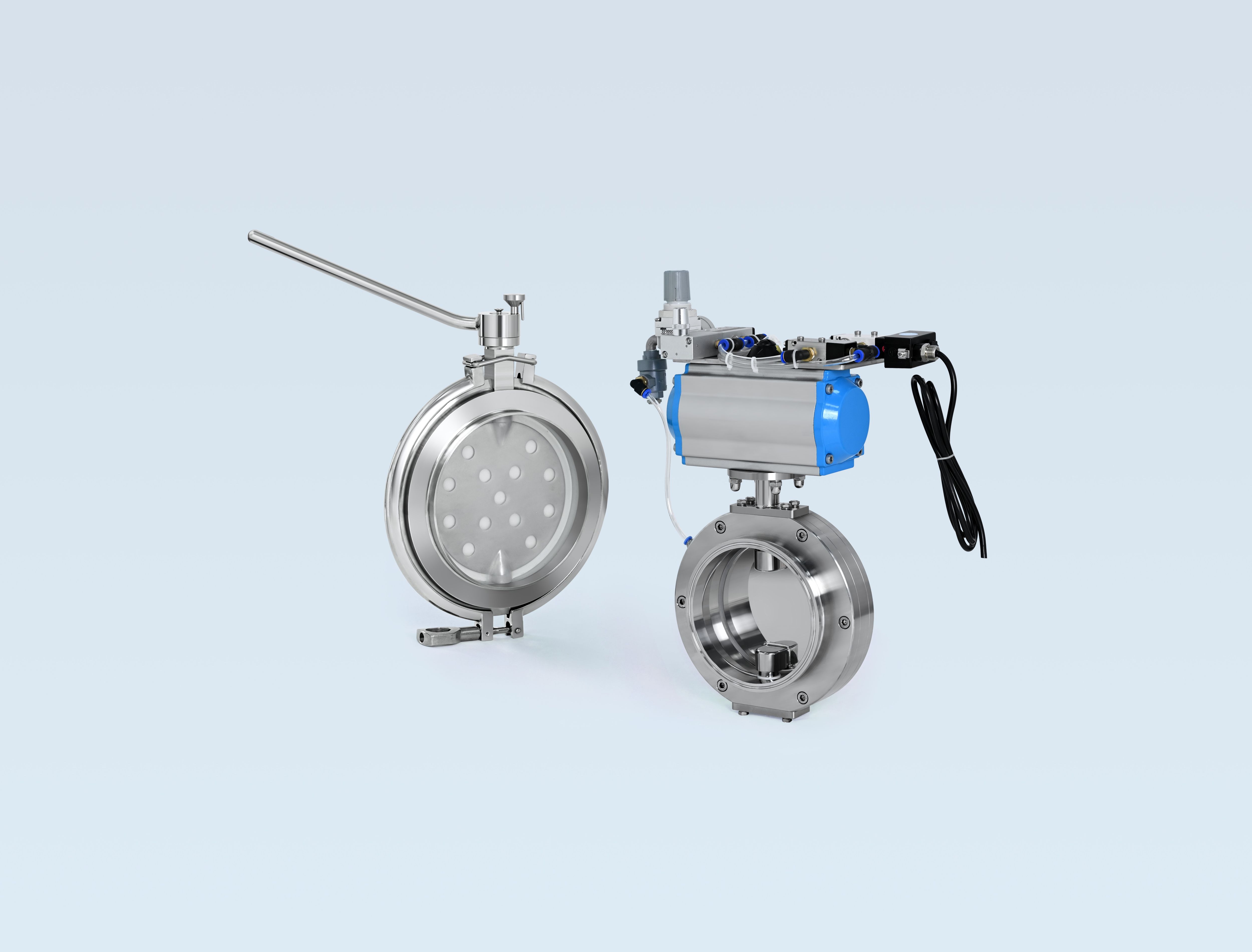
By the time a seal reaches 50,000 cycles, the story is usually written in the contact zone. You'll often see a polished wear band where the lip or face has been running against the mating surface. On well-designed seals this band stays smooth and even, with no deep scoring or embedded debris. The elastomer itself may have taken a slight compression set, meaning it doesn't spring back quite as aggressively as it did on day one, but it still holds enough residual squeeze to maintain a reliable barrier.
The real surprises tend to show up under magnification. Tiny stress cracks can start at the heel of a dynamic seal, especially if the cycling involved rapid temperature swings or pressure spikes. In some cases the backup ring will show signs of extrusion, a clue that clearances opened up more than expected. None of this means the seal is finished; many designs are only halfway through their useful life at this point, but it's the stage where small installation errors or material mismatches become impossible to ignore.
In practical terms, 50,000 cycles is a checkpoint rather than an endpoint. If the seal still seals, doesn't leak, and the friction hasn't climbed beyond the original break-in range, it's generally cleared for continued service. Maintenance teams often use this milestone to inspect, relubricate, and decide whether the remaining life justifies keeping the unit in place or swapping it during the next scheduled shutdown.
Can You Get a Custom Flange Without Paying a Custom Price?
Many assume a custom flange means a custom price tag. But shops with large inventories of standard flange blanks can often alter bolt patterns, bore sizes, or face profiles without starting from scratch. The trick is to ask for a modified standard rather than a fully bespoke part. That alone can cut machining time and tooling costs dramatically.
Another route is to work with manufacturers who keep a library of near-net shapes or common custom profiles from previous jobs. If your required dimensions overlap with something they already produce, you may only pay for the incremental setup, not the full engineering. Sometimes ordering a handful of custom flanges alongside a larger standard order gives the shop enough margin to absorb the custom work.
Finally, do not be afraid to push back on lead times. A shop with slack capacity may offer better pricing on low-volume custom flanges just to keep machines running. Be clear about which tolerances actually matter; over-specifying every surface is a fast way to inflate cost without adding performance.
How Fast Can You Swap a Worn Rotor on the Floor?
If you keep a floor jack, a basic socket set, and a caliper hanger within reach, a single rotor swap usually lands between twenty and thirty-five minutes once the wheel is off. The real time sinks are seized bracket bolts and rust buildup around the hub face. Tapping the old rotor with a dead blow from behind instead of prying against the dust shield often frees it faster than reaching for a puller.
Doing both front rotors on the ground rarely takes more than an hour if you stage the new parts before lifting the car. Crack the lug nuts while the tire is still loaded, then break the caliper bracket bolts before you remove the caliper itself. That order gives you better leverage and keeps the assembly from twisting on the brake hose.
A worn rotor with a deep lip can hang up on the parking brake shoes in the rear, which adds a few minutes unless you back off the adjuster through the access hole first. For a straight front swap with no stubborn fasteners, fifteen minutes per side is entirely possible without rushing.
Is the Vendor Willing to Test With Your Actual Powder?
A vendor who hesitates to run trials with the exact powder you'll be processing is often revealing more about their equipment than their schedule. Simulated materials or generic substitutes rarely capture the real-world challenges—moisture sensitivity, particle size distribution, abrasive wear, or unexpected flow quirks. If they insist on using a “representative” powder instead, ask why. The answer will tell you whether their system can truly handle your product, or if they're hoping you won't notice the gap between demo and reality.
Every powder has its own personality, and no two behave the same under heat, shear, or compression. A vendor who understands this will actively request your actual material early in the conversation. They might ask for a few kilograms, run a preliminary feasibility check, and then invite you to observe the test—either in person or via live video. That level of transparency isn't just reassuring; it's a practical way to identify issues like dusting, bridging, or inconsistent discharge before you commit to a purchase.
If a vendor dodges the request, cites confidentiality concerns without offering a workable alternative, or claims their machine is “proven” with similar materials, proceed with caution. Genuine confidence comes from evidence, not reassurance. Insist on a test with your powder, even if it means paying a small fee for setup and cleaning. The cost of discovering a mismatch after installation is always higher—both in downtime and in compromised product quality.
What Spare Parts Should You Keep on the Shelf?
Most maintenance managers learn the hard way that stocking every possible replacement part is just as costly as stocking almost nothing. The real skill lies in separating the parts that will quietly sit on a shelf for years from the ones that will trigger a panic order at 2 a.m. when a critical machine suddenly stops. A good starting point is to look beyond the vendor's recommended spare list—those are often generic—and instead pull your own failure data. If a specific bearing has seized twice in the past three years, it earns a permanent spot on the shelf, no matter how expensive it is.
The parts that matter most are usually the unglamorous ones: shaft seals, drive belts, filter cartridges, and the odd-sized fuse that nobody thinks about until a control panel goes dark. Don't forget auxiliary items like mounting bolts, gaskets, and even a spare sensor or two, because a missing five-dollar gasket can hold up a fifty-thousand-dollar repair. Some teams also keep one complete rebuild kit for each major pump or gearbox, not because they plan to rebuild it themselves, but because having the kit on hand forces a faster decision when the equipment is down.
On the other hand, be ruthless about what you do not stock. If a local supplier can deliver a part within a few hours and the equipment has a built-in redundancy, you may be better off relying on that supplier than tying up cash in inventory. The goal is not to fill the shelf with everything that could possibly fail, but to keep a short list of items whose absence would stretch a one-hour repair into a five-day shutdown. Walk through your plant with a clipboard and ask one question for each critical asset: if this breaks tonight, what single part will I wish I had already ordered?
FAQ
Ask for a full wetted parts list, not just the valve body. Stainless steel 316 is common, but seals, gaskets, and coatings can react with fine or sticky powders. Request material certificates and, if your powder is food or pharma grade, ask about FDA or EC 1935/2004 compliance. A quick material compatibility test with a sample valve insert is worth the time before you commit.
Look beyond the basic cutaway drawing. Ask about seal design, internal clearances, and whether the valve has been tested with powders below 50 microns or with high moisture content. Vendors who can show high-speed video of the valve cycling with your type of powder or offer a trial unit are more credible than those who only cite a pressure rating.
Generic spec sheets rarely match real plants. Request a performance curve that shows pressure loss across the valve at your expected conveying rate and temperature. Also ask how many cycles the seals are rated for with abrasive powder, not just clean air. If the vendor hesitates to share test data from a similar installation, treat that as a warning sign.
Get a realistic maintenance schedule, not a best-case estimate. Ask for the labor time to replace seals or bearings, whether the valve can be serviced in place, and the list price for common wear kits. A vendor who can tell you the expected cost per million cycles for your powder is far more useful than one who promises low maintenance without numbers.
Request references from plants that handle a powder with similar particle size, abrasiveness, and moisture content. Ask those references about unplanned downtime, seal replacements, and how responsive the vendor was when problems arose. If all references are from a different industry or a much easier powder, push for at least one that mirrors your situation.
Confirm whether the quoted lead time is for the valve assembly or just the actuator. Powder valves often need custom flanges or coatings that add weeks. Ask the vendor to list the three most common failure parts and their delivery times. Stocking those parts from day one can prevent a two-week shutdown over a $40 seal.
A pressure test alone doesn't prove the valve will handle powder. Ask about leak testing with fine media, cycle testing under load, and whether you receive a signed test report with serial number. For food or pharma applications, verify that material certificates and surface finish reports are part of the standard documentation, not an extra-cost option.
The valve's footprint in a catalog can be misleading. Ask for a dimensional drawing that includes actuator stroke, removal clearance, and access for cleaning. Check whether the valve needs an air supply, solenoid, or control signal that your current system doesn't provide. The best vendors will review a simple sketch of your installation and flag potential interferences before quoting.
Conclusion
Before signing off on a powder valve, push vendors past the glossy cut sheets. Ask whether the unit truly handles your powder's particle size range, not just a lab-perfect median. Granules that bridge or fines that leak through clearances can turn a bargain into a process nightmare. Seals deserve equal scrutiny: find out exactly what happens after 50,000 cycles, whether they lose elasticity, shed material, or need constant retorquing. If a custom flange is required, see if the vendor treats it as a standard modification or slaps on engineering fees. And don't overlook field serviceability—a rotor that takes an hour and special tools to swap will stall your line, while a tool-free design lets a technician finish the job during a shift change.
Beyond the hardware, insist on a trial with your actual powder, not a look-alike. Many valves perform fine with free-flowing starch but choke on cohesive or abrasive materials, so a vendor willing to run your product through their test loop—and share pressure drop and leakage data—earns trust. Once you buy, avoid downtime by asking which spare parts typically wear first: rotors, seals, shaft bearings, maybe a few fasteners. Stocking those items from day one costs little compared to a halted batch. The best vendors answer these questions without hedging, and their honesty tells you more than any specification sheet ever will.
Contact Us
Contact Person: Ananda
Email: [email protected]
Tel/WhatsApp: 8619016718200
Website: https://www.wzaomi.com