
Top Hot Rolled Coil Wholesalers You Can Trust for Industrial Projects
2026-11-16
Finding a hot rolled coil wholesaler who won't let your industrial project down is harder than it sounds. From inconsistent dimensions to late deliveries, the wrong supplier can stall an entire production line. That's why we've vetted the market and pulled together a shortlist of names that actually earn their keep. Among them, Sanhe Steel stands out for its consistent quality and responsive service. Read on to see which wholesalers made the cut and what sets them apart.
Reading Past the Spec Sheet: What Trustworthy Mills Actually Deliver
Spec sheets are useful for comparing horsepower, roll diameters, and feed rates, but they rarely predict how a mill behaves at 3 a.m. when the feedstock suddenly changes or a bearing starts running hot. A trustworthy mill earns its reputation through consistency—same output quality, shift after shift, without constant babysitting. Operators quickly learn which machines need frequent adjustment and which ones simply hold their settings.
The deeper difference shows up in the relationship behind the equipment. Dependable mill builders stock critical spares locally, answer technical calls with people who actually know the machine, and share failure data instead of hiding it. That level of support means a minor hiccup stays minor, instead of turning into a week-long shutdown while you wait for a part from overseas.
Before signing a purchase order, spend time with operators who have run the same model for several years. Ask about unplanned stops, how the mill handles overload, and whether the manufacturer stood behind their product when things went wrong. Those conversations reveal far more than any glossy brochure or spec table ever could.
When a Warehouse's Inventory Depth Saves Your Schedule
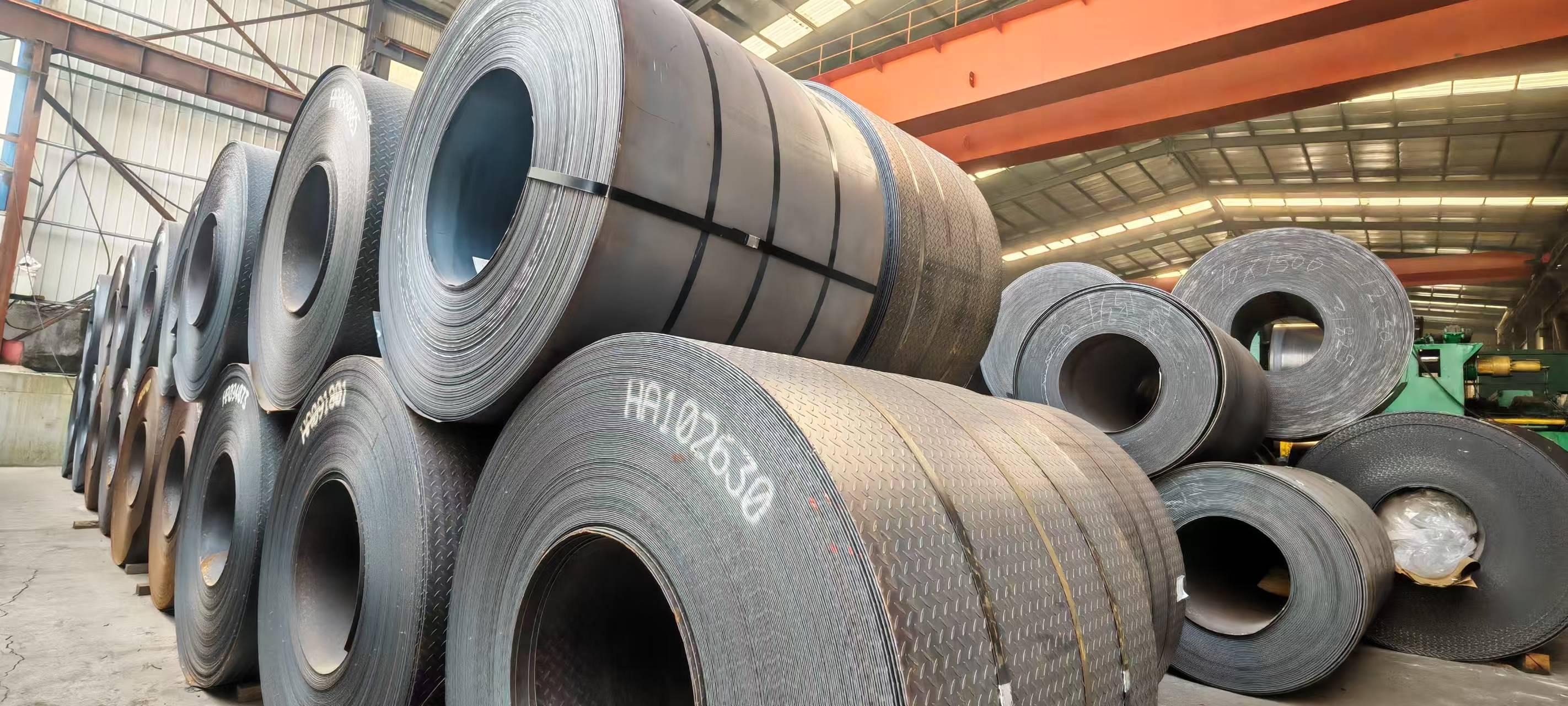
A deep inventory can quietly absorb the shocks that would otherwise throw a carefully planned week into disarray. When a supplier misses a shipment or a machine goes down, having extra units on hand means the team doesn't have to scramble, reschedule production runs, or tell customers their orders will slip. Instead, the schedule stays intact because the warehouse already holds what's needed to bridge the gap.
This isn't about hoarding for the sake of it. Smart depth comes from knowing which SKUs are prone to sudden demand spikes or supplier delays and keeping those items at levels that buy you breathing room. That buffer turns a potential schedule disaster into a minor inventory adjustment, letting your team keep its promises without working overtime or air-freighting parts at the last minute.
The Real Cost of Inconsistent Coil Widths and Crown
Mills often treat strip width and crown as separate inspection points, but the moment they drift out of tolerance together, the line starts paying for it in ways that don't show up on the first coil report. A width that runs a few millimeters heavy near the weld zone forces slitter operators to slow down, re-align blades, or accept wider trim scrap. Meanwhile a crown that comes off the hot mill at 1.2% instead of 0.8% pushes extra material into the center of the strip, which downstream roll forming and stamping tools read as hard spots. The real cost isn't just the rejected coil; it's the accumulated downtime from repeated setups and the quiet loss of line speed while crews compensate.
Inconsistent crown becomes even more expensive when it interacts with width variation at the cold mill or coating line. A strip with a heavy crown tends to track off-center under tension, so edges wander and the measured width changes along the length. That forces the customer's automatic gauge control to hunt, which leaves thickness variations at the trim point. Later, when these coils are slit into narrow mults, the center strands carry more mass than the edge strands, producing loose coils on the payoff reel and occasional camber in the finished strip. Every one of those defects translates into a claim, a return, or a lower resale grade — not because the steel failed chemistry, but because the geometry never settled.
Operators sometimes accept a wider tolerance on width and crown as a way to keep production moving, but the downstream math rarely agrees. A single coil with a 4 mm total width variation across its length can add two to three minutes of slitter adjustment per order. If the crown swings from 0.5% to 1.1% within the same coil, the recoiler may need a cardboard or steel shim to keep the wraps from walking. Over a week, those small interventions consume full shifts, and the resulting mixed geometry coils usually sell at a discount or end up in a re-roll pile. By the time accounting sees the variance, the true cost has already moved into labor hours, lost capacity, and customer trust.
Questions Worth Asking Before You Commit to a Bulk Order
Before you sign off on that massive order, take a step back and ask yourself how much you actually need. Overestimating demand can tie up cash in inventory that sits for months, while underestimating leaves you scrambling to restock at higher prices. Do the math on your typical monthly sales or usage, and account for seasonal spikes or upcoming projects.
Another thing to consider is the real cost beyond the unit price. Bulk discounts look tempting, but shipping, storage, insurance, and potential spoilage or damage can eat into those savings fast. Check whether the supplier has a solid track record for consistent quality across large batches, and ask for samples from the exact production run you’ll be buying.
Finally, think about flexibility and exit options. What happens if your needs change, or the product doesn’t move as expected? Can you return unsold stock, swap items, or adjust future orders without penalties? A good supplier will be upfront about terms, but it’s on you to ask before you’re locked in.
How Established Wholesalers Manage Claims and Replacements
Established wholesalers rarely treat claims as one-off transactions. They lean on clear return authorization workflows that capture photos, batch numbers, and the original purchase order before anything is shipped back. That front-end discipline cuts down disputes later and makes it easier to spot recurring trouble with specific carriers or product lines. When a claim does land, the response often mirrors the customer's track record: long-term buyers may get an immediate replacement or credit note, while newer accounts go through a standard inspection window.
Beyond the paperwork, experienced wholesalers keep buffer stock and supplier agreements that already include failure allowances. A replacement order doesn't wait for the returned goods to be inspected if the dollar value sits under a set threshold. For larger claims, they may send a third-party inspector or ask for a short video of the unboxing before authorizing credit. This isn't about treating customers with suspicion; it's about keeping the process predictable so that honest claims move fast.
The real advantage shows up when claims data gets fed back into purchasing and quality control. A spike in replacement requests for a particular SKU prompts the buying team to quarantine the batch or renegotiate with the manufacturer. That closed loop means replacements don't just fix today's problem—they reduce the odds of the same issue repeating next quarter.
From Mill to Job Site: Where Delays Usually Hide
A mill can hum along at full speed, but if the scheduling office is still shuffling paper orders or waiting on a single coil of specialty steel, the truck leaves late. Delays rarely announce themselves on the factory floor—they pile up in the quiet corners of order entry, raw material staging, and last-minute quality rechecks. The forklift may be ready, but if the bill of lading isn't signed or the load isn't wrapped to spec, the whole day slips.
The route from a Midwest mill to a coastal site might look straightforward on a map, but a missed rail connection or a two-day queue at a port can eat a week. Transit delays often hide in the handoffs: a driver swap outside Kansas City, a barge waiting for a lock, or a customs broker re-filing the same paperwork. These aren't dramatic breakdowns—just slow drips that compound until the promised delivery window is gone.
Even when the material arrives on time, it can sit on the trailer while the site supervisor argues about lift plans or waits for a forklift that's three floors up. The last 100 feet are where schedules quietly die: no staging area cleared, no crane operator on shift, or an inspector who wants to re-measure every beam before sign-off. The mill and the truck did their part, but the job site wasn't ready to receive.
FAQ
Look for a supplier that carries its own inventory across multiple grades and dimensions, can provide mill test reports without delays, and has a track record of fulfilling repeat orders for industrial fabricators. A dependable wholesaler typically maintains buffer stock, offers slitting or cut-to-length services in-house, and won't hesitate to share information about the source mills. If they can walk you through how they handle claims for edge cracks or thickness variation, that's a strong sign they understand the product beyond a paper transaction.
Certifications matter as much as the steel itself. Ask for EN 10204 3.1 or 3.2 certificates, or equivalent mill test reports that trace heat numbers and mechanical properties. For pressure vessel or structural work, the difference between a generic commercial grade and a certified grade can mean passing an audit or facing a costly re-qualification. A supplier who sends certifications proactively rather than only after you ask usually has better internal quality control.
Coil storage reveals a lot. Look for covered or indoor storage areas that prevent water ingress and edge rust. Check whether they use proper coil tongs, saddles, and protectors to avoid mechanical damage during loading. Also ask about their rotation system—older inventory without FIFO practices can arrive with surface oxidation. If possible, visit the warehouse or request recent photos of your actual material before it ships.
Yes, over-specifying or under-specifying are both common. Many buyers ask for A36 when a lower-cost commercial quality would suffice, or they assume A1011 CS Type B is interchangeable with A1011 SS Grade 36, which it is not. For heavy structural fabrication, you might need higher yield strengths like Grade 50 or specific impact properties. Always clarify the end use—forming, welding, machining, or load-bearing—so the wholesaler can recommend the right chemistry and mechanicals instead of just selling what's in stock.
Ask for a list of active industrial clients and the average monthly tonnage they move. A capable wholesaler will have contracts with mills that allow them to reserve capacity, not just buy from spot markets. For JIT schedules, they should be able to stage material in their warehouse and release it against a pull list, with clear penalties for late deliveries. Red flags include vague answers about inventory levels, no dedicated logistics team, or an over-reliance on third-party traders for every mill order.
Price is only one lever. Discuss payment terms, return policies for coil with mill defects, and whether they absorb freight on full truckloads. Ask about custom slitting widths, edge conditioning, or oiling options that can reduce your in-house processing costs. If you are ordering mixed sizes, see if they will bundle multiple items on one truck to avoid LTL charges. A good wholesaler will also offer price holds for 30–60 days on large commitments, which helps you lock project budgets.
At minimum, you need a packing list with coil numbers, heat numbers, gross and net weights, and dimensions. The mill test report should match those heat numbers and show chemical composition, yield and tensile strength, elongation, and any required impact or bend tests. For export or heavily regulated projects, ask for a certificate of origin and a compliance statement for standards like ASTM, ASME, or EN. Keep these documents tied to your receiving records so any future material audit doesn't become a scavenger hunt.
When project timelines, repeatability, and liability outweigh the initial savings. An established wholesaler often has better insurance coverage, more stable mill relationships, and a claims process that won't leave you stuck with unusable coils. If your fabrication involves automated lines or tight tolerances, consistent chemistry and gauge from coil to coil can prevent expensive downtime. The premium is essentially buying predictability, which cheaper spot-market suppliers rarely guarantee.
Conclusion
Trust in a hot rolled coil wholesaler rarely comes from a polished catalog. It shows up in how consistently the steel behaves on your line. A reputable supplier will go beyond the standard mill test reports and talk plainly about actual thickness profiles, edge condition, and surface quality across an entire lift. When their warehouse carries a deep spread of widths, gauges, and grades, you are not forced to accept a near-match that slows fabrication or forces rework. Inconsistent coil widths and crown create real costs: extra trimming, feed problems, and wasted labor that no discount can offset. The mills worth staying with treat dimensional control as routine, not as a negotiating point.
Before committing to a bulk order, it pays to ask how a wholesaler handles coils that arrive out of spec or damaged in transit. The best ones do not make you fight for a credit; they have a clear replacement path and stock set aside for quick swaps. They also understand that delays seldom happen at the mill alone. Port congestion, truck availability, and poor paperwork are where schedules usually break. A wholesaler who tracks every handoff from mill to job site and flags problems before they reach your dock is the one that keeps your project moving. That kind of operational honesty is worth more than any spec sheet promise.
Contact Us
Contact Person: Zoey
Email: [email protected]
Tel/WhatsApp: +86 15865577002
Website: https://www.sanhesteels.com