

Top CNC Press Brake Machines for Precision Metal Bending
2026-09-19
Precision metal bending demands more than just heavy machinery—it requires a press brake that thinks ahead. While many workshops settle for outdated equipment, the top CNC press brake machines are rewriting the rules with tighter tolerances, smarter controls, and repeatability that manual setups can only dream of. Whether you're forming complex brackets or long-run production parts, the right machine can cut setup time and scrap rates dramatically. At HUNSONE, we've seen how the latest CNC systems transform hesitant operators into confident fabricators. In this guide, we break down the key features that separate true precision performers from the rest, so you can invest in a machine that bends metal—not your patience.
Why Precision Metal Bending Demands More Than a Basic Press Brake
Basic press brakes rely on operator skill and fixed mechanical stops to set bend angles. When working with high-strength steels or thin-gauge alloys, material springback varies enough that a few tenths of a degree can push a part out of tolerance. Precision bending demands closed-loop angle measurement and automatic compensation—features absent from entry-level machines.
Another factor is material variability. Even within the same coil, thickness and hardness can shift enough to change the required tonnage and bend depth. A basic press brake cannot adapt on the fly; it repeats the same stroke regardless of what the material is doing. Precision systems use real-time force and position feedback to adjust each bend for consistent results.
Tooling alignment and bed deflection also play a huge role. Long or narrow parts magnify any crowning error, leading to uneven angles across the bend line. Precision metal bending calls for active crowning, rigid frames, and precision-ground tooling that maintains alignment under load—capabilities that go well beyond what a basic press brake offers.
Crowning, Backgauges, and the Details That Affect Every Bend
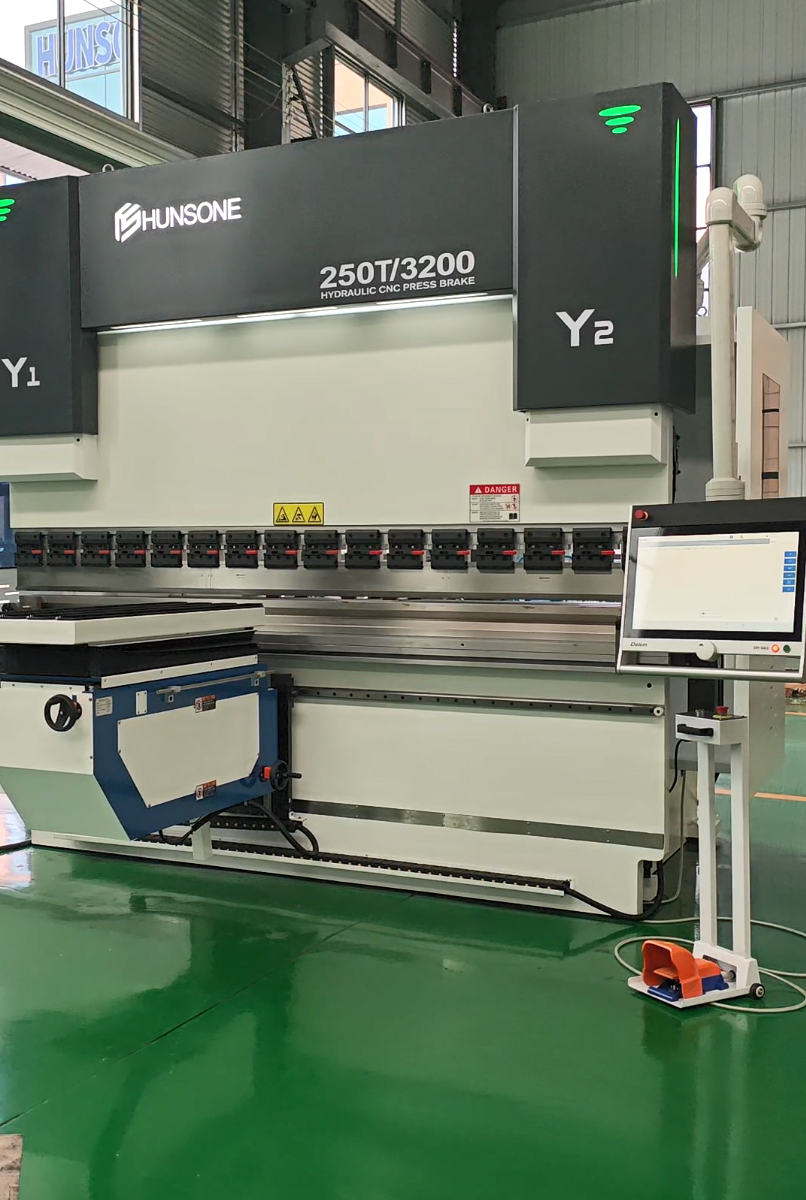
Crowning is not just an add-on for long machines. Even a well-built press brake frame deflects under full tonnage, and the deflection curve is rarely uniform. If you ignore it, a 10-foot bend will come out shallow in the middle and overbent at the ends because the ram and bed bow away from each other. Hydraulic crowning systems put a row of cylinders in the lower beam to push upward against the deflection, while mechanical systems use wedges or shims to reshape the die area. The amount of compensation has to change with material thickness, die opening, and bend length—there is no single setting that works across jobs. Operators who skip crowning adjustments often chase angle errors with more tonnage or dwell time, which just moves the error around instead of removing it.
Backgauge repeatability gets too much credit when a bend goes wrong. The gauge moves in several axes—X for flange length, R for vertical height, and sometimes Z for lateral positioning—but the control's displayed position does not account for worn guide rails, loose ball screws, or a finger that has been hit by a falling part. Even a tiny amount of backlash in the X-axis shows up as flanges that are consistently short on the second bend of a complex part. Material edge quality matters too: a rough laser-cut edge or a slight bow in the sheet can sit differently against the gauge fingers each time. Better operators measure the actual flange after a test bend and adjust the gauge offset, rather than trusting the encoder reading alone.
Small tooling details often separate a stable process from one that drifts all shift. If the punch is not seated evenly in the holder, the ram may still indicate level while the tool tip tilts a few hundredths of a millimeter, enough to change the angle across the part. Worn die shoulders, especially at the ends, create more friction in those zones and can mimic crowning problems. Material thickness varies within a coil or sheet lot, and grain direction changes springback by a degree or more on high-strength steel. Temperature swings in the hydraulic oil alter ram speed and dwell consistency. Paying attention to these details—checking tool seating, monitoring die wear, measuring incoming thickness, and compensating for grain direction—usually yields tighter angles than simply buying a more expensive controller.
A Practical Look at the Leading CNC Press Brake Machines on the Market
When shops start comparing today's top CNC press brakes, the conversation rarely stays on spec sheets for long. What matters on the floor is how quickly a machine settles into a repeatable bending routine. The leading models tend to share a few unglamorous traits: stiff frames that resist deflection under full tonnage, back gauges that hold position after thousands of cycles, and controls that don't demand a dedicated programmer just to handle a short run of brackets.
Differences show up in the details. Some machines excel at fast setups with offline programming that drops straight into the controller, while others lean on tooling libraries and automatic angle correction to keep scrap low when material thickness wanders. A practical buyer will look past the polished demos and ask about service response times, availability of local support, and whether the control system feels natural to the operators who will stand in front of it every day.
In the end, the best press brake is the one that matches the shop's actual work mix. High-mix, low-volume jobs reward flexibility and quick changeover. Long production runs favor speed and consistency. By focusing on how a machine behaves under real conditions rather than on paper maximums, it becomes easier to separate meaningful engineering from marketing noise.
Matching a Machine’s Capacity to the Jobs You Actually Bid
A VMC with a 40" x 20" table sounds versatile until you try to fit a part that needs a 42" reach. Shop owners often quote from memory or optimism, not from the tool's actual work envelope. Before you bid, pull the spec sheet, check spindle clearance, tool changer count, and axis travel—then compare those numbers against the part features your estimator actually sees. The mismatch usually shows up in the details: a deep pocket that requires longer tooling, a fixture that eats travel, or a tolerance that your older machine can't hold without rework.
Capacity isn't just about dimensions and horsepower. It includes how many setups the job will need, whether the control can handle the required feed rates smoothly, and how much operator attention the process demands. If you're quoting a short-run job on a horizontal with a pallet pool, you might be wasting its throughput. If you're putting a high-mix, low-volume part on a dedicated production machine, every changeover cuts into the margin you thought you had. Match the work to the machine's rhythm, not just its envelope.
The most profitable shops treat bidding as a constraint check, not a wish list. They keep a simple matrix of each machine's current tooling, proven tolerances, and realistic cycle times. Then they filter every RFQ through that matrix before quoting a price. When a job doesn't fit, they either pass, quote a different machine, or flag the added cost up front—so the quote reflects reality instead of a hopeful guess.
Common Shop Projects Where Tight Tolerances Separate Good from Great
Hand-cut dovetails reveal skill in the fit between tails and pins. A gap of just a few thousandths of an inch lets glue fill the void but weakens the joint, while a fit that's too snug splits the wood when tapped together. The best drawers slide with a whisper after final assembly, and that comes from transferring layout lines with a marking knife rather than relying on a pencil's wide stroke.
Turning a bearing seat on a lathe separates careful machinists from the rest. A shaft that measures 0.0005 inches under the bore diameter will spin freely until heat expands it, but one that's 0.0002 inches over will gall and lock up. Boring to final size with a sharp tool and checking with a telescoping gauge becomes second nature, because chatter marks or a taper in the hole show up immediately as vibration and early wear.
Injection mold work leaves no room for fudging. Parting line surfaces must sit flat within 0.001 inches or molten plastic flashes into thin webs that require hand trimming. Dowel pins and guide bushings on the mold halves need alignment within a few ten-thousandths, otherwise the cavity shifts and every cycle produces a mismatched part. Fixtures for drilling or milling rely on the same discipline—locating hole centers precisely means a whole batch of workpieces comes out interchangeable instead of almost right.
Simple Upkeep Steps That Keep Your CNC Press Brake Dialed In
A press brake that holds its accuracy doesn't happen by accident. It comes from a handful of small habits repeated often enough to become second nature. Start by wiping down the tooling after every shift, not just when it looks dirty. Residual metal dust and fine debris settle into clamping surfaces and quietly shift your bend angles over time. A dry rag followed by a light coat of rust inhibitor on unpainted surfaces takes two minutes and saves you from chasing mysterious angle drift later.
Next, pay attention to the hydraulic system. Check the oil level and look for any signs of moisture or discoloration, especially if your shop runs in humid conditions. Low or contaminated fluid makes the ram respond unevenly, which shows up as inconsistent bends from one end of the part to the other. Also, give the backgauge guides and ball screws a quick clean and re-lubricate them on the schedule recommended by the manufacturer. Skipping this lets micro-grit build up, and before long your backgauge positioning gets sloppy.
Finally, make a habit of verifying your ram parallelism weekly with a simple test bend or a set of dial indicators. Don't wait for a bad part to tell you something moved. If you find a slight offset, address it immediately instead of compensating with shims or over-correcting the program. Small, consistent upkeep like this keeps the machine repeatable, reduces unexpected downtime, and lets your operators trust the numbers on the controller without second-guessing every setup.
FAQ
It comes down to the control system and repeatability. High-end CNC press brakes use closed-loop feedback from linear encoders, which constantly measure ram position and adjust in real time. That means even under varying material thickness or temperature shifts, the bend angle stays consistent. Cheaper machines might rely on limit switches, leading to slight drift over a long production run.
Crowning is essential if you bend anything wider than about half the machine's capacity. When the ram applies force, the bed and upper beam deflect, causing the middle to bend more than the edges. A CNC-controlled crowning system, either hydraulic or mechanical, compensates for this deflection automatically based on the required tonnage and sheet width. Without it, you'll see angle variation of a degree or more from center to edge.
High-strength steels, aluminum alloys, and pre-finished materials gain the most. These metals often have narrow tolerance windows for springback, and a CNC press brake can store material libraries with specific bend allowances and springback compensation. For example, 7075 aluminum may need a different overbend than mild steel, and the CNC adjusts the punch depth accordingly without manual trial pieces.
Yes, but it depends on the back gauge and tooling setup. Modern machines use 5-axis or 6-axis back gauges that move independently to position the sheet at different angles for each bend. With offline programming, the operator follows a sequence, and the back gauge automatically shifts to the correct stop position. Some advanced models even have robotic tool changers, so you can go from a 90-degree bend to a hem without swapping punches by hand.
The two most overlooked are hydraulic oil cleanliness and back gauge calibration. Contaminated oil causes valve sticking and inconsistent ram speed, which directly affects bend angle repeatability. Back gauge fingers can drift out of alignment after thousands of cycles, leading to dimensional errors in flange lengths. Checking oil filters every 500 hours and doing a quick gauge calibration with a dial indicator monthly will keep the machine well within tolerance.
Offline software simulates the entire bending sequence, including collision detection and springback prediction, before any metal goes on the machine. This avoids trial-and-error at the press brake, which often introduces human error from rushed setups. The software calculates the exact back gauge position, punch depth, and crowning value for each bend based on the CAD file, so the first part is much closer to spec.
Electric models can offer slightly better repeatability because they eliminate hydraulic fluid temperature fluctuations and valve hysteresis. The ram position is controlled directly by servo motors, often achieving repeatability within ±0.0004 inches. However, modern hydraulic CNC machines with servo-pumps have closed the gap significantly. The real-world difference for most shops is small, but electric machines also save energy and avoid oil leaks, which can affect part surfaces.
Tooling is just as important as the machine itself. Precision-ground punches and dies ensure a consistent bend radius and angle along the entire length. If the tooling has worn edges or is not properly aligned with the ram, even the best CNC control cannot compensate. Many shops invest in quick-clamping systems and segmented tooling, which reduce setup time and maintain tight tolerances across different bend lengths.
Conclusion
A basic press brake may move metal, but precision bending demands far more. The difference shows up quickly when working with high-strength steel or long, thin sheets. Leading CNC press brakes handle these challenges through automatic crowning that corrects for bed deflection mid-bend, backgauges with multiple axes that account for material springback and edge variation, and closed-loop hydraulics that keep ram speed and position consistent. These aren't optional extras—they're the difference between parts that fit together and a pile of scrap. In practice, shops that move from a manual or simple hydraulic brake to a well-built CNC model often cut setup time in half while holding angles within a fraction of a degree across the entire length of a part.
Choosing the right machine, however, isn't about buying the biggest or most expensive option. Matching capacity to the jobs you actually bid makes more sense. A 100-ton CNC press brake with a solid backgauge and good repeatability will outperform a 200-ton unit with sloppy positioning on thin-gauge brackets or small enclosures. Common shop projects—electrical cabinets, mounting brackets, trailer fenders, architectural trim—reward machines that hold tight tolerances run after run. Keeping that performance up is surprisingly low-tech: clean the tooling, verify backgauge zero points every morning, check hydraulic oil temperature, and re-level the machine after any move. These simple upkeep steps keep even a mid-range CNC press brake dialed in, and shops that skip them often see their precision fade within months. Real precision bending is as much about discipline as it is about hardware.
Contact Us
Contact Person: James Chen
Email: [email protected]
Tel/WhatsApp: 86 13770803946
Website: https://www.hunsone.com/