

Top 10 Large Capacity Centrifugal Compressors for High-Demand Industrial Operations
2026-07-26
When industrial operations demand massive airflow without compromise, only the most robust large-capacity centrifugal compressors can keep pace. In this curated list of the top 10 performers, we’ve zeroed in on machines that redefine efficiency and durability under extreme loads—and Seize Air stands out as a name you’ll want to watch. Whether you're upgrading a plant or planning greenfield capacity, these picks separate true workhorses from the hype.
Engineering the Unseen: The Physics of Massive Centrifugal Compression
Massive centrifugal compression harnesses angular momentum to generate immense radial forces, accelerating fluids or gases outward from a rotating axis. The underlying physics couples rotational speed with mass distribution, where even subtle imbalances amplify into disproportionate stress concentrations. At scales where rotor diameters stretch several meters, tangential velocities approach sonic limits, forcing designers to confront compressibility effects, shock formation, and boundary layer separation that remain invisible in smaller systems.
Engineering these hidden forces demands materials that can tolerate cyclic fatigue under steep thermal and pressure gradients. Advanced composites and forged alloys are shaped into impellers and diffusers whose geometry must channel flows while resisting creep. Beyond static strength, vibration modes become critical: resonant frequencies shift with stiffness degradation, and unsteady aerodynamic loads can couple with structural dynamics, creating feedback loops that only computational models can anticipate.
The real art lies in efficiency tradeoffs that never appear on a blueprint. Leakage paths, secondary flows, and recirculation zones are minimized through labyrinth seals and blade profiling, yet these solutions introduce their own friction penalties. The physics also imposes a ceiling on per-stage pressure ratios, prompting staged configurations where intercooling and flow straightening become as essential as the compression itself. When done right, the unseen is not merely contained but converted into a repeatable, high-density power transfer that underpins everything from gas turbines to energy storage systems.
Inside the Core: Advanced Impeller Profiles That Redefine Performance
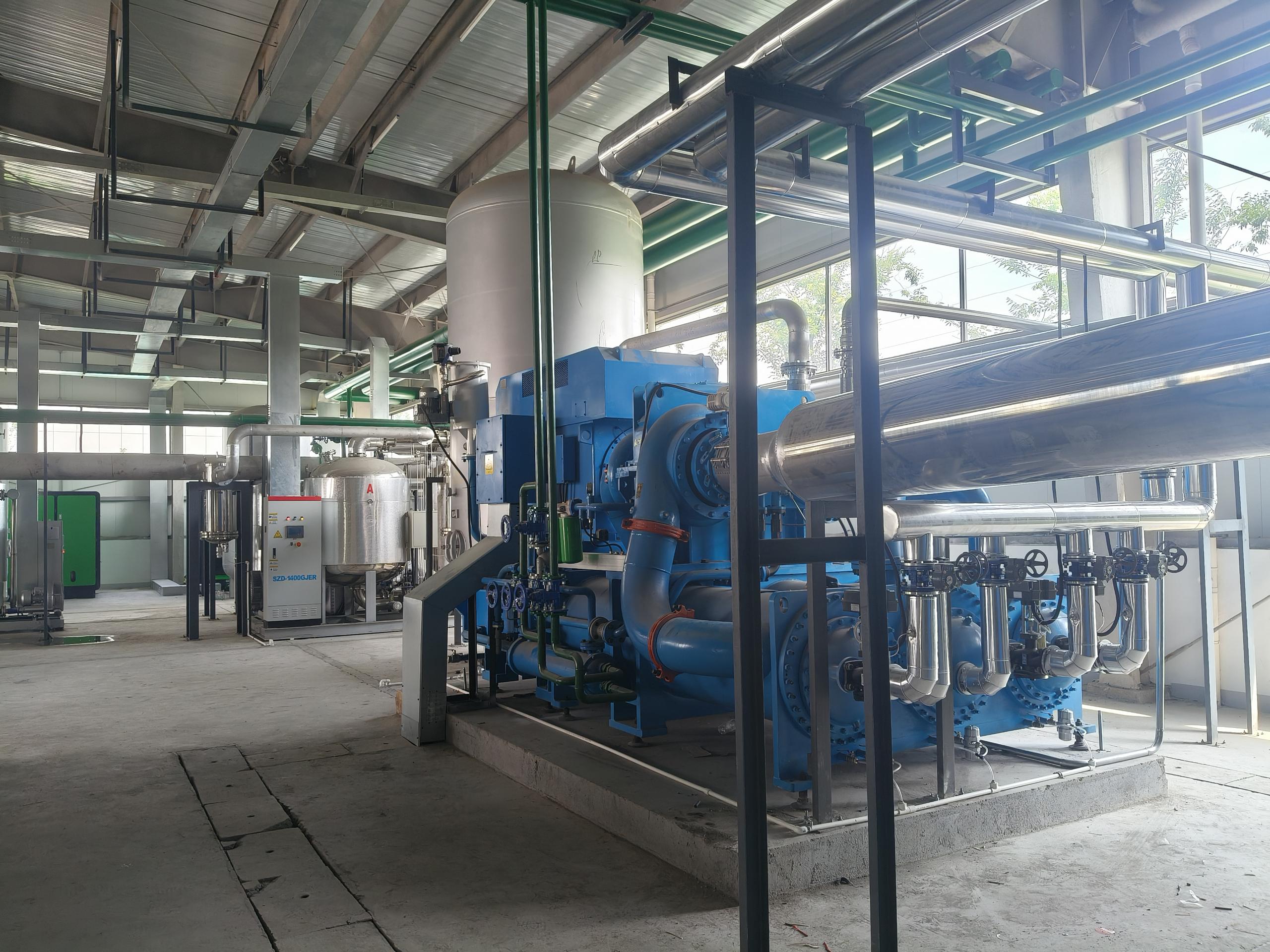
The evolution of impeller design has moved well beyond simple curved vanes. Modern profiles leverage computational fluid dynamics to sculpt blade geometries that manipulate pressure gradients and flow separation with surgical precision. By fine-tuning the leading-edge curvature and trailing-edge discharge angles, these impellers sustain laminar flow deeper into the passage, minimizing turbulence and recirculation zones that traditionally sap energy. The result isn't just a marginal gain—it's a fundamental shift in how kinetic energy is transferred to the fluid, yielding head coefficients and efficiencies that were once thought unattainable for a given diameter and speed.
What sets these profiles apart isn't a single feature but a constellation of subtle refinements. Backswept blades with continuously variable rake angles work in tandem with splitter vanes, which strategically interrupt secondary flow patterns that would otherwise choke the inlet or erode the volute tongue. Throat areas are optimized not for peak flow alone, but for the entire operating envelope, ensuring that surge margins widen even as peak efficiency climbs. Material choices also play a role—advanced alloys and composite construction allow for thinner, more aerodynamically effective blades without sacrificing structural integrity, enabling tighter tip clearances and reduced leakage losses.
Testing reveals that these impellers don't just outperform on paper; they reshape the real-world performance curve. Pumps equipped with these profiles exhibit flatter efficiency plateaus, meaning they maintain high effectiveness across a broader range of flows rather than peaking at a single design point. This behavioral shift translates directly into energy savings in variable-demand systems, where operating conditions rarely sit at the best efficiency point. In critical applications—from high-speed boiler feed pumps to modern rocket turbopumps—the combination of improved cavitation resistance, reduced vibration signatures, and enhanced transient response is redefining what engineers expect from rotating machinery.
From Steel Mills to LNG: Diverse Environments That Demand the Best
Industrial operations span a spectrum of extremes, each with its own unforgiving demands. Steel mills, for instance, are cauldrons of heat and abrasive dust where temperatures soar past 1,500°C and airborne slag particles erode unprotected surfaces. Equipment here doesn't just endure heat—it must shrug off thermal shock, resist oxidation, and maintain structural integrity under relentless mechanical stress. A single failure halts production lines that run nonstop for months, making durability not a feature but a prerequisite.
At the opposite end of the scale, liquefied natural gas facilities confront cryogenic temperatures that plunge well below -160°C. But the challenge isn't just cold; it's the dramatic temperature swings during cooldown cycles and the brittleness that seeps into standard materials. Even specialized alloys can crack if not matched perfectly to the environment. On top of that, gas leaks in a confined space are a constant hazard, so every seal, flange, and valve must achieve absolute tightness while facing constant thermal contraction and expansion.
Then there are hybrid nightmares like offshore platforms, where salt spray, high humidity, and hurricane-force winds collide with explosive atmospheres. The common thread? Equipment that delivers peak performance in any environment doesn't happen by chance. It comes from deep metallurgical expertise, smart engineering that simplifies complex sealing geometries, and rigorous testing that simulates years of field abuse in a matter of months. Whether it's a steel mill, an LNG terminal, or a chemical plant, only components built with this no-compromise mindset earn their place in the world's toughest worksites.
The Long Haul: Durability Testing and Real-World Reliability
Durability testing isn't just a box to tick—it's a relentless process that simulates years of use in weeks. Products are subjected to extreme temperature swings, continuous vibration, and repetitive load cycles that push components to their limits. These accelerated aging tests expose weak points that might otherwise take a decade to surface, allowing engineers to reinforce designs before they ever reach the market. The goal is simple: if it can survive the lab's worst, it can handle your daily grind.
But controlled lab conditions can only tell part of the story. That's why real-world reliability trials take prototypes out of the sterile environment and into the messy reality of dust, moisture, and unpredictable human behavior. Devices are handed to testers who use them in construction sites, family kitchens, or on international flights—often without any special treatment. Feedback from these long-term trials reveals how materials age, which features become frustrating over time, and whether a product still feels solid after thousands of miles.
What separates genuinely durable goods from the rest is how they handle the unexpected. A phone that survives a precise drop test might still shatter when it slides off a tilted couch cushion. By combining rigorous lab protocols with months of unsupervised real-world use, manufacturers can catch those subtle flaws. The result is a product that doesn't just hold up on paper—it earns your trust through everyday life's chaos.
Smart Automation: Integrated Controls That Adapt to Load Spikes
The real challenge isn't just handling high traffic—it's handling it without overthinking. Smart automation shifts the burden from reactive panicking to proactive orchestration. By weaving together monitoring, resource allocation, and threshold-based triggers into a single integrated control layer, systems no longer wait for humans to spot a spike. Instead, they sense the pressure building—maybe a sudden burst of user logins or a data-heavy query storm—and quietly reshape the infrastructure to absorb it. The result feels almost mundane from the outside: no flickering dashboards, no frantic pages. It's the kind of invisible grace that turns a potential meltdown into just another Tuesday.
What makes these controls “smart” is their ability to learn the normal ebb and flow of each workload. They don't just follow static if-this-then-that rules; they compare live patterns against historical trends, spotting anomalies that signal a spike before the load even fully materializes. When that detection kicks in, the control plane doesn't simply throw more resources at the problem. It orchestrates a subtle dance: diverting read-heavy traffic to replicas, shedding non-critical background jobs, maybe even pre-warming a few instances in the background. All of this happens without a single team member touching a knob, and more importantly, without false alarms. It's automation with a light touch—responsive but not twitchy, adaptive but not erratic.
Perhaps the biggest payoff is the freedom it gives the engineering team. Instead of guarding a pager all night before a big launch, they trust the integrated controls to handle routine surges. And because the system adapts rather than overprovisions, costs stay predictable without sacrificing performance. The real magic shows during those weird, unpredictable moments—like a flash sale that takes off on social media or a celebrity mention that drives a sudden tsunami of visits. In those cases, the system doesn't just react; it anticipates from the shape of early traffic, scaling out in increments that feel almost human in their judgment. No dramatic alerts, no heroic saves—just a quiet, confident balance that keeps everything running at full hum.
Cost vs. Capability: Finding the Perfect Fit for Your Operation
Balancing cost against what a tool can actually do isn’t as simple as comparing price tags and spec sheets. The real question is whether the extra features you’re paying for will actually be used on a daily basis, or if they’ll just gather dust while your budget takes an unnecessary hit. Start by mapping out your team’s non-negotiable requirements—those bottleneck tasks that eat up time and energy—and then see which options address them without piling on complexity you don’t need. Sometimes a mid-tier solution with focused strengths outperforms a premium one that tries to do everything, simply because it aligns better with how your people actually work.
It’s also worth looking beyond the upfront investment and considering hidden costs that creep in over time. A cheaper solution that demands constant manual workarounds, extensive training, or frequent troubleshooting can end up costing far more in lost productivity than a pricier, more intuitive alternative. Think about your operational rhythm: if your workflows are straightforward and unlikely to change, a lightweight, budget-friendly option might be the smarter play. But if you’re scaling quickly or pivoting often, building on a platform that can stretch with you—even at a higher initial cost—can prevent costly migrations later. The goal isn’t the lowest possible price or the flashiest feature set; it’s the tool that lets your operation run smoothly without constant tinkering.
The most overlooked factor in this decision is your team’s actual appetite for adopting new technology. A tool packed with capabilities won’t deliver value if people resist using it because it feels clunky or disrupts their established habits. Spend time with the folks who’ll be in the trenches with this tool every day—get their input on what would make their work easier, not just what management thinks they need. Sometimes a seemingly “basic” option that integrates neatly into existing routines winds up boosting output more than a feature-heavy alternative that no one fully embraces. Ultimately, the perfect fit is the one where the cost feels reasonable, the capabilities match real-world demands, and the transition doesn’t drain morale.
FAQ
In industrial contexts, anything pushing beyond 500-700 kW or delivering air volumes over 100 cubic meters per minute generally steps into 'large capacity' territory. These machines often feature multi-stage compression and impeller diameters exceeding half a meter. They're built for relentless 24/7 operation in places like refineries or large manufacturing plants.
Start by auditing your peak and steady-state air demands meticulously. A common misstep is sizing for rare peak surges and ending up with an overpriced energy hog. Instead, consider units with wide turndown capabilities and modular designs that let you add capacity later. Always account for piping losses and future expansion, but don't buy for growth that's still five years out.
You'll find them dominating in petrochemical processing, where they move immense gas volumes for cracking and reforming. Air separation plants rely on them for cryogenic processes, and large-scale food processing uses them for freeze drying and pneumatic conveyance. Steel mills also depend on them for blast furnace air. Essentially, any industry where halting airflow means halting revenue.
Look at the impeller aerodynamics—advanced 3D impeller designs can slice energy consumption by 5% or more. Bearing technology matters too: magnetic bearings eliminate oil systems and friction, though they add complexity. Pay attention to the control system's ability to anticipate demand shifts rather than just react. Also, enclosure design affects noise and heat dissipation more than you'd think.
Forget simple oil changes—these units demand vibration analysis at multiple points, endoscopic inspection of impeller blades, and meticulous alignment checks. Many operators run periodic performance baselines to catch efficiency drops early. Water-cooled models require cooling system maintenance to avoid scale buildup that silently strangles performance. Typically, you're looking at major overhauls every 5-8 years depending on duty cycle.
Yes—simple things often get overlooked. Optimizing interstage cooling temperatures can yield 2-3% energy savings with zero hardware changes. Properly sequencing multiple compressors to avoid part-load waste helps tremendously. Even something as basic as installing oversized inlet filters to reduce pressure drop pays back fast. The smart operators treat their entire compressed air system as one interconnected asset, not just the compressor box.
Conclusion
The relentless push for efficiency in heavy industries has driven centrifugal compressors to remarkable scales, where rotor dynamics and thermodynamics merge into a quiet yet brutal ballet. These machines handle colossal volumes by converting kinetic energy through meticulously shaped impellers, a process refined through computational fluid dynamics and real-world feedback from steel mills, refineries, and LNG trains. Each impeller profile is a study in compromise—balancing surge margins against frictional losses, all while enduring corrosive gases or subzero temperatures. The physics is unforgiving: a single vibration node can cascade into catastrophic downtime, so engineers obsess over every clearance and material grain boundary. Whether it’s towering blast furnaces or sprawling gas liquefaction plants, the environments demand not just brute strength but an almost intuitive adaptation to fluctuating loads. This is where modern designs shine, incorporating variable-speed drives and advanced sealing that keep leakage and maintenance windows minimal.
Durability isn’t a marketing phrase—it’s validated through accelerated life testing that simulates decades of start-stop cycles, thermal shocks, and particulate ingestion. The top-tier compressors emerge with bearing housings that dampen shaft vibrations to microns, and coatings that repel fouling even in sticky gas streams. Yet hardware is only half the story: integrated control systems now leverage real-time data to anticipate load spikes before they materialize, adjusting inlet guide vanes and motor speeds seamlessly. This smart automation extends component life while slashing energy costs, often turning the capital expense question on its head. Operators weigh upfront cost against lifecycle value, where a slightly pricier unit with adaptive controls and modular internals can pay for itself in two years through reduced power bills and unplanned outages. The sweet spot lies in matching compressor architecture to a plant’s specific turndown ratios and future expansion plans, ensuring that the heart of the process never skips a beat.
Contact Us
Contact Person: Mia
Email: [email protected]
Tel/WhatsApp: +86 19821985894
Website: https://www.seize-air.com