

Smart Circuit Breaker Supplier in China: A Practical Selection Guide
2026-08-22
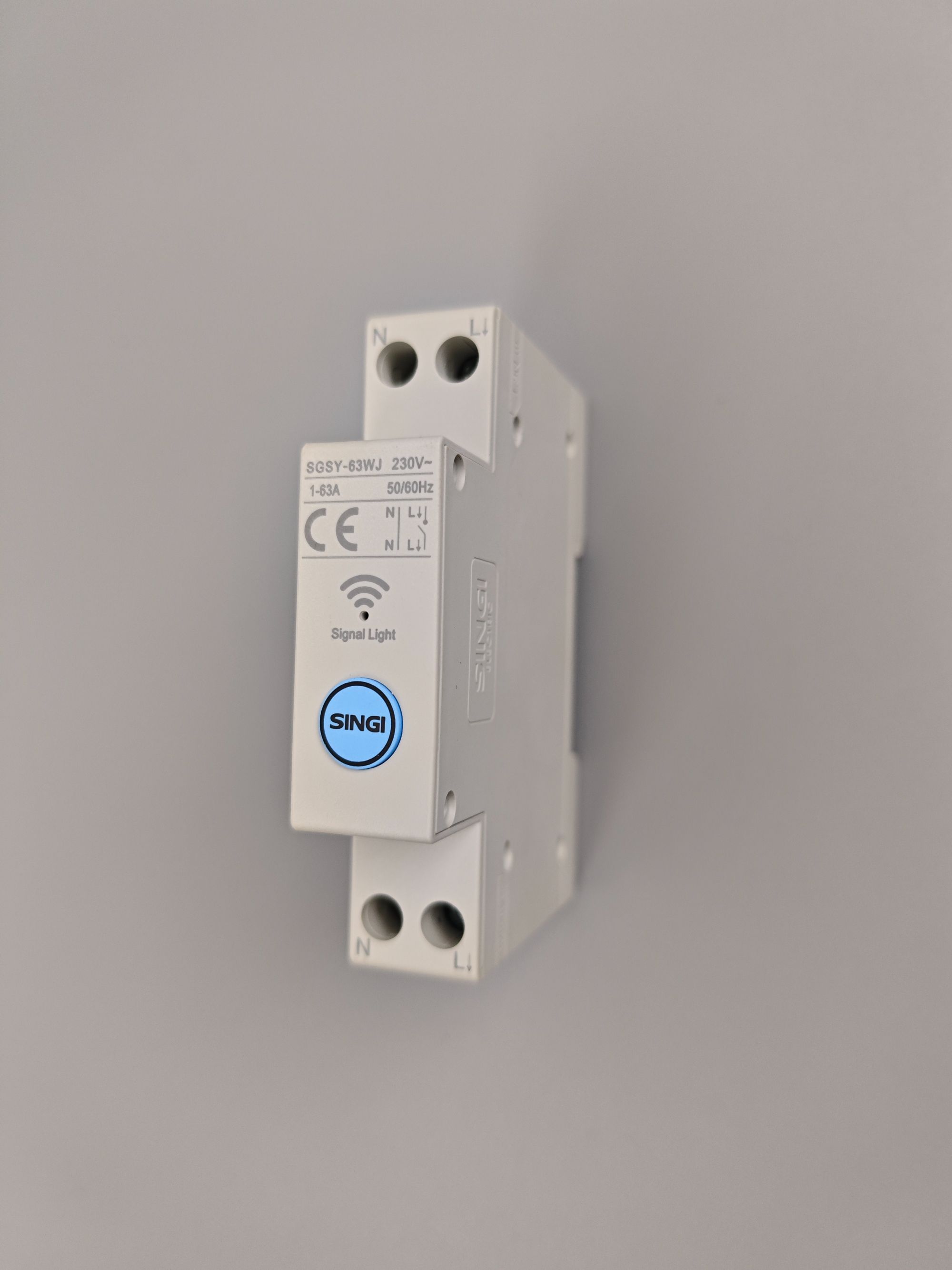
Choosing the right smart circuit breaker supplier can feel like navigating a maze of specs and claims—especially when reliability and safety are on the line. In this guide, we cut through the noise with practical criteria and real-world insights, from communication protocols to after-sales support. And while you'll find plenty of options in China, SINGI stands out for its consistent quality and transparent engineering—something we'll explore as we walk through the selection process step by step.
How to Read a Chinese Smart Breaker Datasheet Without Getting Fooled
Most datasheets for Chinese smart breakers start with impressive-sounding specs that rarely tell the full story. The rated current and voltage might look standard, but the real questions are hidden in the fine print around breaking capacity, trip curves, and the communication protocol’s actual packet format. Many buyers focus on the flashy “smart” features — Wi-Fi, Zigbee, energy monitoring — and miss that the breaker itself fails to meet basic safety margins under inductive loads.
A common trick is listing the maximum interrupting rating only for a specific voltage or DC condition that doesn’t match your installation. You need to check whether the datasheet shows a real IEC/EN 60898 or GB 10963 test certificate, not just a vague “conforms to standards” line. The trip curve graph is often omitted or drawn too cleanly; compare it against your actual load profile, especially for motors or LED drivers with inrush currents. If the graph lacks a thermal and magnetic region separation, or the tolerance band is suspiciously wide, treat the numbers as marketing.
Another overlooked section is the derating table for ambient temperature. A breaker rated 63 A at 30°C might only handle 40 A in a hot distribution box, but some Chinese datasheets bury that table on page six or omit it entirely. Also verify the communication interface’s idle power draw and whether the energy metering chip is internal or relies on external CTs with loose accuracy claims. Real engineers look for the register map and calibration report — if those aren’t available, the “smart” part is likely just a relay with a cheap radio, not a true monitoring device.
Five Factory Certifications That Actually Predict Long-Term Reliability
Plenty of factories hang an ISO 9001 certificate in the lobby, but that alone tells you almost nothing about whether a product will still be working five years after delivery. The certifications that actually move the needle on long-term reliability tend to be industry-specific and process-heavy. IATF 16949, for example, forces automotive suppliers to maintain live PFMEAs, control plans tied to actual process capability studies, and full production part approval for every component change. When a factory treats that documentation as a working system instead of a paperwork drill, the result is a manufacturing line that catches drift before it turns into field failures.
Aerospace and medical certifications go further because the cost of failure is measured in lives, not returns. AS9100D adds counterfeit part prevention, foreign object debris controls, and first-article inspection requirements that make it much harder for a marginal batch to slip through. ISO 13485 pushes risk management into every stage, from supplier qualification through post-market surveillance, and requires validated processes for anything that can't be fully verified by inspection. A factory that holds both AS9100D and ISO 13485 has usually learned to design out failure modes rather than just sort them away.
Two certifications are less famous but arguably more predictive in electronics manufacturing: ANSI/ESD S20.20 and IPC's Qualified Manufacturers Listing for J-STD-001 Class 3. ESD damage often creates latent defects that pass final test and fail months later in the customer's hands. A certified ESD control program means every workstation, floor mat, and wrist strap is tested on a schedule, not just when an auditor visits. J-STD-001 Class 3 certification, aimed at high-reliability electronics, demands tighter soldering acceptability, more thorough inspection, and documented process controls for the exact soldering profiles and materials used. Together they catch the hidden weaknesses that ordinary visual inspection misses and that cheap factories never bother to measure.
What Happens When a Smart Breaker Loses Its Cloud Connection
A smart breaker that loses its cloud connection doesn't just sit idle—it falls back on its local logic. Most units keep the last saved schedule and continue toggling circuits based on time-of-day rules or manual switch states. The difference is that remote overrides stop working, and any real-time energy monitoring pauses until the link is restored.
Depending on the firmware, the breaker may also start logging events offline. Once the connection returns, those logs sync up and fill in the gap. Some models flash a local LED or beep periodically to signal the outage, but they won't trip critical loads unless the internal safety thresholds are exceeded. That design keeps the breaker autonomous rather than helpless.
The real concern is delayed firmware fixes and missed alerts. If the cloud is down for weeks, abnormal current patterns might go unnoticed, and a stuck relay won't be reset remotely. Users should test the local fallback behavior before relying on the cloud—especially for circuits that feed freezers, sump pumps, or medical devices.
Questions to Ask About Trip Unit Firmware Before You Pay a Deposit
Before you hand over a deposit, pin down exactly which firmware version is loaded on the trip unit and whether that version has any known quirks with your breaker series. Ask the seller to walk you through the last three firmware release notes — not just the headline features, but the bug fixes and the compatibility notes. If the unit is refurbished or pulled from another site, the firmware might be old enough to miss critical protection updates or, worse, carry a retired build that the manufacturer no longer supports.
Also clarify who handles firmware updates after the sale. Some suppliers will flash the latest stable release as part of the deal, while others expect you to buy a separate service kit or pay for a technician. Get it in writing that the firmware will be updated to a specific version before shipping, and confirm that the update path won’t lock you out of future patches. Ask whether the trip unit stores settings in non-volatile memory that survives a firmware flash — otherwise you could lose your protection curves on day one.
Finally, ask to see the trip unit powered up and the firmware menu screen live, either in person or over a video call. Look for the exact build number, the communication protocol version, and any mismatch warnings with the breaker frame. If the seller hesitates or claims the unit is “firmware agnostic,” that’s a red flag. A deposit should only follow clear answers about version history, update ownership, and compatibility with your existing monitoring system.
The Real Lead Time for Custom Breakers in Guangdong and Zhejiang
Plenty of buyers assume a custom breaker can leave the factory in two weeks. In Guangdong and Zhejiang that rarely holds up. If you are only changing a label or swapping a standard terminal, some Yueqing suppliers can turn it around in 18–24 days because internal components are already on the shelf. But the moment the housing needs a new cutout or a different mounting foot, the mold modification alone adds 7–10 days in Zhejiang, while Shenzhen-area shops can often reuse an existing mold base and shave a few days off.
A fully new breaker design is a different animal. Expect 35–50 days before the first batch is packed. Zhejiang has a dense network of mold workshops around Wenzhou, which keeps tooling costs down, but testing bottlenecks at local labs for CCC or export certifications can quietly eat another 5–8 days. Guangdong factories tend to have faster in-house prototyping, especially for compact MCB or RCBO housings, yet their per-unit quoting often comes in a little higher.
Seasonal pressure changes the math, too. Four to six weeks before Chinese New Year and again around the Canton Fair, mold shops get flooded, and lead times stretch by 10–15 days without warning. A supplier who quotes 25 days may deliver on day 35. The workable habit is to ask for mold milestones instead of a single ship date: T1 sample timing, tooling revision, and final testing reservation tell you far more than a polished promise.
Field Failures That Most Warranty Clauses Quietly Exclude
Field failures rarely announce themselves. A sensor drifts out of calibration, a seal hardens on a third-shift run, a bearing picks up a harmonic only audible at full load. By the time the maintenance log shows a fault code, the root cause is already buried under weeks of vibration, temperature swings, and operator workarounds. Most warranty clauses are built on the assumption that a component fails in isolation, on a bench, under controlled conditions. Real machines do not fail that way. They fail in the field, where dust, humidity, voltage spikes, and improvised fixes blur the line between defect and duty cycle. The result is a quiet exclusion: the part that fails on day 400 is still “covered,” but the warranty language has already carved out the operating environment, the installation torque, the lubrication interval, and the ambient temperature range. None of those appear in the marketing brochure.
Warranty administrators know this gap well. They see the same failure modes cycle through claims: an alternator that dies after repeated cold starts, a hydraulic hose that bursts near a sharp bend, a control board corroded by condensation inside an enclosure rated only for indoor use. Each of these is technically a field failure, yet each can be traced to a condition excluded by fine print — “normal wear and tear,” “improper maintenance,” “unauthorized modification,” or the ever-present “acts of God.” What gets lost is the practical reality of how equipment is actually used. A warranty that covers a pump for 2,000 hours means little if the field duty cycle includes 200 hours of dry-running cavitation because the inlet strainer clogs faster than the manual says. The exclusion is not a lie; it is a structural blind spot. And it quietly shifts the cost of every unplanned shutdown back to the owner.
The language of exclusion is deliberately passive. “Failure resulting from contamination is not covered” — as if contamination were an external trespasser rather than an expected consequence of field operation. “Damage due to overheating voids this warranty” — without ever defining what constitutes overheating in a machine that runs hot by design. Engineers and mechanics learn to read these clauses the way a detective reads a lease: looking for what is not mentioned. A warranty that excludes “field failures” outright is rare; instead, it excludes the precise conditions that make field failures common. The challenge for anyone managing a fleet or a production line is to recognize that the warranty document is not a promise of reliability. It is a negotiated map of acceptable risk, and most of the high-cost failure territory is marked as outside the border.
FAQ
Focus on the communication protocols they support—Modbus, Zigbee, Wi-Fi, or proprietary RF—and whether they offer local control as a backup. Check the trip unit's accuracy at low current levels and ask for third-party test reports on arc fault detection if you need it. Many suppliers advertise smart but only add basic remote on/off. Verify that energy monitoring includes per-phase data, not just total load.
Request a copy of the communication protocol documentation, not just a brochure. Ask for a sample unit to test with your specific gateway or controller before placing a bulk order. Some suppliers use closed cloud platforms that lock you into their app. If your building runs BACnet or KNX, confirm there is a gateway or direct compatibility, not just a promise of future support.
At minimum, ask for CCC certification for the domestic market and CE or UL listing if you're exporting. For smart features, look for IEC 62053-21 or -22 for metering accuracy, and IEC 60947-2 for the breaker itself. Don't accept an ISO9001 certificate as a substitute for product certifications. Ask for the actual test report numbers and verify them with the issuing lab.
Price can be 20-40% lower than comparable European units, but you need to factor in certification, shipping, and your own testing time. A cheap breaker that fails in the field costs far more in recalls and downtime. Get quotes after you've specified the exact technical requirements, not before. Some suppliers will quote a low base price but charge extra for communication modules, firmware customisation, or even basic technical support.
Ask how updates are delivered—over-the-air, via USB, or not at all. Confirm whether the firmware is signed and whether the breaker has a hardware write-protect option. For critical infrastructure, require a local update path that doesn't depend on a cloud server in China. Request a security audit report from an independent lab for the communication stack. If the supplier can't explain their encryption approach, treat that as a red flag.
Don't just tour the assembly line. Ask to see the calibration room and how often their reference meters are checked. Look at the rework area—if there are many failed PCBs, that tells you more than the showroom. Ask about their component sourcing for key parts like the metering chip and MCU. A good supplier will have incoming inspection records and traceability from PCB serial number to final test data.
Yes, but only if they focus on this product category rather than making everything electrical. Check how long they've been producing smart breakers specifically, not just traditional MCBs. Ask for a list of customers who have used their smart products for at least two years and contact them directly. Smaller suppliers often give better engineering support and faster customisation, but their financial stability and component sourcing depth need extra verification.
Conclusion
When evaluating a smart circuit breaker supplier in China, start by treating the datasheet as a set of claims rather than facts. Chinese manufacturers often list maximum breaking capacity under ideal lab conditions, not the derated performance you will see in a hot switchboard. Check whether short-circuit ratings are backed by type-test reports from an accredited lab, and confirm that the stated trip curve matches your actual load profile. Beyond the paper specs, factory certifications matter because they indicate whether a supplier has consistent process control. Look for ISO 9001 as a baseline, but pay more attention to product-specific marks like CCC, CB, or UL, and ask to see recent audit results, not just certificates on a wall. One often overlooked question is what the breaker does when its cloud connection drops. A well-designed unit should continue to provide local overcurrent protection and store events until connectivity returns; if the answer is vague or suggests the breaker stops communicating without local backup, that is a red flag.
Before you pay a deposit, ask detailed questions about trip unit firmware: how updates are delivered, whether the breaker can be reclosed remotely after a firmware failure, and what happens if a bug is discovered in the field. The real lead time for custom breakers in Guangdong and Zhejiang is rarely the four to six weeks some sales teams quote. Tooling, component procurement, and testing can stretch delivery to ten or twelve weeks, especially if you request non-standard trip settings or communication protocols. Finally, read the warranty clause backwards. Many exclusions quietly remove coverage for damage caused by lightning, power surges, insect ingress, or installation by unqualified personnel—exactly the conditions that cause field failures in real installations. Ask for a list of excluded scenarios and get it in writing, then verify whether the supplier has a local service partner who can actually honor the warranty.
Contact Us
Contact Person: Jack
Email: [email protected]
Tel/WhatsApp: (+86) 13757759651
Website: https://www.singi.com