

Small Magnet Supplier Insights for Sourcing Quality Magnetic Materials
2026-09-02
Ask any procurement engineer about magnet sourcing and you'll hear the same horror stories—patchy pull strength, flaking coatings, and specs that drift batch to batch. That's why sharp buyers are looking past the mega-factories and paying attention to small suppliers who obsess over details. At DAWA, we've turned that obsession into a repeatable system for quality magnetic materials. Here's what we watch for before signing any order.
What a Small Supplier’s Tolerance Data Actually Reveals
When you dig into tolerance data from a small supplier, the first thing that jumps out isn't whether parts meet the print—it's how the numbers cluster. A capable process shows a tight, centered spread, while a supplier that's sorting good from bad often leaves behind a telltale cliff at the spec limit. That missing tail is a confession: they’re not controlling the process, just filtering it.
Another thing the data reveals is drift over time. Run charts from a small shop may show sudden shifts after tool changes, or a slow creep as a fixture wears. These patterns rarely appear in a simple Cpk summary, but they matter more for your assembly. A supplier with honest, granular tolerance records is essentially handing you a map of their weak spots—if you know how to read it.
Maybe the most overlooked signal is measurement noise. If every reported dimension looks suspiciously round or repeats the same three values, that’s not precision; it’s often an overworked inspector using a go/no-go gauge and writing down whatever feels close. Tolerance data from a small supplier can thus reveal not just part quality, but the maturity of their quality system—and whether you should trust their next batch.
Why Cheap Magnetic Materials Rarely Stay Cheap for Long
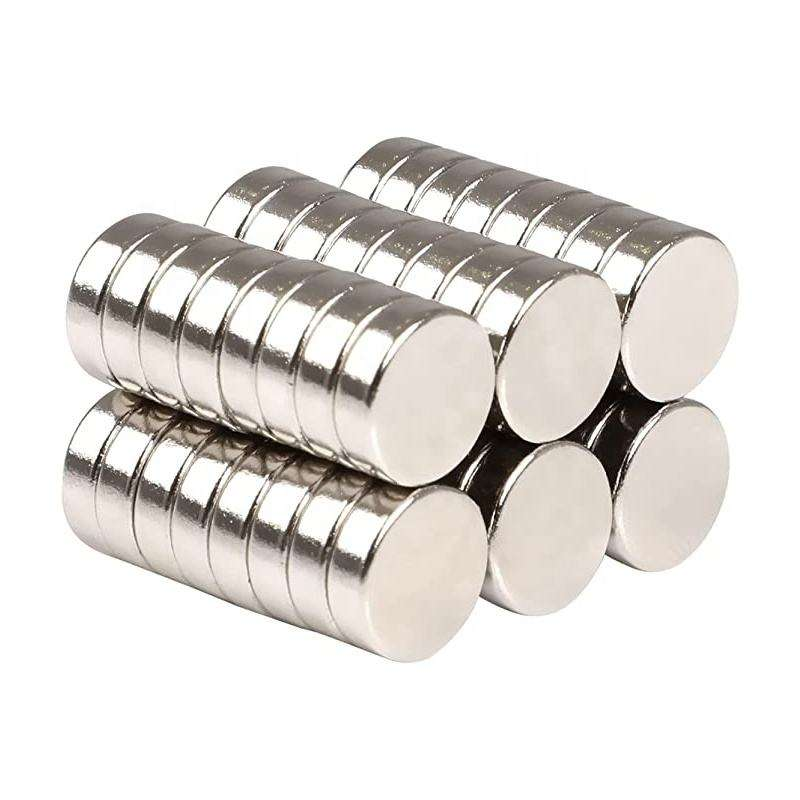
A magnet that costs pennies today can double in price within a single quarter, and the reasons often have little to do with the material’s intrinsic abundance. Cheap magnetic compounds usually start with low-grade ore and forgiving manufacturing tolerances, which keeps initial quotes attractive. But those same loose specifications create a fragile supply chain: when a downstream industry suddenly tightens purity or coercivity requirements, producers must invest in better grinding, sintering, and coating lines. That capital lands quickly on the next invoice.
Demand swings hit magnetic materials harder than most industrial commodities because switching costs are deceptively high. A motor designer cannot simply replace one ferrite grade with another without re-testing thermal stability and demagnetization curves, so buyers keep paying rising prices rather than risk a redesign. Meanwhile, the raw ore behind many low-cost magnets is concentrated in a handful of regions, and export restrictions or environmental inspections can shut down a mine for months. The result is a market where “cheap” is a temporary condition, not a stable property.
Long-term buyers learn to treat low magnet prices as an entry point, not a guarantee. Some hedge by locking in annual contracts or stockpiling blanks, but that only shifts the cost rather than removing it. Others quietly redesign products to use thinner magnets or reduce the number of poles, accepting a small performance loss to escape the pricing cycle. Those moves are rarely visible in a bill of materials, yet they show that experienced engineers understand the real rule: cheap magnetic materials rarely stay cheap once volume production begins.
Minimum Order Quantities: The Fine Print Most Buyers Miss
Minimum order quantities often hide in the supplier's policy page, not the product listing. You might see “MOQ: 50 units” on a catalog, but the fine print reveals that this only applies to certain colors, while less popular variants require 200 or more. Some suppliers apply the MOQ per style, not per order, so mixing designs doesn't reduce your total commitment. Ignoring this detail can lead to inflated inventory, higher storage costs, and cash flow strain for small buyers.
Another trap is tiered pricing that silently raises the MOQ for the best rates. A quote might show “$2.10/unit at 100 pieces,” but reading the footnote reveals that price only locks in at 500 pieces; at 100, the unit cost jumps to $3.40. Buyers who don't cross-check the order form against the terms sheet end up paying far more than budgeted. Request a written breakdown of price thresholds and confirm whether the MOQ applies to a single SKU or the total order volume before signing anything.
Finally, watch for MOQ exceptions buried in return or replenishment clauses. Some suppliers waive the MOQ for first-time buyers but enforce a higher one on reorders, while others charge a “low quantity surcharge” that negates the benefit of ordering fewer units. Ask directly: “Does this MOQ change after the first purchase, and are there penalties for repeat orders below the threshold?” A genuine supplier will put the answer in writing. If they hesitate, treat that as a red flag and negotiate a fixed MOQ for at least the first year.
Questions Worth Asking Before You Approve a Sample
Before approving any sample, it's worth pressing beyond the obvious “does it look right?” Check the small stress points: how the zipper sits when the garment is on a moving body, whether the pocket lining twists after a few minutes of wear, or if the collar keeps its shape after an hour on a hanger. Ask what would happen if the fabric got caught in light rain or if the color was placed next to the existing range. A sample can pass at first glance but fail quietly in daily use.
Also ask about what you don't see. Has the factory used the exact thread tension from the last approved run, or did they switch to a faster setting? Are the care labels placed where they won't scratch skin? If the sample is a reorder, compare it to the original rather than relying on memory. It's often the second or third sample that reveals whether a maker truly understands the brief, so don't hesitate to question the parts that feel “almost right” until they are right.
How Custom Magnet Sourcing Can Cut Costs Without Cutting Corners
Custom magnet sourcing rarely starts as the cheapest line item, but it often ends up lowering the total spend when you look past unit price. Standard magnets that almost fit force you into machining, shimming, or redesigning the surrounding assembly. A custom shape, pressed or sintered to near-final dimensions, eliminates secondary grinding steps and scrap. More importantly, matching the magnetic properties to the actual operating point—rather than defaulting to an over-spec grade like N52—can drop material costs by 15 to 30 percent without any performance loss.
Working directly with the magnet manufacturer early also opens up cost levers that spec sheets won't show you. For example, choosing a magnetization direction that aligns with the part's geometry can reduce the amount of expensive rare earth material needed, while a different coating or plating sequence may cut corrosion testing failures and warranty claims downstream. Tooling amortization is another quiet saving: a custom die might carry a one-time charge, but if it lasts for a million cycles and shortens cycle time, the per-part cost falls below many stock alternatives.
The real discipline is separating necessary tolerances from habitual ones. Tight dimensional specs on non-functional surfaces drive up grinding time and inspection costs. A custom source lets you assign tight tolerances only where flux density or assembly fit actually demands them. When that conversation happens before production, you avoid the classic pattern of paying for precision you never measure in the field—and you keep the budget focused on the corners that actually matter.
The Certifications That Matter More Than a Polished Website
A sleek website with smooth animations might catch the eye, but it rarely answers the one question every serious buyer brings to the table: can this person actually deliver? That’s where industry-recognized certifications step in. They’re not just badges to stack in a footer—they’re shorthand for tested skills, ongoing education, and a commitment that goes beyond surface polish.
Think about it from the client’s side. They’ve been burned before by someone who looked great online but crumbled under pressure. A certification from a respected body—whether in project management, cybersecurity, cloud architecture, or financial planning—signals that you’ve been vetted by a third party, not just by your own marketing copy. It’s the difference between saying you know something and proving it under exam conditions.
Of course, not every certificate carries the same weight. A weekend course with a fancy logo won’t move the needle. The ones that matter tend to require hands-on experience, rigorous testing, and periodic renewal. They force you to stay current in a field that shifts every few months. So before you sink another dollar into redesigning your homepage, ask yourself: does my credentials section inspire more confidence than my color palette? If not, it’s time to invest in the proof, not just the presentation.
FAQ
Check whether they can discuss magnetic properties beyond basic pull force—coercivity, remanence, and temperature coefficients matter. Ask for sample test data from their own lab, not just datasheet copies.
Request batch-level traceability and ask about their incoming raw material inspection. Smaller shops often rely on trusted foundry partners, so find out who casts or sinters the blanks and whether they share QC reports.
Many can, but it depends on tooling. Ask if they own or outsource EDM and grinding, and have them walk through a previous custom job from drawing to finished part. Prototyping speed is often their strength.
Expect flexibility. Some accept as few as 100 pieces for standard sizes, though custom tooling may require a few thousand to offset costs. Always clarify whether tooling fees are amortized or charged upfront.
Look at their raw material inventory strategy and whether they hold safety stock for common grades like N35 or N42 NdFeB. Also ask about their backup machining partners and lead time history during peak seasons.
ISO 9001 is a reasonable baseline, but don't stop there. Ask for in-house gauss meter testing, salt spray test reports for coatings, and whether they can provide PPAP documentation if your industry requires it.
When you need faster design feedback, lower volume flexibility, or specialized niche alloys that big producers consider low priority. Smaller suppliers often give direct access to engineers who can tweak processes quickly.
Vague answers about coating adhesion, no documented tolerance capabilities, or inability to provide a certificate of conformance per batch. Watch for unusually low prices that likely signal recycled or off-spec material.
Conclusion
When evaluating a smaller magnet supplier, the tolerance data they provide often says more about their production discipline than any glossy brochure. A supplier whose dimensional variation stays within a narrow band, even on repeat runs, is signaling that they understand how magnetic performance shifts with geometry. Meanwhile, the familiar lure of rock-bottom pricing deserves a second look. Cheap magnetic materials frequently arrive with inconsistent coating thickness, lower-grade neodymium, or poorly controlled sintering—problems that reveal themselves only after assembly. Those initial savings evaporate once you factor in rejected batches, field failures, or the engineering time spent diagnosing why a motor hums or a sensor drifts.
Before approving samples, it pays to read the minimum order quantity clauses closely. Some small suppliers set a low first-order threshold but quietly raise it for repeat orders, or charge tooling fees that weren’t mentioned upfront. Ask direct questions: Can you provide batch-level test data for coercivity and remanence? What happens if a shipment falls outside the agreed tolerance? Equally important is exploring custom sourcing paths. A supplier who can adjust a magnet’s shape or grade slightly—perhaps reducing plating thickness or switching to a near-net pressing method—may help you avoid over-specifying. This approach trims cost without sacrificing performance, because you’re paying only for what the application truly needs. Finally, certifications tell a more reliable story than a polished website. Look for ISO 9001 or IATF 16949, but also request actual material test reports from the exact production lot. A small supplier who can produce these documents quickly, and who doesn’t dodge questions about failure rates, is worth far more than one with a slick online presence and vague quality promises.
Contact Us
Contact Person: Kelvin Lo
Email: [email protected]
Tel/WhatsApp: 0769-88561131
Website: https://dawamagnetic.com/