

Reliable ESD Devices: How to Choose the Best Static Protection for Your Electronics
2026-05-31
Electrostatic discharge might be invisible, but its damage to sensitive electronics is all too real. Choosing the right ESD devices isn't just about compliance—it's about safeguarding your innovations from unexpected failures. At TPS, we understand that reliable static protection starts with informed decisions. This guide walks you through what matters most, so you can stop static before it stops your project.
When a Spark Means Disaster: Grasping the Real Impact of ESD
Our clothing crackles in the dry winter air, a tiny jolt that makes us flinch for a second. Yet that same minuscule spark, invisible and fleeting, carries enough energy to obliterate the delicate architecture of a microchip. In the world of electronics, this isn’t just a minor inconvenience—it’s a silent, pervasive threat that can corrupt data, fry components, and bring entire production lines to a grinding halt.
What’s truly alarming is how often the damage goes unnoticed at first. A device might pass initial testing only to fail mysteriously weeks later, the root cause traced back to a latent weakness inflicted by an electrostatic event. This hidden latency turns ESD into a nightmare for manufacturers, eroding customer trust and inflating warranty costs in ways that don’t appear on any immediate balance sheet.
Grasping the real impact means rethinking safety from the ground up. It’s not enough to slap on a wrist strap and call it a day. Effective control requires a culture shift—where every workstation, every material, and every routine is scrutinized for potential discharge risks. Only then can we prevent that tiny spark from turning into a catastrophic blaze of failure and recall.
Material Matters: Picking the Right Conductive and Dissipative Solutions
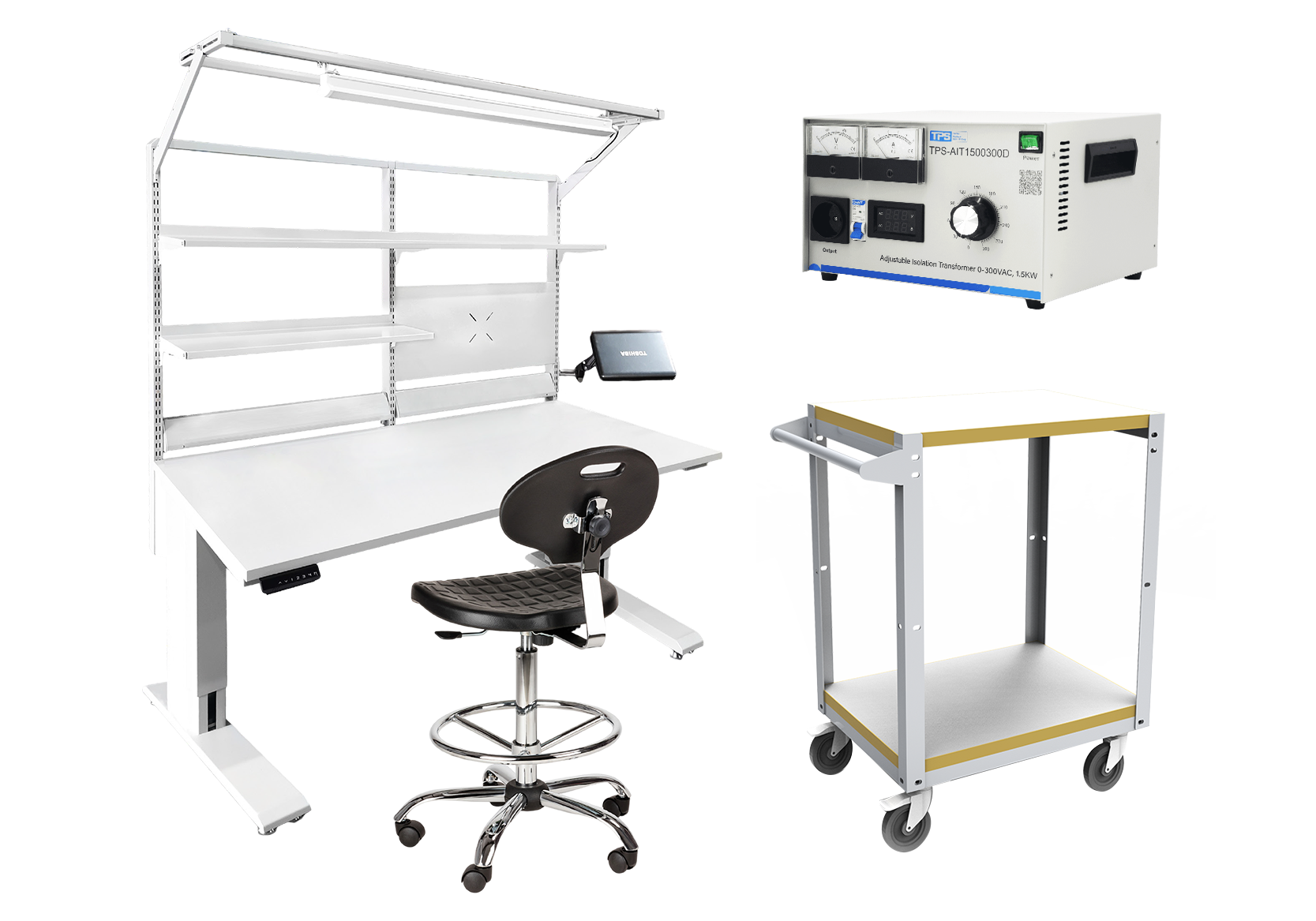
Choosing materials isn’t just about ticking boxes on a spec sheet—it’s about understanding how they behave in real-world conditions. Conductive solutions often rely on carbon or metal fillers to create permanent pathways, but the dispersion quality and base resin choice can make or break performance. Meanwhile, dissipative materials walk a finer line, needing enough resistivity to bleed charge slowly without turning into a short-circuit hazard. The real art lies in matching the material’s surface and volume resistivity to the specific threat level of electrostatic discharge your design faces.
Temperature swings and humidity shifts can quietly undermine even the most carefully selected compound. A material that measures perfectly in a lab might drift into unsafe territory on a dry winter day or in a warm, damp enclosure. That’s why testing under actual use environments—not just standard conditions—separates robust designs from fragile ones. Pay attention to filler migration and outgassing too, especially if the part sits near sensitive optics or high-voltage nodes where contamination isn’t an option.
Don’t forget that mechanical demands rarely take a back seat. A dissipative plastic that shatters under load or warps after a few thermal cycles isn’t much of a solution. Look for materials that balance conductivity with impact strength, dimensional stability, and long-term chemical resistance. Sometimes a hybrid approach—using a conductive core with a dissipative outer layer—gives you the best of both worlds, letting you tailor protection without compromising the part’s structural integrity.
Matching Gear to Your Workspace: Not All Environments Are Equal
The gear that works perfectly in a quiet home office might become a headache in a bustling co-working space. Noise-canceling headphones are a must in open-plan environments, but over-ear models can feel suffocating after hours; sometimes, a pair of well-tuned earbuds with ambient-aware modes offers more comfort without sacrificing focus. Your lighting setup also shifts—a portable LED panel beats a fixed monitor lamp when you’re constantly changing desks, and a lightweight laptop stand can spare you from hunching over in ad-hoc workspaces.
Outdoor or on-the-go work adds another layer of complexity. Sun glare and weather resistance become as important as processing power, so matte screen protectors and rugged cases aren’t just accessories—they’re essentials. Even something as simple as a mouse matters: a trackball performs better on uneven outdoor surfaces than a laser mouse, and it won’t drain your device’s battery searching for a signal.
Then there’s the overlooked influence of your immediate physical context—like humidity, temperature, and vibration. In a workshop or studio, dust-resistant keyboards with tactile switches survive longer, while in cold environments, gloves-compatible touchscreen pens keep your workflow from freezing up. The point isn’t to overcomplicate your kit, but to recognize that “one size fits all” rarely holds when your workspace shifts even slightly from the assumed norm.
Certification Claims You Can Trust – and the Ones You Shouldn’t
Not all certifications are created equal. Some come from respected, independent bodies that actually test products before slapping on a label. Others? They're little more than fancy stickers created by marketing teams. The trick lies in knowing which ones have real standards behind them—and which are just for show.
Take a look at the wording. Vague terms like "green" or "natural" often mean nothing without a recognizable third-party seal. But don't blindly trust logos either—some manufacturers invent their own official-looking badges. The most dependable certifications have detailed, publicly available criteria and undergo regular audits you can actually verify.
When in doubt, follow the money. Certifications funded by the very industries they're supposed to regulate tend to be less stringent. The most trustworthy ones often involve non-profits or government agencies that have no financial stake in passing a product. A quick online search can reveal whether a certification has ever been challenged or debunked by consumer watchdogs.
Budgeting for Protection: Why Cheap Options Often Cost More
Cutting corners on protective measures feels like a win for the budget—until the first disaster strikes. That budget security system might miss the one breach that costs a fortune to fix, and the bargain insurance policy could leave you exposed when you need it most. The initial savings fade fast once you’re facing the real-world consequences of skimpy coverage.
Think beyond the sticker price. A cheap option often lacks the robustness to handle unexpected scenarios, turning a manageable incident into a financial nightmare. Investing a bit more upfront in reliable protection isn’t just about safety; it’s about avoiding the devastating ripple effects that cheap fixes inevitably bring.
Real-World Validation: Stress Testing Vs. Spec Sheet Promises
A spec sheet can list all the right numbers—impressive grip thresholds, high tensile strength, or flawless load ratings—but those figures often come from controlled lab environments. On a rain‑soaked trail or a fully loaded highway, materials behave differently. Early in my testing days, I saw a tire with premium ratings hydroplane at speeds well below its promised limits, simply because the lab test didn’t account for uneven road camber and real‑world water depth. That moment taught me that paper promises are just the starting point.
Stress testing, on the other hand, is about breaking things on purpose in the wild. I don’t just follow ASTM protocols; I push gear past its advertised limits in conditions that mimic the worst you’ll actually face. For instance, when verifying a winch’s pull capacity, I’ll anchor it at awkward angles on a muddy slope rather than a clean, straight‑line bench test. The difference is stark: a spec sheet might claim a certain load rating, but a stress test reveals how that rating erodes when heat, vibration, and side loads pile up simultaneously.
What matters most isn't the number itself, but how long a product can hold that number when everything goes wrong. I’ve run brake pads through repeated alpine descents where temperatures soared past the listed maximum, only to find fade onset much earlier than the lab data suggested. This kind of validation strips away the marketing gloss and shows you what actually happens on the road or trail. In the end, I’d rather trust a component that survived a brutal, imperfect test than one that merely aced a clipboard checklist.
FAQ
ESD devices range from wrist straps and mats to flooring, garments, and ionizers. They work by either grounding you and your work surface or neutralizing static charges before they build up enough to damage sensitive components. Without them, even a touch you can't feel can fry an integrated circuit, leading to costly failures and product returns.
If you handle bare PCBs, chips, or assembled boards, the answer is almost always yes. A simple test: if you can generate a spark when touching a metal doorknob in dry weather, your environment has enough static to harm microelectronics. Also consider whether you're working with components rated for human body model sensitivity—many are vulnerable to discharges below 100V.
Look for a strap with a built-in 1-megohm safety resistor and a comfortable, adjustable band. The cord should be coiled to reduce tangling, and the grounding connection needs to be secure—either through a banana plug into a verified ground point or an alligator clip. Check the interval for periodic testing; a strap that can't be tested easily may give a false sense of security.
Not all mats are equal. Quality ESD mats have a two-layer structure: a static-dissipative top layer that slows charge flow and a conductive bottom layer that drains it to ground. Cheap mats may only have a single layer or degrade quickly under heat and chemicals. Certifications like ANSI/ESD S20.20 compliance indicate a mat has been properly tested.
While aluminum foil can provide a Faraday cage effect, it's not safe for everyday use—punctures create sharp edges, it can short out battery-powered devices, and it's not designed for prolonged contact. Anti-static bags (pink poly) are better for temporary storage, but they don't offer true shielding; for long-term or transport, use metalized shielding bags designed for ESD control.
For personal grounding devices like wrist straps, daily testing is recommended if you're handling ESDS items continuously. Work surface mats should be checked quarterly at minimum, but monthly checks are safer. Any time a device is dropped, bent, or exposed to harsh cleaners, test it immediately. Using a continuous monitor is an excellent way to catch failures in real time.
Static dissipative materials have resistance between 10^4 and 10^11 ohms, allowing a slow, safe release of electrostatic charge. Conductive materials are below 10^4 ohms and drain charge almost instantly, but they can also create a risk of a rapid discharge if not used correctly. For most bench top applications, static dissipative surfaces are preferred because they prevent sparking while still protecting components.
All ground points must tie back to the electrical ground of the building—never just clip to a random metal leg or pipe. Use a common-point ground system, connecting each item to a verified earth ground via a hub. Avoid daisy-chaining instruments; each should have its own path. If you're unsure about your outlet's ground, use a ground-fault circuit interrupter (GFCI) and verify with a tester.
Conclusion
Even a single, barely perceptible spark can destroy sensitive electronics, making static protection a non-negotiable part of any workspace where components are handled. The damage isn't always immediate or visible—latent failures can cause costly field returns and erode product reliability long after the fact. This is why understanding the real impact of electrostatic discharge (ESD) goes beyond fear of sparks; it's about grasping how tiny voltage surges disrupt nanoscale circuits. The right protective gear starts with material choices that balance conductivity and dissipation. Conductive materials drain charges fast but require careful grounding, while dissipative options offer a safer, controlled bleed-off. Matching these to your actual environment—whether a dry assembly line or a humid repair bench—is essential, as no single solution fits all settings.
When selecting ESD devices, certifications should signal trust, but the market is flooded with hollow claims that crumble under scrutiny. Look for products backed by rigorous third-party testing that mirrors real-world stress, not just ideal lab conditions. Spec sheets might promise grounding effectiveness, but only validation through repeated flexing, temperature swings, and prolonged use reveals true durability. Budgeting wisely means rejecting the false economy of cheap, uncertified items that fail prematurely and risk wrecking far more expensive boards. Instead, invest in gear proven to maintain consistent performance over time. Ultimately, reliable static protection hinges on pairing informed material selection with verified, application-specific validation—a strategy that safeguards both immediate yields and long-term reputation.
Contact Us
Contact Person: Lily
Email: [email protected]
Tel/WhatsApp: +49 (0) 2161 49526-0
Website: https://tps-elektronik.com/en/