

Offshore Aluminum Fishing Boats: The Key Benefits and What to Look For
2026-08-03
Few pursuits match the thrill of heading offshore, where the horizon stretches endlessly and the true giants of the deep await. Yet, the difference between a memorable trip and a grueling one often comes down to your boat. Among the many options, aluminum fishing boats stand out for their ruggedness, efficiency, and surprising comfort. But not all are created equal — from hull construction to layout, the details matter. In this guide, we’ll explore why offshore aluminum boats have become the top pick for serious anglers and what features demand your attention. At Allheart, we’ve seen firsthand how the right design transforms time on the water, so let’s dive into the key benefits and what to look for before making your choice.
Aluminum’s Lightweight Edge: Shallow Drafts and Easy Towing
When you’re navigating skinny water, every inch of draft counts. Aluminum boats naturally ride higher in the water column compared to their fiberglass counterparts, letting you sneak into back bays and shallow flats that others have to idle past. This shallow draft isn’t just a spec on a sheet—it’s the difference between reaching untouched fishing spots and watching them from a distance. Because aluminum hulls can be built with less material while maintaining strength, they displace less water without sacrificing stability.
The weight savings also transform the towing experience. A typical aluminum boat can be hundreds of pounds lighter than a similarly sized fiberglass model, which means you don’t need a heavy-duty truck to get on the road. Even a mid-size SUV or crossover handles the load comfortably, making spontaneous trips to a new lake less of a logistics headache. At the ramp, that lighter footprint translates to easier launching and retrieval—no more white-knuckle moments as you wrestle a heavy rig in a crosswind.
Beyond the practical perks, there’s a genuine freedom that comes with a boat that’s easy to move and nimble on the water. You burn less fuel towing it there, and once you’re floating, the hull’s responsiveness makes dodging stumps and sandbars almost instinctive. It’s the kind of advantage you don’t think about until you’re gliding over a rocky flat, watching a heavier boat struggle in the same channel. That lightweight edge adds up to more time fishing and less time fighting the boat.
Unmatched Durability: Why These Boats Handle the Rough Stuff
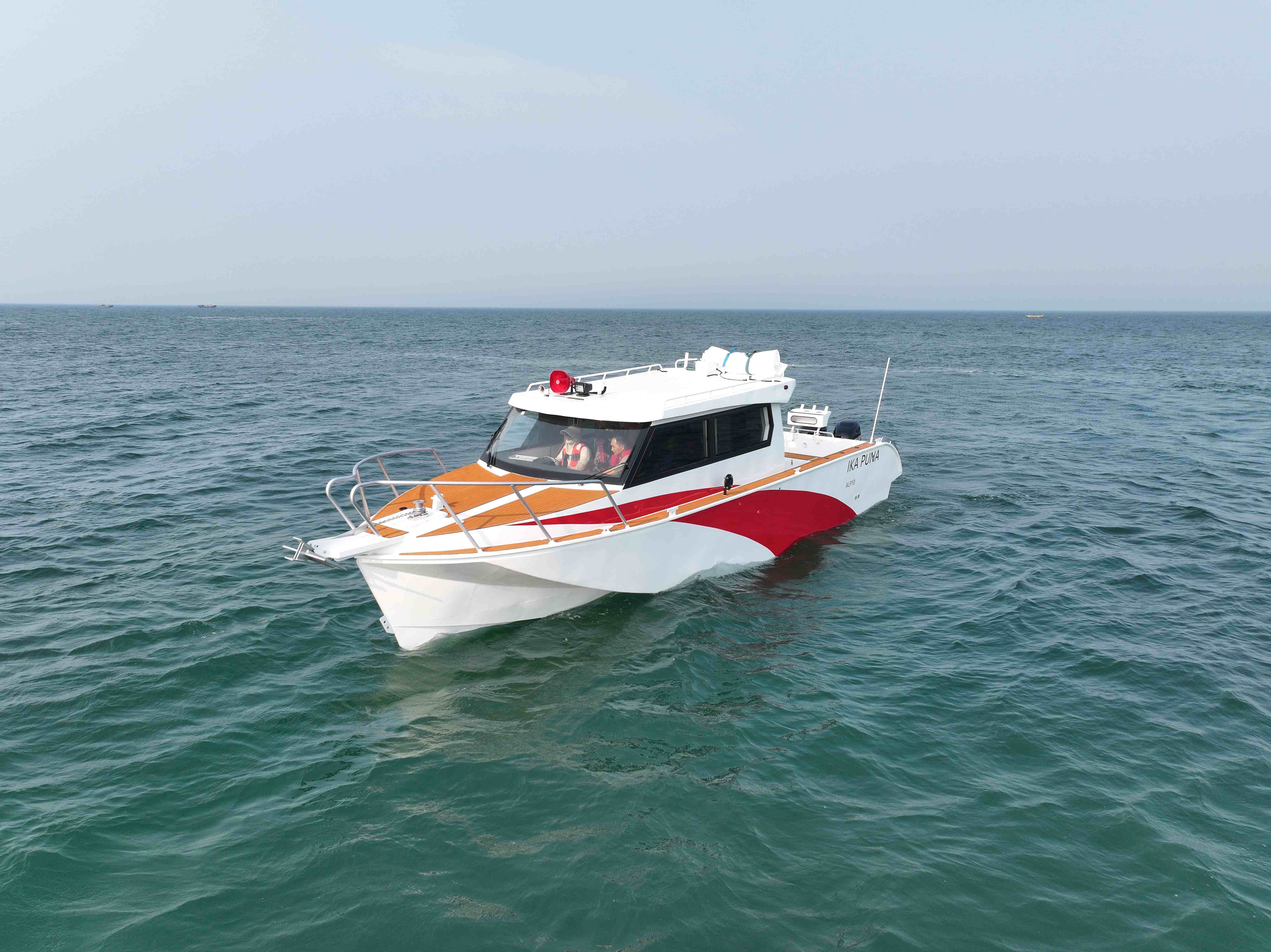
Every weld, every rivet, and every inch of marine-grade aluminum is there for a reason. These boats are built with a monocoque-style hull that distributes stress across the entire frame instead of relying on a handful of weak points. It’s the kind of over-engineering you’ll appreciate when you misjudge a rocky shoal or take a wave broadside that would crack a lesser hull clean open.
The deck hardware is another quiet flex. Stainless steel cleats, oversized hinges, and reinforced gunwales don’t just look tough—they shrug off constant pounding without loosening or corroding. Even the wiring is sealed against salt and spray, because replacing a bilge pump at sea isn’t a memory anyone wants. When a boat maker bothers to protect the small things, you know the big things are handled.
Real durability isn’t just about surviving a single storm; it’s about getting home after years of them. That’s why these boats use vibration-dampening stringers and thick rub rails that absorb dock rash like a bumper. Owners who’ve logged thousands of offshore hours will tell you the same thing: the boat ages, but it doesn’t loosen up. The hull stays tight, the hatches stay dry, and the confidence stays high, even when the chart shows nothing but trouble ahead.
Built for Salt: How Aluminum Fights Corrosion
Aluminum's natural defense against saltwater environments lies in its ability to form a thin, protective oxide layer almost instantly when exposed to air. This layer acts as a barrier, shielding the metal beneath from corrosive elements. In saltwater, where chloride ions aggressively attack most metals, aluminum's oxide film remains stable and self-repairing, giving it a significant edge in durability.
The secret to this resilience is the oxide's strong bond with the aluminum surface, which prevents deeper penetration of salt and moisture. Unlike steel, which relies on coatings that can fail, aluminum's protection is inherent to the material itself. Even when scratched, the exposed area rapidly re-oxidizes, maintaining continuous resistance without the need for external treatments.
Practical applications see aluminum thriving in marine and coastal settings, from boat hulls to offshore platforms. Its lightweight nature combined with corrosion resistance reduces maintenance costs and extends service life. Engineers often choose specific aluminum alloys, such as those in the 5000 series, which are optimized for seawater exposure, ensuring structures stay sound even after decades of salt-laden winds and waves.
Fuel Efficiency That Keeps Your Wallet and the Environment Happy
When you fill up the tank less often, the savings become impossible to ignore. Modern fuel-efficient vehicles squeeze more miles out of every drop, which means fewer stops at the pump and more cash staying in your pocket where it belongs.
Fewer emissions drift into the air when engines burn fuel intelligently. It's a quieter, cleaner way to get around—reducing your carbon footprint without demanding a radical change to your daily routine. Every mile traveled with less fuel is a quiet nod to clearer skies.
Pairing lower running costs with a gentler environmental impact turns every drive into a smarter choice. It's not just about the numbers on the dashboard; it's about feeling good every time you turn the key, knowing you're getting the best of both worlds.
Custom Layouts: From Rod Storage to Live Wells
Every angler has a different rhythm on the water, and a custom layout lets you tune the boat to your own style. Rod storage, for instance, isn’t just about stuffing tubes wherever there’s space. Some builders recess lockable racks into the gunwales so rods are secure but instantly accessible, while others design under-deck compartments with foam cradles that keep expensive graphite from knocking together in a chop. The goal is to have your gear where you need it without cluttering the casting deck—because a clean workspace means fewer tangles when a school erupts.
Live wells are another area where customization pays off. Off-the-shelf designs might simply circulate water, but a tailor-made system can maintain precise oxygen levels, adjust flow for different bait species, and even chill the water slightly in hot weather. Placement matters too: moving the well forward can improve running attitude, while a midship location keeps pitch and roll minimal for delicate bait like shiners. Some anglers want separate wells for different baits, others demand huge capacity for tournament redfish. The plumbing and insulation get integrated into the hull during the build, not retrofitted later, so the boat doesn’t just carry bait—it keeps it lively all day long.
Beyond rods and bait, a custom layout strings together the small details that make a day effortless. You might see a flip-up rigging station that disappears into the gunwale, a tackle locker that faces the cockpit for one-handed access while you’re fighting a fish, or a coffin box lid that doubles as a casting platform. These aren’t just add-ons; they’re baked into the deck plan from the start. When you walk the floor with the builder and sketch out how you actually fish—where you stand, where you cast, where you land—the result is a boat that feels like an extension of your instincts rather than a generic hull.
The Art of the Weld: What to Look for in Build Quality
A truly skilled weld isn't just a structural necessity—it’s a quiet testament to craftsmanship. You can spot quality almost immediately if you know where to look. The bead should flow evenly, with consistent width and minimal spatter, telling you the welder maintained a steady hand and the right heat. Discoloration is normal, but excessive scorching or erratic patterns often reveal haste or poor technique. Run a finger gently along the seam (when cool) – a smooth, almost polished surface means the filler metal fused cleanly with the base, creating a bond that’s as durable as it is tidy.
Good penetration is the soul of a strong weld, but it’s rarely obvious at a glance. Instead, look for subtle clues: the edges of the joint should melt seamlessly into the surrounding metal, without deep undercuts or gaps that could become stress points. A convex or overly lumpy bead can indicate too little heat, while a concave, sunken look suggests over-penetration or burnout. The best fabricators aim for a reinforcement that rises just slightly above the parent material—this suggests full fusion without weakening the joint’s thickness. Listen to what the weld doesn’t show; consistently clean starts and stops, free of cracks or pinholes, are marks of someone who took their time.
There’s also a rhythm to quality welding that emerges only through practice. In pulse MIG or TIG work, you might notice a faint, stacked-coin pattern—not just decoration, but evidence of deliberate, timed deposits that reduce distortion. Beyond aesthetics, the surrounding metal should tell a story of care: minimal warping, no unnecessary grinding marks, and a paint or coating finish that hasn’t been burned away far from the seam. When you start seeing welds as signatures rather than mere joins, you’ll naturally gravitate toward builds where every inch of fusion reflects patience and pride. Trust your eyes—and if you can, find the faint blue or gold hues of a properly shielded bead, which confirm the weld was protected from contamination while it cooled.
FAQ
Aluminum boats have gained a strong reputation among offshore anglers due to their exceptional strength-to-weight ratio, which allows for a smoother ride in choppy conditions without sacrificing fuel efficiency. Unlike fiberglass, they shrug off impacts with submerged obstacles that would cause serious damage to other hulls, giving you peace of mind when you're miles from shore.
Absolutely—modern aluminum boats are built with marine-grade alloys and advanced coatings that resist corrosion far better than older models. Routine rinsing with fresh water and proper anodes keep them in great shape for decades. Many commercial fishing boats rely on aluminum for exactly this reason; it stands up to constant saltwater exposure with minimal fuss.
A lighter hull responds more readily to throttle and trim adjustments, letting you fine-tune your ride to match wave patterns. That nimbleness means you can dodge breaking swells more effectively and maintain a comfortable pace rather than plowing through. It also translates to better stability at trolling speeds because there's less mass rocking back and forth.
Look for a deep-V hull with a sharp entry and generous deadrise—this cuts through waves instead of slamming over them. Reverse chines and spray rails are a big plus, keeping the deck dry and adding stability when you're drifting or maneuvering around a hooked fish. A self-bailing deck is non-negotiable for safety when you're taking water over the bow.
They definitely have an edge in maintenance. There's no gelcoat to fade or crack, no need for waxing, and minor dings can often be hammered out or welded by a local shop without special composites work. The simplicity of the material means you spend less time on upkeep and more time fishing.
Beyond standard gear, ensure the boat has positive flotation—many aluminum boats are inherently unsinkable when built with foam-filled compartments. Check that all hardware is marine-grade stainless steel to avoid galvanic corrosion. A sturdy, raised gunwale height is also crucial for keeping you aboard when the ocean gets rowdy.
Aluminum boats tend to retain value remarkably well because the hull doesn't deteriorate like fiberglass, and demand remains steady among serious fishermen. A well-cared-for aluminum boat with a solid reputation can often sell for close to its original price even after several years of heavy use.
Conclusion
Offshore aluminum fishing boats have earned a loyal following among anglers who prize agility and resilience. Their lightweight construction translates into a shallow draft, letting you sneak into skinny backwaters and beach the boat without worry, while towing becomes a breeze behind a standard pickup. This same lightness, however, doesn’t sacrifice toughness: a well-built aluminum hull can shrug off collisions with submerged rocks or docks that would crack fiberglass. The secret lies in the metal’s natural flex and high tensile strength, absorbing impacts rather than fracturing. Plus, aluminum’s inherent corrosion resistance makes it a natural companion for saltwater environments, forming a protective oxide layer that halts rust, so you spend less time scrubbing and more time chasing that trophy catch.
Beyond the hull, the real charm of these boats is how they can be tailored to your exact fishing style. From integrated rod lockers and cavernous live wells to modular seating and tackle stations, the customization options are nearly endless because aluminum’s workability allows for precise fabrication without compromising structural integrity. When evaluating a boat, pay keen attention to the welding—smooth, even beads with minimal discoloration signal a builder who understands heat control and joint preparation, which directly impacts longevity and hull integrity. A well-designed aluminum offshore rig also sips fuel gently, thanks to reduced weight and efficient hull shapes, keeping both your operating costs down and your environmental footprint smaller. In the end, it’s this blend of practical durability, personalized layout, and quiet efficiency that makes a top-tier aluminum boat feel less like a purchase and more like a trusted partner on the water.
Contact Us
Contact Person: Benny Hu
Email: [email protected]
Tel/WhatsApp: +8618354225697
Website: https://www.allheartmarine.com/