

OEM Stainless Steel Casting Benefits and Best Practices
2026-11-16
Every OEM stainless steel casting project starts with a simple question: will the part survive real-world stress without driving up costs? The answer depends on more than just material choice—it hinges on mold design, pouring control, and post-casting treatment. At Zhaoyuqi, we approach each casting as a production problem to solve, not a generic part to replicate. Below, we share the concrete benefits and field-tested best practices that help you avoid porosity, warpage, and supply chain surprises.
Cutting Machining Costs with Near-Net Shape Stainless Castings
Starting from bar stock or a rough forging means paying to remove metal that doesn't need to be there. Near-net shape stainless castings flip that equation: the part arrives with its final geometry almost fully formed, so only critical surfaces, bores, and tight-tolerance features need a light finishing pass. On a complex bracket or housing, this can cut machining time by half or more, which directly lowers cost per piece.
The savings don't stop at cycle time. Less material removal means less wear on inserts and end mills, fewer tool changes, and shorter setup runs. It also reduces the volume of chips that have to be collected, recycled, or disposed of—a hidden cost that adds up quickly in high-volume production. Because the casting process handles complex internal passages and undercuts, you can often eliminate secondary operations like drilling, tapping, or milling deep pockets entirely.
Another often-overlooked gain comes from part consolidation. Instead of machining several components and bolting or welding them together, a single stainless casting can combine those features into one piece. That removes assembly labor, fixture costs, and the tolerance stack-up between separate parts. When designers and foundry engineers collaborate early, they can shift stock allowance to only the areas that need it—leaving minimal work for the CNC department and slashing total manufacturing cost.
How Draft Angles and Radii Make or Break a Stainless Casting Design
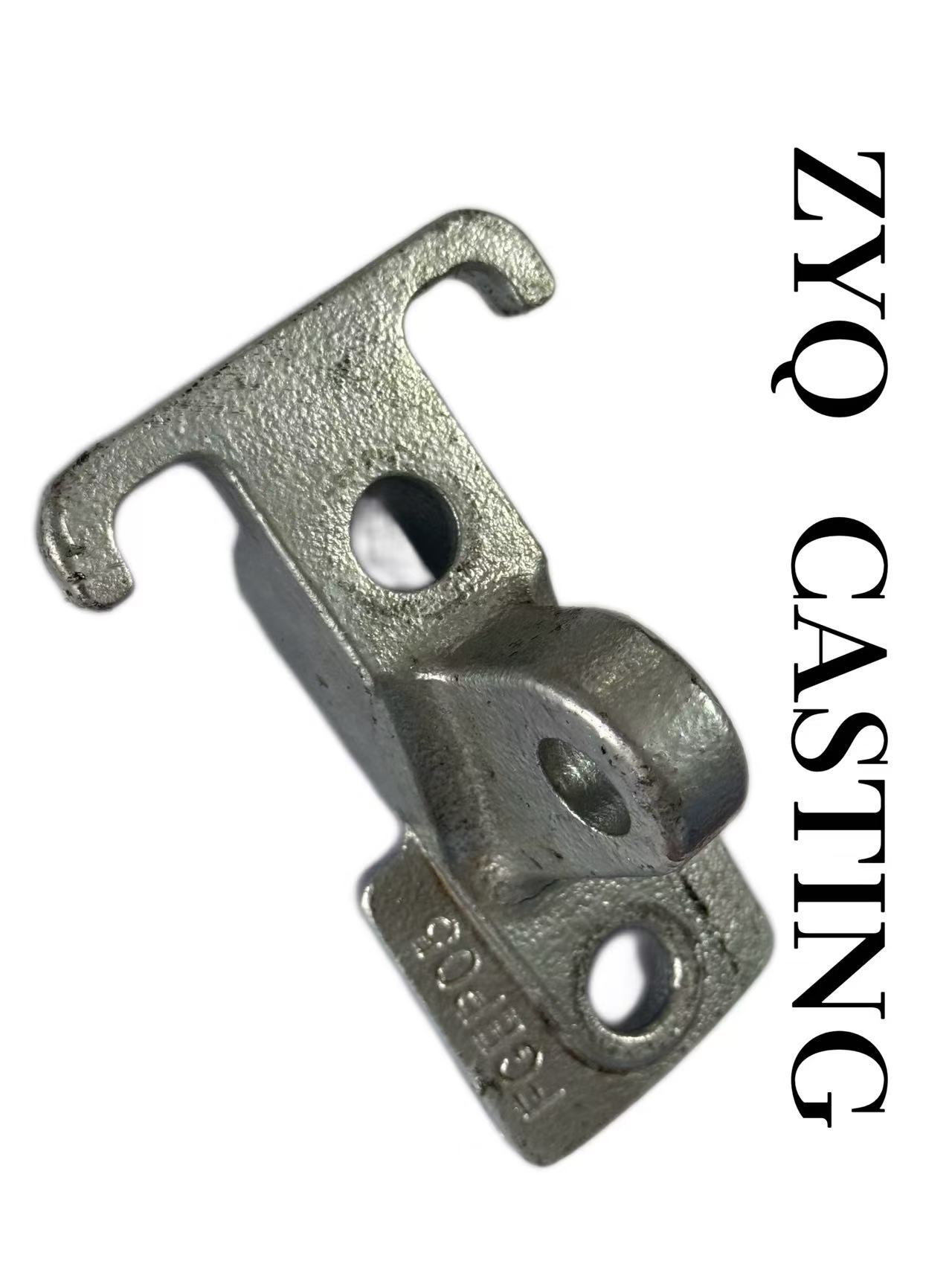
Draft angles often get treated as a minor detail, but with stainless steel they carry real weight. Stainless shrinks more than plain carbon steel during solidification, and it grabs onto mold walls with surprising tenacity. If you spec a draft angle under one degree on a deep pocket or a tall rib, the part may tear before it releases cleanly. The result isn't just a stuck casting—it's surface scarring, bent features, and a tool that needs rework. On the flip side, going too steep adds unnecessary mass that has to be machined away later, driving up cost and cycle time. The sweet spot usually sits between one and three degrees, but it shifts based on wall depth, surface finish, and whether you're using a permanent mold or an investment shell.
Radii are just as unforgiving. A sharp internal corner in a stainless casting acts like a notch, concentrating stress exactly where the metal is weakest during cooling. Thermal gradients pull at that edge, and before you know it, a hairline crack appears—often invisible until machining or pressure testing exposes it. Generous fillets don't just reduce cracking risk; they let the molten metal flow around corners without turbulence, which means fewer gas pockets and cold shuts. External corners benefit too, since a small radius prevents chipping during handling and eases the transition from as-cast to machined surfaces. The old rule about matching the fillet to roughly half the adjacent wall thickness holds up well, but even a modest radius is infinitely better than a dead-sharp edge. When draft and radii are designed together rather than patched on later, the part ejects predictably, fills completely, and survives the stresses that stainless inherently brings.
Beyond 304 and 316: Choosing Alloys for Harsh Environments
Many engineers default to 304 and 316 stainless steels for corrosive service, but these grades fall short in harsh environments containing high chlorides, strong acids, or elevated temperatures. The pitting resistance equivalent number (PREN) is a useful starting point: 316 typically sits around 24, while environments with seawater or acidic brines often demand values above 40. Alloys such as super duplex 2507 (PREN >40) or super austenitic 254 SMO (PREN ~43) offer substantially better resistance to pitting and crevice corrosion without the cost of full nickel-based alloys.
For chloride stress corrosion cracking, a common failure mode in hot chloride-bearing streams, ferritic and duplex stainless steels perform far better than austenitic 304/316. Duplex grades like 2205 combine high strength with improved stress corrosion cracking resistance, making them attractive for heat exchangers and pressure vessels. In more aggressive acid environments, nickel alloys such as Alloy 625 or Hastelloy C-276 provide reliable service, though at significantly higher material cost. Selecting among these options requires balancing corrosion resistance, mechanical properties, fabricability, and lifecycle economics—not simply upgrading to the next standard grade.
Temperature extremes also push beyond 304/316. At sustained temperatures above about 600°C, 316 can suffer from sigma phase embrittlement and reduced creep strength. Heat-resistant alloys like 310S or nickel-chromium grades (e.g., Incoloy 800H) maintain structural integrity in furnaces and exhaust systems. Meanwhile, titanium and zirconium find niche use in oxidizing chloride solutions where even high-alloy stainless steels may fail. A thorough alloy selection process starts with a detailed analysis of the actual corrosive species, concentration, temperature, and pH, often validated through corrosion coupons or electrochemical testing.
Achieving Tight Tolerances Without Secondary Machining
Achieving tight tolerances without secondary machining demands a shift in how we approach the initial forming process. Rather than treating the primary operation as a rough approximation, leading manufacturers now engineer the tooling and process parameters to hold critical dimensions from the very first hit. For example, in fineblanking, the use of triple-action presses and precision-ground dies allows parts to come off the press with hole-to-edge positions accurate to within ±0.05 mm, eliminating the need for drilling or reaming.
Metal injection molding (MIM) offers another path to near-net shape parts with exceptional dimensional control. By blending fine metal powders with a thermoplastic binder, then debinding and sintering under tightly controlled atmospheres, components can achieve tolerances of ±0.3% of the nominal dimension. This is particularly valuable for complex geometries like internal threads or undercuts, where traditional machining would require multiple setups and add significant cost.
Additive manufacturing has also matured beyond prototyping, with binder jetting and laser powder bed fusion now capable of holding ±0.1 mm on small features without any post-machining. The key lies in compensating for thermal distortion during the build through simulation-driven pre-deformation of the CAD model. When the part is printed, the predicted shrinkage brings it into specification on the first attempt—no rework, no hand finishing.
In-Process Quality Checks That Prevent Porosity and Inclusions
Porosity and inclusions don't just weaken a part—they create failure points that can pass undetected until the component is in service. Catching them after casting or welding is often too late, which is why the most effective prevention happens while the material is still being processed. In-process checks interrupt the cycle only long enough to verify that gas evolution, shielding, and filler feed are all behaving as expected. A deviation caught at this stage can be corrected before the next layer or mold cavity is filled, saving both the part and the production schedule.
Several non-destructive techniques are suited to real-time monitoring without stopping the line entirely. Ultrasonic testing can be applied during solidification or immediately after in automated welding cells, mapping internal discontinuities as they form. Radiographic inspection, though often thought of as a final check, is increasingly integrated into the process using low-dose digital detectors that flag density variations in near real time. For castings, thermal imaging of the cooling part can reveal areas where shrinkage porosity is developing, allowing the operator to adjust riser placement or cooling rates before the next pour.
The value of these checks lies in how they link back to process parameters. When a cluster of micro-porosity shows up at a certain weld pass, the data can be traced to travel speed, arc voltage, or shielding gas flow—and adjusted immediately. Similarly, inclusions in a casting often correlate with slag carryover or refractory erosion, so an in-process check that identifies them early points directly to furnace or ladle maintenance. This closed loop between detection and correction is what separates a robust quality system from one that merely documents defects after they've already become part of the product.
Working with a Foundry That Speaks Your OEM Language
When a foundry already speaks your OEM's language, the usual back-and-forth about spec interpretation quietly disappears. Terms like PPAP, APQP, and DFM aren't met with blank stares; they're part of daily conversation. That means your engineering notes, drawing annotations, and quality gates get understood the first time, not after three clarification calls.
It also changes how problems get solved. A foundry that lives in the same terminology can point out that a certain draft angle will complicate your customer's fixture design, or that a surface callout needs to match the OEM's incoming inspection checklist. Those small catches happen early, when they cost hours instead of weeks.
Over time, this kind of alignment makes the foundry feel less like a vendor and more like an extension of your own team. They start anticipating what your OEM will push back on and bring alternatives before you ask. That's the difference between a supplier who makes castings and a partner who keeps your launch on schedule.
FAQ
Casting opens up shapes that would be impossible or wasteful to machine from solid stock. Stainless steel adds corrosion resistance and strength, so you get complex geometries with material properties that hold up in harsh environments. For OEM runs, it often reduces part count by consolidating assemblies into a single cast piece.
304 and 316 are the workhorses, especially when corrosion resistance matters. 17-4 PH is common for parts that need higher strength and can be heat treated. Duplex grades like 2205 appear when chlorides or stress corrosion cracking are concerns. The right grade depends on the service environment, mechanical loads, and whether the part gets welded later.
The wax pattern process holds tighter tolerances because the ceramic shell forms directly around a precision-made pattern. You can typically hold ±0.005 inch per inch or better, which means less finish machining and fewer scrapped parts. That accuracy is valuable when an OEM needs near-net shapes with fine details like thin fins or internal passages.
As-cast surfaces from investment casting usually land around 125 RMS or better. If the application demands smoother surfaces, secondary operations like electropolishing, glass bead blasting, or machining can bring it down further. The finish choice also affects corrosion performance, since smoother surfaces tend to resist pitting and product buildup.
Wall thickness should stay as uniform as possible to avoid sinks and distortion. Radii at internal corners reduce stress risers and cracking during solidification. Draft angles help with pattern removal, and the location of gates and risers needs to be planned so they don't create shrink porosity in critical load paths. A quick design review with the foundry early on saves expensive revisions later.
Melt quality is the starting point—using clean charge materials and proper deoxidation. Gating systems are designed to fill the mold smoothly without turbulence that traps air or slag. Vacuum or controlled-atmosphere melting can be used for aerospace or medical parts where inclusions are unacceptable. Radiographic and dye penetrant testing then confirm the casting is sound.
If the part has complex internal features, irregular outer contours, or would waste too much material in chips, casting usually wins. It also makes sense when you need a specific alloy that is expensive or difficult to machine. For medium to high volumes, the lower material waste and reduced machining time offset the tooling cost.
Chemical analysis of each heat, tensile testing of test bars, and dimensional layout on first articles are standard. Depending on criticality, you may add radiographic or ultrasonic testing for internal soundness, dye penetrant inspection for surface cracks, and corrosion testing when the part serves in aggressive media. Keeping records tied to heat numbers allows traceability if a field issue ever arises.
Conclusion
For OEMs, the real benefit of stainless steel casting isn't just material—it's eliminating machining hours. A well-designed near-net shape casting can arrive within a couple millimeters of final size, so only sealing faces or bearing bores need a light cut. That only happens when draft angles and radii are treated as design requirements, not afterthoughts. A one-degree change in draft or a small fillet radius can be the difference between a clean pull from the mold and a pattern stuck with scrap. Alloy selection also deserves more thought than defaulting to 304 or 316. If the part sees chlorides, high heat, or sour service, duplex alloys, precipitation-hardening grades, or super-austenitic stainless often hold up better for only a modest increase in raw material cost. Choosing based on the actual corrosion mechanism—rather than a generic 'stainless' spec—prevents field failures.
Close dimensional control doesn't have to mean secondary machining. Foundries that control mold temperature, cooling rate, and pattern wear can hold surprisingly tight tolerances straight from the casting process. What matters more is catching defects before they reach your assembly line. In-process radiography, ultrasonic testing, or simple visual checks at the right steps filter out porosity and inclusions early, saving you from discovering a bad casting after it's already machined. And don't underestimate the value of working with a foundry that asks engineering questions—about load direction, mating parts, or operating environment—instead of just accepting a PDF. That kind of collaboration shortens lead times, reduces concessions, and usually ends with a casting that fits the first time. These practices separate suppliers who understand OEM pressures from those who simply pour metal.
Contact Us
Contact Person: Nico Yin
Email: [email protected]
Tel/WhatsApp: 8618561567088
Website: https://www.ductileironparts.com/