

ODM Flap Gate Valve Explained: Key Features, Benefits, and Applications
2026-07-16
Discover how ODM flap gate valves deliver reliable backflow prevention and flow control in demanding industrial systems. With customizable designs, robust sealing, and low-maintenance operation, these valves solve critical challenges in water treatment, wastewater, and marine applications. THT brings decades of expertise to ODM manufacturing, ensuring every valve meets your exact specifications. Let’s explore the key features, real-world benefits, and common use cases that set them apart.
The Core Mechanics Behind ODM Flap Gate Valve Operation
At the heart of every ODM flap gate valve lies a straightforward yet highly effective principle: a hinged disc, or flap, that permits fluid flow in one direction while automatically sealing against reverse flow. Unlike traditional swing check valves, ODM designs often optimize the flap's weight and geometry to reduce cracking pressure and improve dynamic response. When fluid moves in the intended direction, it pushes the flap open, rotating it around a pivot point located above the centerline of the bore. This off-center pivot generates a natural closing torque as flow diminishes, ensuring the disc seats promptly and tightly once forward velocity drops to zero. The result is a valve that combines low head loss with dependable backflow prevention, even under fluctuating flow conditions.
What truly sets ODM flap gate valves apart is the attention to the sealing interface and the pivot mechanism. The sealing face is often machined to accommodate resilient elastomer inserts or precise metal-to-metal contact, depending on the application. A carefully engineered seat angle, typically inclined, helps the flap shed debris and prevents wedging of solid particles that could otherwise compromise the seal. Meanwhile, the pivot design frequently incorporates bushings or bearings that isolate the shaft from the process media, minimizing corrosion and wear. Some variants feature an external counterweight or spring-assist, allowing the cracking pressure to be fine-tuned beyond what geometry alone can provide. This level of customization makes ODM valves particularly suitable for demanding municipal and industrial systems where backflow could cause contamination or equipment damage.
Long-term reliability in ODM flap gate valves stems from their ability to self-clean and their minimal reliance on external actuation. During each opening cycle, the flap’s movement helps scour the seat area, reducing the risk of buildup that plagues many other check valve types. The absence of complex internal linkages or multiple moving parts, aside from the disc itself, cuts down on potential failure points. In many installations, these valves operate for decades with only routine inspection of the hinge pin and seal. When maintenance is required, the design often allows in-line replacement of the seat or disc without completely dismantling the pipeline, a practical advantage that engineers value in large-diameter wastewater and drainage applications.
Material Choices That Define Durability and Chemical Resistance
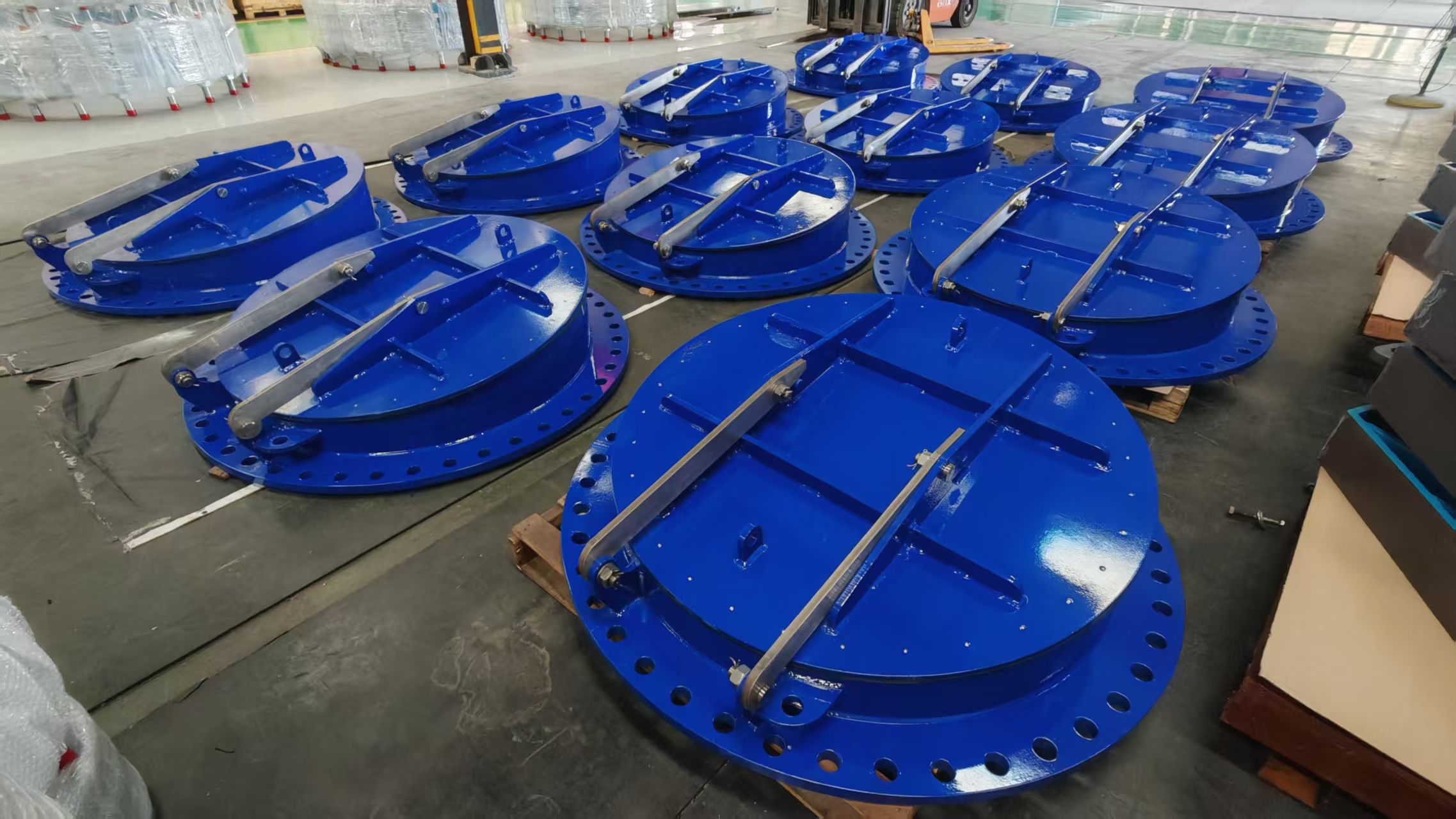
Selecting the right material is the foundation of both long-term durability and reliable chemical resistance. In demanding environments—whether in industrial processing equipment, chemical storage, or laboratory components—it is not merely about choosing a strong substance. It is about understanding how each candidate interacts with aggressive media, thermal cycling, and mechanical stress simultaneously. For instance, fluoropolymers like PTFE and PFA excel in nearly universal chemical inertness, resisting even highly corrosive acids and solvents at elevated temperatures. Yet they may be unsuitable where structural rigidity is critical. The real skill lies in balancing these trade-offs, often by considering composite materials or specialized alloys that offer a synergy of properties rather than a single standout feature.
The concept of durability extends beyond simple tensile strength. It encompasses resistance to wear, fatigue, and environmental stress cracking—phenomena that can quietly undermine a component over time. Engineers are moving beyond generic stainless steels toward higher-performance grades, such as super duplex or nickel-based alloys, when faced with chloride-rich environments that would quickly pit standard materials. Conversely, in manufacturing settings where frequent cleaning with aggressive agents is required, even minor material selection errors can lead to rapid degradation and contamination risks. This has driven an increased focus on testing materials under conditions that closely mimic real-world exposure, rather than relying solely on standardized compatibility charts. Accelerated life testing and in-situ monitoring now guide decisions, ensuring that the chosen material doesn’t just survive but performs predictably over its intended lifespan.
A less obvious but equally crucial aspect is how material selection intersects with design complexity. Even the most chemically resistant material can fail if the geometry promotes crevice corrosion or if thermal expansion mismatches cause mechanical loosening. This is where practical experience often overrides textbook data: an engineer who has witnessed repeated gasket failures in a flange connection might opt for a material with slightly lower chemical resistance but far better creep relaxation properties, eliminating the weak point. Additionally, innovations like additive manufacturing are reshaping possibilities, allowing for gradient materials or internal coatings that tailor resistance precisely where needed without compromising bulk properties. Ultimately, defining durability and chemical resistance is not a one-time material choice but an evolving strategy that integrates material science, processing methods, and operational realities.
Seal Integrity: How Design Prevents Leakage in Critical Systems
In systems where failure isn't an option—think deep-sea valves or fuel injection assemblies—the battle against leakage starts long before a seal ever meets a flange. Material selection is the quiet foundation. Engineers don't just grab an off-the-shelf O-ring; they match elastomers to the exact chemical cocktail they'll face, from aggressive hydraulic fluids to cryogenic temperatures that turn ordinary rubber brittle. A fluorocarbon might excel in one scenario, while a perfluoroelastomer becomes the only survivor in another. The wrong choice doesn't just risk a drip—it can cascade into contamination, pressure loss, or catastrophic downtime that ripples across entire operations.
Beyond the material itself, the shape and finish of mating surfaces dictate whether a seal holds or weeps. A scratch invisible to the naked eye can become a leak path under high pressure, so surface roughness tolerances are obsessive—often measured in microinches. Gland design is equally deliberate: too tight and the seal extrudes; too loose and it lacks the squeeze to energize properly. In dynamic applications, a lip seal's profile might be tweaked to pump a micro-film of fluid back toward the source, turning motion into a self-replenishing barrier. Even static seals rely on controlled compression set and precise groove geometry to maintain that critical interfacial stress over years of thermal cycling.
Dynamic systems bring their own demons. A piston seal in a hydraulic actuator doesn't just sit there—it slides, twists, and absorbs pressure spikes that can deform a lesser design. Here, backup rings prevent extrusion, while specialized coatings reduce friction without sacrificing the tight contact needed to seal. Testing regimes mirror real-world abuse: seals are cycled through millions of strokes, dunked in abrasive slurries, and subjected to sudden temperature shocks. Data from these trials feeds back into iterative refinements, so that by the time a seal reaches a fuel system or a surgical robot, its integrity isn't a hope—it's a certainty carved out of material science, geometry, and relentless validation.
Advantages Over Conventional Check Valves: A Practical Perspective
Switching from a standard check valve to a more thoughtfully designed alternative can sidestep a host of real-world headaches. Traditional swing or lift checks often slam shut, creating water hammer that rattles pipes and shortens component life. In contrast, a valve with a soft-close mechanism or an assisted sealing design practically eliminates this shock, protecting the whole system without needing extra dampeners or complicated maintenance routines.
There’s also a noticeable difference in how these valves handle debris and low-flow conditions. Conventional checks can stick open if grit gets lodged in the seat, or they may chatter and leak when flow is barely trickling. A more advanced design, with self-cleaning geometry or a flexible seal that compensates for tiny particles, keeps working reliably over time. The result is less downtime spent cleaning or replacing parts, and fewer callbacks that eat into your schedule and budget.
Typical Deployment: Where ODM Flap Gate Valves Excel
In wastewater treatment plants, ODM flap gate valves are frequently installed on discharge lines leading to open waters or holding lagoons. Their simple, gravity-assisted closure prevents backflow from the receiving body, even during pump stoppages or power failures. Because they rely solely on water pressure and a flexible sealing disc, these valves excel in setups where electrical actuation would be impractical or where debris-laden fluid demands a self-scouring design that resists clogging.
Stormwater and flood control systems benefit immensely from the fail-safe nature of these valves. Positioned at outfalls, they allow unimpeded outflow during normal conditions but snap shut when external water levels rise, blocking reverse surges that could inundate low-lying areas. The ODM approach often incorporates corrosion-resistant materials and tailored hinge geometries, making each unit ideal for specific coastal or riverine environments where standardized products fall short.
Industrial process lines also showcase their versatility—whether in cooling water returns, chemical plant drainage, or food processing effluent. What sets ODM flap gate valves apart in these settings is the ability to fine-tune the opening pressure and seal material to match the process fluid’s viscosity and temperature. This minimizes unwanted vibration and ensures a tight seal, cutting maintenance intervals and extending service life far beyond what off-the-shelf alternatives deliver.
Maintenance Simplified: Keeping Valves in Peak Condition
A valve that’s ignored will eventually make itself heard—usually at the worst possible moment. Instead of waiting for a leak or a stuck handle, build a simple routine: a quick visual check, a listen for odd hissing, and a feel for smooth operation. Five minutes a week can head off hours of downtime.
Lubrication and cleaning don’t need to be chores. A light coat of the right grease on the stem and a wipe-down of the exterior keeps corrosion at bay and moving parts happy. For valves in dusty or wet spots, a little extra attention after storms or heavy use pays off big.
Smart maintenance also means knowing when to swap out parts before they fail. Keep a log of valve performance—tightness, cycles, any quirks—and replace seals or packing at the first sign of degradation. It’s the difference between planned upkeep and unplanned chaos.
FAQ
An ODM flap gate valve is essentially a check valve that uses a hinged disc or flap to permit flow in one direction and prevent backflow. Unlike many standard check valves, ODM variants are tailored to specific client designs, meaning dimensions, materials, and sealing mechanisms can be customized extensively. This makes them especially useful in non-standard pipelines where off-the-shelf solutions fall short.
The primary reason is flexibility. ODM valves are manufactured based on detailed specifications provided by the buyer, so you get exact flange ratings, face-to-face dimensions, and materials that match your system’s requirements. This eliminates the need for adapters or compromises, often improving sealing reliability and reducing leakage risks in demanding applications like wastewater treatment or chemical processing.
Cast iron, ductile iron, stainless steel, and various bronzes are frequently used. The choice depends on fluid compatibility and pressure needs. For example, stainless steel handles corrosive media well, while ductile iron offers strength without excessive cost. Elastomer seals like EPDM or NBR can be specified for tight shutoff, and coatings like epoxy can add durability in abrasive or corrosive environments.
While flap gate valves can work in horizontal or vertical positions, proper orientation is critical. In horizontal lines, the flap must be on top so gravity aids closure. For vertical upward flow, the flap opens upward. Installing them incorrectly can lead to incomplete sealing or water hammer. Always follow the manufacturer's mounting instructions, especially since ODM designs may have unique hinge configurations.
They shine in water and wastewater systems, stormwater drainage, industrial effluent lines, and anywhere backflow prevention is vital. Custom ODM valves are often found in treatment plants, pumping stations, and even in marine outfalls where non-standard pipe sizes or special coatings for saltwater resistance are needed. Their robust, simple design handles debris-laden flows better than many swing check valves.
The sealing occurs when the flap presses against a seat, usually with a rubber or metal seal. In low-flow conditions, gravity and backpressure ensure closure; at higher flows, the fluid holds the flap open. Maintenance is minimal but includes periodic inspection of the hinge pin for wear and verifying the seal’s integrity. ODM designs may feature externally accessible hinges for easier lubrication or part replacement without removing the valve from the line.
One notable limitation is that they shouldn't be used for throttling—the flap can flutter, causing seat wear and noise. They also induce some pressure drop due to the opening angle. In slurry services, solids can build up around the hinge, so purge ports might be needed. Since ODM valves are built to order, lead times can be longer than stock valves, so planning is essential.
Depending on the intended market and application, they can be designed to meet AWWA C508 for waterworks, EN 593 or BS 5153 for general industrial use, and pressure testing per API 598. Custom valves can also incorporate provisions for seismic certification or specific material traceability like EN 10204 3.1 certification. Always confirm with the manufacturer which standards are followed in the design and testing phases.
Conclusion
ODM flap gate valves operate on a straightforward principle: a hinged disc swings open with forward flow and swings shut by gravity or reverse pressure, creating a reliable one-way seal. This simple action belies the engineering that goes into material selection and sealing integrity. Depending on the fluid handled—whether corrosive chemicals, wastewater, or clean water—the valve body and disc may be constructed from stainless steel, ductile iron, or advanced polymers, specifically chosen to resist chemical attack, abrasion, and temperature extremes. The sealing interface itself is a focal point of design, employing precision-machined metal seats paired with elastomeric or PTFE inserts that conform to minor imperfections and maintain a drip-tight closure even under low backpressure. This built-in resilience makes the valve a trusted component in systems where any leakage could compromise safety or process continuity.
Compared to conventional swing or lift check valves, ODM flap gate valves offer a slimmer profile, lighter weight, and lower cracking pressure, which translates to less energy loss in operation. Their ability to handle fluids with suspended solids without jamming is a practical edge that conventional designs often lack. Typical installations span sewage treatment plants, stormwater runoff control, irrigation networks, and industrial discharge lines—anywhere backflow prevention is critical but full port flow is needed. Maintenance routines are refreshingly minimal: a visual inspection of the disc, hinge pin, and seat periodically, with quick in-line access for cleaning or seal replacement. There are no complex actuators or tight tolerances to worry about, which reduces downtime and keeps total cost of ownership low over the valve’s lifespan. This blend of functional simplicity, material adaptability, and service ease cements the ODM flap gate valve as a versatile workhorse in fluid handling infrastructure.
Contact Us
Contact Person: Su Zhang
Email: [email protected]
Tel/WhatsApp: +86-25219206
Website: https://www.tht-valve.com/