MNS Switchgear Solutions: Key Features and Benefits for Reliable Power Management
2026-10-12
Power failures don't send a warning—they just shut down production, stall critical systems, and drain budgets before anyone can react. That's why the choice of switchgear matters more than most teams admit. MNS switchgear solutions have earned a reputation for turning that risk into a manageable equation, with modular design, quick fault isolation, and long-term operational stability. In this post, we'll unpack the features that actually move the needle for reliable power management—and show how MOLDVOLT brings those benefits into real-world installations without the usual complexity.
Power Continuity When Every Second Counts
In environments where a single power interruption can compromise safety, data integrity, or life-critical operations, continuity isn't just a feature—it's a non-negotiable layer of resilience. Facilities such as hospitals, air traffic control towers, and semiconductor fabrication plants operate under a different clock. A two-second outage isn't a minor blip; it can trigger a cascade of failures that takes hours or days to untangle. That's why the design philosophy shifts from simply having a backup to orchestrating an instantaneous, seamless transition that leaves connected equipment completely unaware anything happened.
Achieving true power continuity demands more than bolting on a UPS. It requires a holistic view of the entire electrical chain: from the incoming utility feed and automatic transfer switches to rotary or static UPS systems, down to the final milliseconds of stored energy in flywheels or supercapacitors. Each component must be tuned to overlap its ride-through time with the next stage's startup, so there is never a gap. For instance, a static switch can transfer load in less than a quarter of an electrical cycle, while a diesel generator may take ten seconds to reach full load. Bridging that gap with battery or kinetic storage isn't an afterthought—it's the very heart of the system.
Maintenance and testing under real-world conditions separate reliable installations from those that only work on paper. Load bank testing, thermal imaging of connections, and regular discharge cycles uncover hidden weaknesses before they become critical. Furthermore, intelligent monitoring can predict a weakening capacitor or a battery cell drifting out of spec, allowing preemptive replacement. When every second counts, the difference between graceful continuity and a costly outage often comes down to the discipline of routine verification and the foresight to design for the unexpected, not just the average failure mode.
Expandable Modules That Never Force a Shutdown
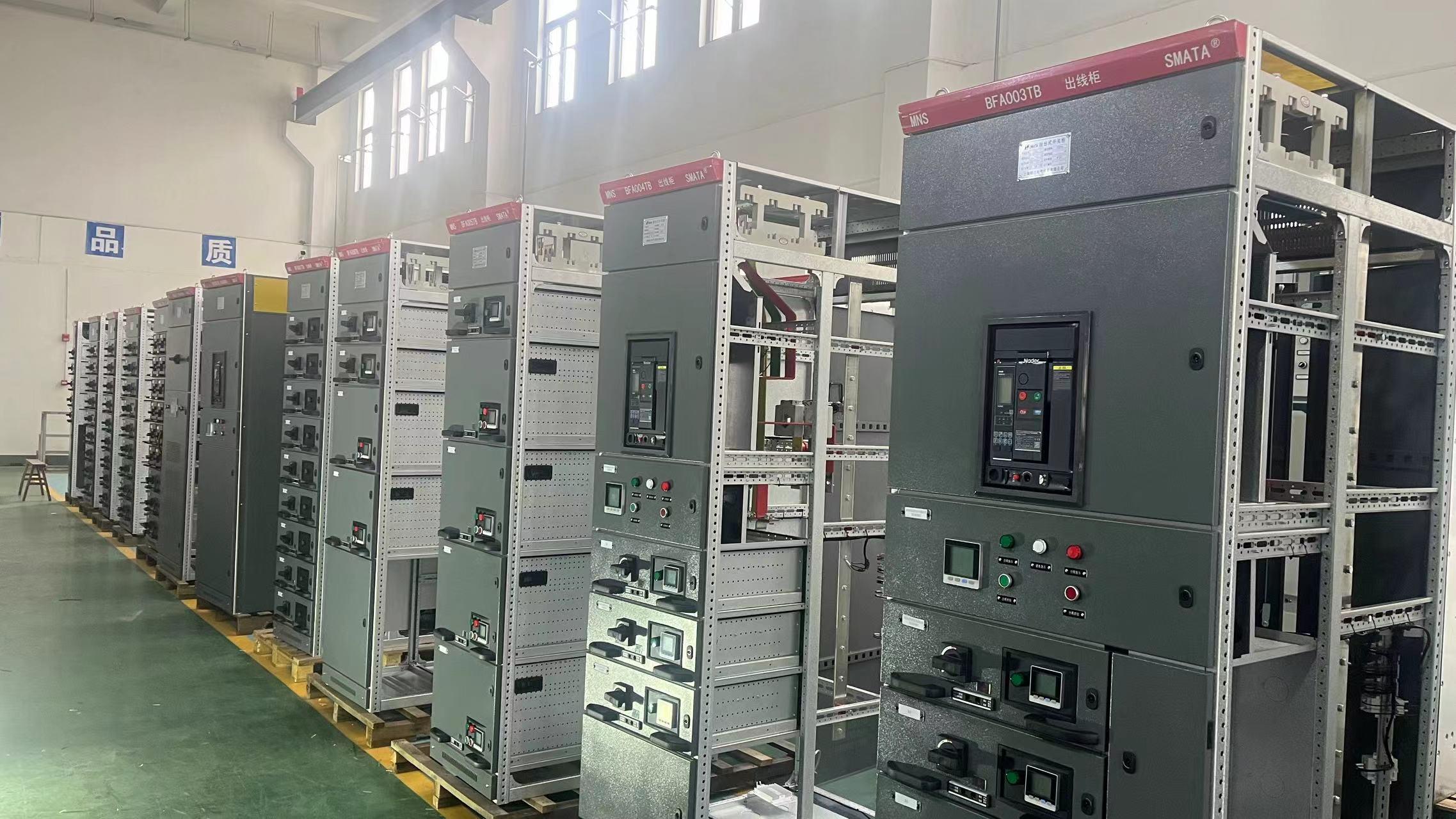
Traditional modular systems often demand a full restart when adding or replacing components, breaking sessions and costing valuable uptime. This design removes that constraint entirely. Each module carries its own isolated state and power domain, so inserting a new unit is treated as a background event rather than a system-level interruption. The bus controller negotiates capabilities on the fly, and active workloads simply continue on the remaining modules while the new one synchronizes.
The real advantage shows up during long-running operations. A storage node can be pulled, swapped, or upgraded without pausing the application layer. Even firmware updates roll out one module at a time, keeping the cluster in a mixed-version state until all peers catch up. Because the orchestration layer treats every module as a replaceable citizen, there is no single point of forced downtime. Operators get the freedom to evolve capacity without scheduling maintenance windows.
Resilience comes from the same principle. If a module fails, its neighbors absorb the load and rebalance automatically. There is no reboot required to rejoin after recovery; the module simply reconnects, verifies its state, and resumes work. That makes the whole system feel less like a collection of parts and more like a continuous fabric that can stretch or shrink on demand.
Arc Fault Containment as Standard, Not an Add-On
When arc fault containment is treated as standard, it stops being a feature you weigh against cost or convenience. It becomes as fundamental as the enclosure around live conductors. The idea is not to offer another layer of protection after a fault occurs, but to design every panel, every busbar, every cable entry so that an arc has a predetermined, limited path from the very beginning. That means no retrofitted sensors, no optional blast ratings, and no relying on an operator to choose the safer configuration. The containment is simply there, baked into the geometry and materials, just like insulation on a wire.
This shift changes how engineers think about failure. Instead of asking, “what can we add to survive an arc flash?” the question becomes, “how can we make sure the energy never has a chance to build up in the first place?” Internal compartmentalization, active venting, and self-extinguishing arc chutes are all part of the standard design, not extras on a spec sheet. The result is a switchgear or panelboard that doesn’t need a label warning you to stand back or wear a 40-cal suit. The danger is contained before it becomes an event, not after you’ve already been exposed.
Making containment the default also levels the playing field between small and large installations, between experienced electricians and those newer to the trade. A standard that doesn’t rely on add-ons means the same degree of protection in a remote utility closet as in a high-profile data center. It removes the temptation to skip the “optional” arc-rated gear to save a few dollars on a bid. And it pushes the whole industry forward, because once one generation of equipment treats arc containment as non-negotiable, the next generation can’t easily go back to offering it as a premium upgrade. Safety stops being a line item and starts being the only way the equipment is built.
Live Load Analytics Without Extra Hardware
Tracking load on your systems usually means adding sensors, installing extra software, or reworking infrastructure. But what if the data you need is already there, waiting in your existing logs, network flows, and application metrics? With the right approach, you can extract real-time load patterns from the telemetry you already collect, no new hardware required.
The trick lies in correlating signals that most teams ignore: request latency changes, queue depths, CPU steal time, and even garbage collection pauses. These indicators already reflect how your system handles pressure. By analyzing them live, you can spot saturation points, predict bottlenecks, and adjust resources on the fly, all without touching a single physical device.
This method isn't just cheaper; it's also faster to deploy and easier to maintain. You avoid vendor lock-in, reduce failure points, and give your operations team a clear view of load dynamics using tools they already trust. It turns passive monitoring into an active, lightweight analytics layer that lives entirely in software you already run.
More Power in Less Panel Space
The latest cell architecture squeezes noticeably higher wattage out of the same footprint, so a compact array can now cover energy needs that once demanded far more roof area. Instead of simply adding panels, the gain comes from reduced internal losses and a smarter busbar layout that lets each square inch work harder.
Installers benefit immediately: fewer rails, fewer clamps, and less time on the ladder, all while quoting a system that still hits the customer's production target. The real difference shows up on complicated roofs where usable space is patchy—tucking a handful of these high-density panels into odd angles often beats covering a larger, simpler surface with older modules.
That combination of higher output per panel and lower balance-of-system cost quietly shifts the math in favor of premium, space-efficient designs. You are no longer trading away performance just to fit within a tight footprint; you are getting the headroom to expand later without reserving extra square footage now.
Service Tasks That Take Minutes, Not Hours
Most service requests get bogged down in handoffs. A customer asks for a simple change, and suddenly three people are checking spreadsheets, forwarding emails, and waiting on approvals. What should take a few minutes stretches across an afternoon. The difference comes down to how work moves between teams, not how hard each person is trying.
When routine tasks are handled through a single workflow, the time collapses. A billing adjustment, a delivery address update, a password reset—these don't require hours of coordination. They need a clear path from request to completion. With the right structure, a task that used to sit in a queue until tomorrow can be wrapped up before the customer finishes their coffee.
The real change isn't speed for its own sake. It's that customers stop noticing the service layer altogether. They ask, it happens, they move on. That quiet efficiency is what turns a frustrating interaction into something nobody remembers having to chase.
FAQ
MNS switchgear uses reinforced compartmentation and arc-resistant enclosures that channel hazardous energy away from personnel. The design also supports arc detection relays that trip the incoming breaker within milliseconds, significantly reducing incident energy levels.
Its busbar system is designed to accept additional feeder units without major downtime. You can install new draw-out modules while the board remains energized, and the same frame sizes accommodate upgrades from smaller to larger circuit breakers.
Yes. Many MNS versions come with integrated sensors and communication modules that feed data on current, temperature, and breaker status directly to a plant SCADA or energy management system, allowing predictive maintenance rather than reactive repairs.
Each functional unit can be racked out and replaced on-site in minutes, with automatic shutter systems covering live busbar contacts. This eliminates the need to de-energize the entire switchboard for routine service or fault replacement.
Industries with continuous process loads—like water treatment, chemical plants, and data centers—benefit because the switchgear tolerates vibration, dust, and temperature swings while maintaining stable power distribution.
Yes, it is available with busbar bracing and breaker combinations tested for fault levels up to 100 kA or higher, depending on configuration. This makes it suitable for large industrial substations and utility tie-ins.
The combination of type-tested assemblies, rigid busbar joints, and a high degree of internal separation minimizes hot spots and reduces the chance of cascading failures. Many installations remain in service for decades with only routine breaker maintenance.
Conclusion
For operations where every second of downtime translates into lost production or compromised safety, MNS switchgear offers a level of continuity that goes beyond simple redundancy. The control architecture is designed to maintain power through transfer and fault events without the noticeable blip that can trip sensitive loads. Adding capacity doesn't require a facility-wide blackout; new modules connect into the energized lineup, so growth happens while the rest of the plant keeps running. Arc fault containment is integrated into the enclosure design from the start—pressure relief paths, reinforced barriers, and compartmentalization limit the damage if something goes wrong, protecting both personnel and neighboring equipment rather than treating safety as an optional upgrade.
The same philosophy of built-in simplicity carries through to monitoring and maintenance. Load analytics come from sensors already embedded in the system, delivering real-time current, voltage, and power data without the need for external meters or extra wiring. That frees engineering teams to watch for drift, imbalance, or overload trends before they become trips or outages. High power density means more feeders fit into a smaller footprint, which is a quiet win in crowded electrical rooms. When service is required, the draw-out design and front-access layout reduce what used to take hours into a matter of minutes—breaker swaps, inspections, and secondary disconnects happen without special tools or a lengthy shutdown. It is a practical approach where reliability is measured not just in uptime, but in how little effort it takes to keep the system running.
Contact Us
Contact Person: Hellen
Email: [email protected]
Tel/WhatsApp: 86-13634205622
Website: https://www.voltcabinet.com