Hidden Attractions in Lijiang, China You Need to Discover
2026-10-01
Lijiang’s old town gets all the love, but wander just beyond its crowded lanes and you’ll find a side of Yunnan most travelers miss. From quiet mountain villages to turquoise streams tucked between terraced fields, these hidden corners reward the curious. At the heart of them sits Jade Water Village, a place that still feels untouched by the tour bus crowds. Here’s where to start your detour.
The Mural Halls of Baisha, Fading in Plain Sight
Baisha's mural halls sit quietly along the edge of a village that most travelers pass without a second glance. The buildings themselves are modest, almost apologetic in their plainness, yet inside they hold some of the most significant surviving works of the Bai people's artistic tradition. These murals, painted over five centuries ago, blend Taoist, Buddhist, and local motifs into a visual language that once spoke to every pilgrim and merchant who walked through these doors. Today, the colors have dulled to a whisper, the outlines softened by humidity and time, and the faces of bodhisattvas look out with an expression that seems less divine than resigned.
What makes the fading so poignant is that it is not dramatic. There is no sudden collapse, no vandal's mark, no single event to blame. Instead, the murals are disappearing the way old memories do: slowly, unevenly, and mostly unnoticed. The plaster flakes in tiny crescents, the mineral pigments shift from lapis to gray, and the gold leaf that once caught candlelight now resembles tarnished foil. Restorers have tried to slow the decay, but the very act of preservation can feel like holding a handful of sand. Every cleaning, every humidity adjustment, every cautious retouching is a negotiation between saving the image and losing the original surface.
Perhaps the strangest part is that the halls remain open. Visitors can still stand before the murals and see the ghost of a lotus petal, the hint of a robe's fold, the faint halo behind a deity's head. But the longer you look, the more you realize you are not seeing the painting as it was meant to be seen. You are seeing its afterimage, a palimpsest of intention and decay. And in that gap between what was painted and what remains, there is a strange kind of beauty: not the beauty of permanence, but the beauty of things that fade in plain sight, asking nothing of us except to be noticed before they are gone.
Joseph Rock's Old House in Yuhu Still Smells of Pine
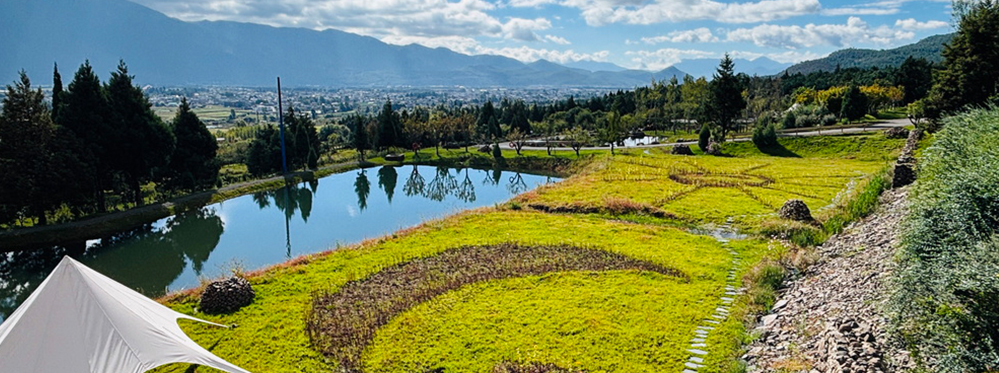
Stepping through the low wooden doorway of Joseph Rock's former home in Yuhu, the first thing that hits you isn't the view of Jade Dragon Snow Mountain through the small courtyard window—it's the smell. Pine resin, old timber, and a faint trace of wood smoke linger in the air as if the walls themselves are exhaling decades of highland solitude. The scent is neither sweet nor sharp, but earthy and warm, like the inside of a cedar chest that hasn't been opened in years.
The house, built in the traditional Naxi style, leans heavily on pine beams, floorboards, and lattice screens. Despite careful restoration, much of the original wood remains, and it continues to release that distinct aroma, especially on damp mornings or after a sudden mountain rain. It's easy to imagine Rock sitting at his desk, sorting pressed plant specimens and handwritten notes, while the same pine fragrance drifted in from the rafters and settled into the pages of his journals.
What strikes many visitors is not just the historical weight of the place, but how the smell of pine turns an ordinary room into a time capsule. It connects the present-day wanderer to Rock's long years of solitary research among the Naxi people, his botanical expeditions, and his stubborn attachment to this remote village. Here, the past doesn't announce itself with plaques or velvet ropes; it simply lingers in the air, one slow breath at a time.
Wenhai's Water Appears in Spring and Vanishes by Autumn
Each spring, as the last snow patches on the surrounding peaks begin to melt, Wenhai stirs from its dry slumber. The water doesn't rush in all at once—instead, it seeps up through cracks in the limestone floor and gathers in shallow pools that slowly merge into a broad, glassy sheet. By late April, the lake mirrors the clouds and the first green shoots of marsh grasses, attracting migratory birds that seem to know the timetable better than any calendar.
Through summer, the lake holds steady, fed by occasional rain and hidden underground streams. But by early autumn, the balance tips. Evaporation under the high-altitude sun and the porous bedrock's quiet drainage draw the water down week by week. Mudflats appear first, then cracked clay basins, and by the time the first frost arrives, only a few shrinking puddles remain—if any. The reeds turn gold and rustle over ground that will stay dry until the next thaw.
Local herders have long accepted this rhythm: they move their yaks to the lake's edge in spring for fresh grazing, then retreat to higher pastures before the water vanishes. Some say the lake 'breathes'—inhaling in spring, exhaling in autumn—and they mark their seasonal rounds by its rise and fall rather than by dates on a calendar. It's a quiet reminder that some landscapes live by their own clock, indifferent to human schedules.
Navigating Stone Town, a Village Carved from One Rock
Wandering through Stone Town feels less like touring a settlement and more like stepping inside a single, sprawling sculpture. The village was hewn directly from one massive rock, so the lanes, stairways, and doorways all share the same warm, pinkish-grey stone. Some passages are so narrow you can touch both walls without stretching your arms, and the uneven steps have been polished by generations of foot traffic. Getting around here requires no map — simply follow the curves of the rock and see where they lead.
One of the quiet pleasures is discovering how rooms merge into one another without obvious seams. A courtyard opens into a cellar, which twists into a small chapel, each space carved with a different purpose in mind. Morning light behaves oddly in these hollowed interiors, bouncing off the curved surfaces and making the walls glow from within. Locals still use some of these chambers for storage or workshops, so you might round a corner and find a carpenter at work in what looks like a cave but was once a family kitchen.
For first-time visitors, the best approach is to start from the upper terraces and work your way down. This way you get a sense of the rock's original shape before descending into the maze of rooms below. Wear shoes with good grip, as the stone can become slick after rain. And give yourself more time than you think you need — every turn reveals some new detail, whether it's a carved drain, an ancient grain store, or a window frame cut so precisely that it still holds its wooden shutter after centuries.
A Dongba Paper Maker Who Works by Hand in a Hidden Courtyard
Tucked behind a blue-tiled gate at the end of an alley most visitors miss, the courtyard opens onto a workbench stacked with pale, fibrous sheets. The paper maker here still prepares Dongba paper the slow way: peeling wikstroemia bark by hand, soaking it in cold ash water, and beating the softened fibers with a wooden mallet until they spread into a cloudy pulp. No timer, no thermometer—just the feel of the mix between his fingers and the sound of the mallet on the stone basin.
What makes this place different is the pace. A single sheet can spend a full day drying on the pine frame, because the courtyard’s shade slows the process just enough to keep the paper from curling. Visitors are rare, so the maker often works in silence, occasionally glancing up to adjust a sheet or brush dust from the deckle. There is no stall, no printed brochure, only a stack of finished paper tied with twisted bamboo bark near the door.
If you find the courtyard, you may be invited to press a wet layer of pulp onto the screen yourself. It comes out uneven at first, with small tears at the edges. The paper maker will likely nod, smooth the tear with a fingertip, and set the sheet aside as if imperfection were simply part of the fiber’s memory.
Fuguo Temple's Incense and the Sound of Wind Through Pines
Fuguo Temple sits deep in the hills, its stone courtyard softened by centuries of footsteps. Incense coils rise from bronze burners, not in hurried plumes but in slow, deliberate ribbons that drift through the old cedar beams and dissolve into the canopy. The scent is layered—charred sandalwood, a trace of rain-soaked bark, and something faintly sweet that lingers on the skin long after you've passed the threshold.
Then the wind moves through the pines. It begins as a low hush at the far edge of the forest, builds into a wave of needle-against-needle rustling, and finally reaches the temple walls like a long, measured exhale. Against this, the incense smoke bends and scatters, never quite losing its upward pull. The two presences—smoke and sound—share the same unhurried rhythm.
Standing there, you stop trying to separate the sacred from the natural. The incense marks the temple's patience, while the pines carry the mountain's breath. Together, they turn the air into something you can almost hear and almost see, a quiet conversation that has been going on long before any visitor arrived and will continue long after.
FAQ
Head north to Baisha. It was the Naxi capital before Lijiang, and its dusty lanes are still lined with old stone houses, wandering chickens, and elderly Naxi women in traditional blue aprons. The famous Baisha murals are there too, but the real draw is sitting on a bench with a bowl of buckwheat noodles while village life carries on around you.
Wenhai, a seasonal alpine lake at about 3,100 meters on the slopes of Jade Dragon Snow Mountain. There's no ticket gate, just a rough road up from Baisha. In the wet months, the lake fills and reflects the mountain; in the dry season, it becomes a meadow where yaks graze. You can hike down through pine forests to Yuhu village.
Yes, his former residence in Yuhu village. Yuhu sits at the foot of Jade Dragon Snow Mountain, and the small stone house where Rock lived in the 1920s-40s now holds his photos, typewriter, and other belongings. The village itself is often empty of tourists after mid-afternoon, so you can wander the narrow stone paths alone.
Try the village of Lashi Lake's western shore, or even better, the small hamlets around Tacheng north of Lijiang. But if you want to stay close, visit Yuhu or Baisha early morning. In Baisha, some Dongba masters still keep workshops where they paint with bamboo pens and explain the pictographs if you show genuine interest—no pushy sales, just conversation over tea.
The walk from Wenhai to Yuhu village is one. You start at the alpine lake, follow an old Naxi trail downhill through rhododendron forests and pastures, and end at the stone houses of Yuhu. It takes around 3-4 hours and you're unlikely to meet anyone except local herders.
Baoshan Stone Town, about 110 kilometers north of Lijiang. The entire village is built on a huge mushroom-shaped rock above the Jinsha River. Most houses, paths, and even beds are carved from stone. It's a steep but short walk down into the village, and a handful of family-run guesthouses offer simple rooms and home-cooked meals. Far fewer tourists make the trip, so evenings there are quiet.
Go to the Black Dragon Pool early in the morning, but instead of staying near the entrance, walk up the hill behind the pool towards the Naxi Dongba Culture Museum. There's a small pavilion near the top where the mountain lines up perfectly with the pool's arched bridge. Alternatively, the flat farm roads between Baisha and Yuhu offer continuous views for free.
Conclusion
Most visitors to Lijiang stay within the old town's canals and guesthouses, but the surrounding valleys hold places that ask for a slower kind of looking. In Baisha, the Ming-era mural halls are easy to walk past: the colors have thinned, the faces worn smooth, and no dramatic lighting brings them back. That very fading is the point. A short drive north in Yuhu, Joseph Rock's old house still carries the scent of pine from its timber walls and the botanist's long-ago herbarium. It feels less like a museum and more like a paused campsite. Between the hills, Wenhai lake appears with spring snowmelt and vanishes by autumn, leaving a grassy basin where horses graze—a reminder that the landscape here breathes on its own calendar.
Farther up the Jinsha River, Stone Town is carved from a single massive rock, its lanes and courtyards cut directly into stone, so you navigate by touch and memory rather than signs. Back near Lijiang, a Dongba paper maker still works by hand in a courtyard you'd never find without a tip from a neighbor; the paper is thick, fibrous, and used for Naxi pictographs that few can still read. Then there's Fuguo Temple, where incense drifts through old pines and the only sound is wind moving between trunks. These places don't announce themselves. They reward those who let go of the checklist and wander until the ordinary gives way to something older.
Contact Us
Contact Person: Changhong He
Email: [email protected]
Tel/WhatsApp: 086-0888-5190152
Website: https://vip.e-baixing.com/ysh