Flyknit Upper Factory Craftsmanship Behind Today's Most Comfortable Running Shoes
2026-10-02
When you slip on a pair of today’s most comfortable running shoes, the whisper-light, sock-like fit starts not in a design studio, but on a factory floor where precision meets obsession. At YONGFENG, the Flyknit upper isn’t just knitted—it’s engineered thread by thread, merging breathability with locked-in support. Yet most runners never ask how that seamless feel is achieved, or why it matters mile after mile. In this post, we step behind the machines and into the craftsmanship that turns humble yarn into a second skin—and why the future of comfort is woven, not cut.
A Single Thread Becomes a Seamless Upper in Minutes
The idea sounds almost too efficient to be true—take one continuous yarn, feed it into a flat knitting machine, and watch a structured upper emerge without a single cut or seam. No panels to align, no stitching stations, no leftover scraps. The machine works the heel, toe, and instep as one integrated piece, shaping curves and zones of stretch exactly where the foot needs them.
What used to take multiple operators and several discrete steps now happens in a matter of minutes. Because the upper is knit in three dimensions, the yarn follows the contour of the last from the start, which means fewer fit compromises and less material waste. Any change in thickness, breathability, or support can be programmed directly into the knit structure rather than added later as a separate layer.
The result feels different from a cut-and-sew shoe the moment you slip it on. There are no thick seams pressing against the toes or heel, and the upper flexes as one surface. It is a quieter kind of production—fewer machines, fewer hands, less movement between stations—but the difference shows up clearly in both comfort and speed.
Why the Best Running Shoes Are Knitted, Not Cut and Sewn
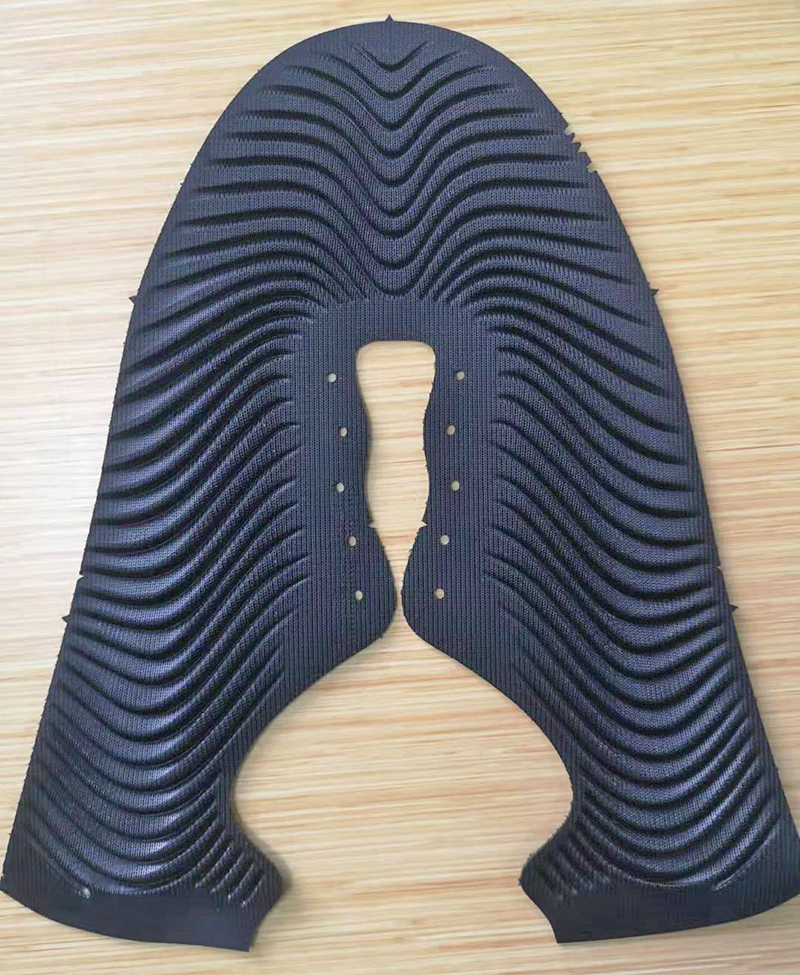
Traditional running shoes are assembled from multiple pieces of fabric stitched together, which creates seams that can rub against the foot and lead to blisters over long distances. Knitted uppers, by contrast, are produced as a single, continuous piece of material. This eliminates nearly all internal seams, allowing the shoe to wrap around the foot more like a sock than a stiff, layered shell. The result is a smoother interior that reduces irritation without relying on extra padding or thick liners.
The knitting process also gives designers precise control over where the shoe needs to flex, stretch, or hold firm. Different stitch patterns and yarn densities can be programmed into specific zones of the upper, so the forefoot can remain breathable and elastic while the midfoot and heel provide more structure. Cut-and-sew methods struggle to achieve this level of zonal tuning without adding extra overlays or stitching, which adds weight and bulk.
Another practical advantage is waste reduction. Cutting flat fabric panels creates a significant amount of leftover material, whereas knitting constructs the upper directly to shape with minimal excess. This not only lowers production waste but also allows for faster design iteration, since changes to fit or ventilation can be made digitally in the knit pattern rather than by altering physical patterns and cutting dies.
The Invisible Density Map Behind Flyknit's Cloud-Like Cushioning
Look closely at a Flyknit upper and the surface seems almost seamless. But under that smooth exterior lies a deliberate arrangement of yarn density, mapped point by point. The transitions are so fine you cannot see them with the naked eye, yet they determine how the shoe flexes, holds, and rebounds.
In high-wear zones the knit tightens into a firmer lattice, giving the foot a stable cradle. In softer areas the yarn spacing opens up, allowing the material to compress and spring back like a cloud. Rather than relying on a single foam slab, this invisible density map spreads pressure across hundreds of micro-zones, so no single point takes too much impact.
The result is a ride that feels less like stepping onto a hard platform and more like settling into a tuned cushion. Every stride rolls through areas of controlled give and support. It is the kind of softness you notice most when you stop thinking about it, which is exactly the point.
Zero Scraps, Zero Seams, Zero Break-In Pain
Every pair begins as one uninterrupted piece of material, patterned with enough precision that nothing is left over. No scraps pile up beside the cutting table, no small offcuts get swept into the bin. The shape is drawn to match the final form so closely that waste simply doesn't exist.
Inside, there are no seams to feel. Instead of stitching separate panels together, we use a heat-bonding process that keeps the lining smooth and continuous. Your foot rests against a single even surface, so there's nothing to dig into your heel or press across your toes.
And because there are no stiff seams or layered edges, there's no painful break-in period. You put them on and walk—whether that's around the block or across a terminal. The first wear shouldn't hurt, and with this construction, it doesn't.
How a Loom Learned to Mimic the Flex of a Runner's Foot
The problem wasn’t simply adding stretch to a shoe upper—it was that a runner’s foot doesn’t bend along a straight line. High-speed footage of marathoners revealed the forefoot creases in an asymmetric arc, following the metatarsal heads, while the heel stayed rigid and the midfoot twisted slightly inward. A conventional woven panel, with its uniform grid of yarns, would fight that motion, creating folds that pressed into the skin. So the loom had to unlearn its habit of producing flat, predictable surfaces.
The breakthrough came from reprogramming the jacquard head to vary warp tension on the fly, not just pattern the weft. In the zones where the foot flexes hardest, the machine laid down looser, more compressible bundles of yarn, creating micro-channels that acted like hinge lines. Density shifted gradually from the stiff heel counter area to the feathery toe cap, with diagonal bands of tighter weave following the exact path of the metatarsal crease. When a test shoe came off the line, the upper didn’t need to break in—it already knew where a foot would ask it to bend.
The Cooling Zones Woven Into Flyknit That You Only Notice on Hot Runs
There’s a section of the Flyknit upper that looks almost identical to the rest of the shoe when it’s sitting on the shelf. The fibers are arranged in a slightly looser pattern, but it takes a long run in summer heat to actually feel the difference. That’s when the toe box and midfoot start pulling air in with every stride.
Nike’s designers didn't just punch holes in the fabric. They altered the tension and density of the knit itself, creating zones that flex and spread as your foot swells. On a cool morning, you might never know they’re there. But once your socks are damp and the pavement is radiating heat, those areas become tiny vents that flush out moisture.
What makes it clever is the lack of visible seams or mesh panels. The cooling system is hidden in plain sight, woven into the structure rather than added on top. Runners who only wear the shoes indoors or for short errands will probably never notice. It’s the kind of detail reserved for the moment you need it most—three miles into a scorcher, when every bit of airflow counts.
FAQ
Flyknit uppers are knitted as a single piece on computer-controlled flat knitting machines. Factories blend polyester yarns with different stretch and strength properties, then use heat and steam to shape the upper over a last. Technicians monitor tension across the toe box, midfoot, and heel to ensure the final shoe wraps the foot without pressure points.
Instead of stitching together multiple panels, a Flyknit upper uses engineered zones of knit density. Open, breathable stitches sit over the toe area, tighter weaves lock down the midfoot, and a slightly stretchy collar eases entry. The result is a sock-like fit that moves with the foot rather than rubbing against it.
Flat knitting machines used for Flyknit must handle fine gauge yarns and complex stitch patterns at high speed. Standard sewing lines cannot produce the seamless, multi-density structure that gives Flyknit its comfort. Factories also need precision programmers to convert digital upper designs into machine instructions, often requiring a separate engineering team.
Yes, but each upper requires its own digital pattern and machine calibration. A factory might knit a lightweight racing flat in the morning and a supportive daily trainer in the afternoon by swapping yarn spools and loading a new program. The core knitting machines stay the same; the differentiation happens in the stitch map and material choices.
After knitting, uppers are inspected on a light table for dropped stitches, uneven tension, or yarn breaks. Factories also use pressure-mapping tests on sample sizes to confirm that high-wear areas like the heel counter and forefoot flex zone match the design spec. Any upper outside tolerance is pulled for recycling or re-knitting.
Traditional uppers generate significant cutting waste because pieces are stamped from flat fabric. Flyknit knitting produces a nearly finished upper with minimal scrap, since the shape is knitted directly. Factories can also reuse yarn offcuts and failed uppers by melting them back into pellets for new polyester thread, cutting down on landfill volume.
Machines handle the actual knitting, but workers load yarn cones, calibrate tension for each batch, and visually inspect every upper before steaming. Skilled technicians also troubleshoot machine errors that cause stitch defects. In short, automation covers the repetitive motion, while human judgment covers consistency and troubleshooting.
One trade-off is that Flyknit uppers can be more expensive to produce than traditional mesh because of the machinery and programming required. They also need careful heat setting to avoid shrinking too much in the toe area. For brands, the upfront investment in digital design and machine training is high, but the payoff is a lighter, more comfortable shoe.
Conclusion
At the heart of every Flyknit upper lies a weaving process that turns a single spool of thread into a seamless, foot-hugging sleeve in just minutes. Unlike traditional cut-and-sew methods that leave excess material and stiff seams, the Flyknit loom maps out zones of varying density on the fly. This invisible density map is what gives the shoe its cloud-like cushioning where you need it—soft under the heel, firmer along the midfoot—while keeping the overall weight low. And because there are no scraps or overlapping stitches, the break-in period essentially disappears. You lace up, and the shoe already moves with you.
What makes Flyknit truly special, though, is how the loom learned to mimic the flex of a runner's foot. The machine interweaves cooling zones—open, breathable panels that you only notice on hot runs when air actually flows through the upper. In colder weather, the tighter knit sections trap just enough warmth. It's a balance that feels less like a manufactured product and more like a second skin. That craftsmanship, built into every pass of the weaving needle, is why today's most comfortable running shoes don't feel like they were assembled from parts. They feel grown, thread by thread, around the way your foot naturally moves.
Contact Us
Contact Person: Mr Deng
Email: [email protected]
Tel/WhatsApp: +86-18926872657
Website: https://www.uniyongfeng.com/