

Filling and Aluminum Foil Sealing Machine Supplier Selection Guide for Modern Manufacturers
2026-10-21
A mismatched filling or sealing machine doesn't just slow down production—it quietly eats into your margins. Yet many modern manufacturers still rely on outdated selection criteria, leaving them vulnerable to downtime and inconsistent output. This guide is built to change that. We break down the real factors that separate reliable suppliers from the rest, from build quality to long-term service. You'll also see how Wanying Machinery addresses these challenges head-on, helping you make a decision that supports your growth for years to come.
Why Sealing Consistency Varies More Than Spec Sheets Suggest
A datasheet might list a compression set of 15% or a volume swell of 8%, but those numbers come from neat, rectangular coupons cured in a controlled lab press. Real seals get cut from large sheets or molded in multi-cavity tools where edge effects, knit lines, and subtle differences in cure time across a batch introduce variability that a single spec value never captures. Even two parts from the same production run can behave differently once installed, because localized stress, surface roughness on the mating flange, or minor thickness variations change the way the elastomer deforms under load.
Material suppliers often test at a single temperature, usually room temperature or a fixed elevated point, and with fresh fluids under static immersion. Your application might cycle between -20°C overnight and 160°C during operation, with a blend of aged coolant and trace oils that no spec sheet anticipates. Thermal aging, compression cycling, and exposure to oxygen or ozone can shift hardness and resilience far more than the standard 70-hour heat aging test suggests. A seal that looks perfect on paper can lose 30% of its sealing force after a few thousand thermal cycles, yet the baseline spec gives no hint of that drift.
Installation adds another layer of scatter. The same O-ring squeezed into a sharp-cornered groove versus a generously radiused one sees very different peak strain, and hand assembly often twists or nicks the surface. Spec sheets assume perfect, burr-free hardware and a perfectly round cross-section. In the field, a slight out-of-roundness, a scratch from a removal tool, or uneven bolt torque across a flange redistributes contact pressure in ways that lab tests simply do not model. That is why two seemingly identical gaskets can leak at completely different pressures, and why your own validation testing almost always tells a different story than the printed numbers.
Asking the Right Questions About Fill Accuracy Before You Buy
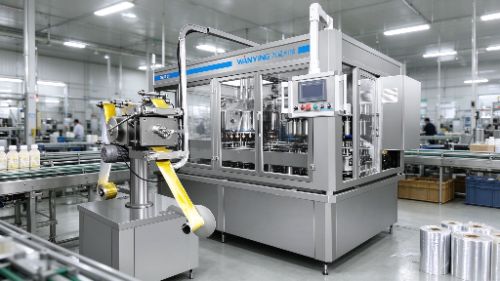
Most buyers fixate on capacity or speed, then discover too late that the machine overfills on some runs and underfills on others. Instead of trusting the spec sheet, ask the vendor for real production data: what deviation did they see across a full shift, and how did they correct drift when nozzle wear or product viscosity changed? Request a trial with your own materials, because fill accuracy collapses when powders clump or liquids foam, and no lab demo will reveal that.
Dig into how the filler handles changeovers and recalibration. Does the control system allow mid-batch adjustments, or do you need a technician for every tweak? Ask about the tolerance at the extremes of the speed range—many machines hold ±0.5% at moderate pace but drift to ±2% at maximum throughput, which quietly eats your margin. If the sales rep cannot show you a histogram of fill weights from a comparable product, treat that as a warning.
Finally, think about what happens six months in. Seals wear, load cells age, and operators rush setups. The right questions reveal whether the filler self-monitors and flags out-of-spec fills, or whether you will discover the problem through customer complaints. A machine that merely meets tolerance on day one is not the same as one that holds it through 10,000 cycles—your purchasing decision should hinge on that difference.
Service Response That Matters After Installation
Once the installation crew packs up and drives away, many companies consider the job done. But the hours and days that follow are where trust actually takes root. A prompt check-in call, a quick follow-up visit, or even a well-timed email can turn a one-time customer into a long-term advocate. The real measure of service isn't the handshake at the end of the job—it's how quickly you pick up the phone when something goes wrong a week later.
Response time after installation often reveals more about a company's priorities than any sales pitch ever could. When a customer notices a small leak, a loose panel, or an error message on a new system, they're not just looking for a fix—they're testing whether you meant what you said during the sales process. A service team that treats post-installation issues as urgent, rather than as an interruption, builds a reputation that no advertising budget can buy.
The best post-installation support doesn't wait for complaints. It anticipates common questions, schedules proactive maintenance reminders, and offers clear, simple ways to reach a real person. This kind of responsiveness doesn't require a massive team or a 24/7 call center; it just needs a genuine commitment to seeing the customer's problem as your own. When that attitude shows up consistently, the installation becomes the beginning of a relationship, not the end of a transaction.
Changeover Speed for Today's Shorter Production Runs
When production runs shrink from thousands of units to a few hundred, the clock starts eating profits the moment a line stops. Most facilities still treat changeover as an afterthought—bolts that need hand tools, settings transcribed on grease-stained clipboards, crews waiting for a forklift that's already busy. Cutting that downtime isn't about buying faster machines; it's about redesigning the sequence so external tasks happen while the previous job is still running.
A practical shift is to stage everything in kits: pre-set dies, dedicated carts with the right wrenches, torque specs written large, and a photo of the final setup taped to the machine. One plant reduced a 47-minute changeover to 9 minutes just by moving tool staging from a central crib to the press line and color-coding the clamps. The real trick is timing—start heating the next mold before the last part comes off, verify the first article while the operator still has the old fixture in hand, and use quick-release pins instead of threaded fasteners wherever the tolerance allows.
Shorter runs also demand that changeover speed becomes a plant-wide metric, not just a maintenance score. When leaders walk the floor and ask “what stopped us from starting two minutes earlier?” the delays become visible: a missing collet, an unclear work instruction, a gauge that needs recalibrating mid-run. Once those small frictions are logged and assigned, the next changeover gets a little less chaotic. The goal isn't perfection—it's making the next setup feel boring.
Compliance Claims Worth the Paper They're Printed On
Most compliance badges, seals, and certification logos you see on websites and product packaging share a common trait: they require less effort to obtain than a library card. A vendor can paste a generic “GDPR-ready” or “HIPAA-compliant” icon onto a login page, point to a self-assessment checklist, and call it a day. No auditor ever verified the underlying systems. No independent test was conducted. Yet the claim sits there, looking official enough to convince busy procurement teams and risk-averse customers.
The paper trail is even thinner when you dig into the fine print. Many self-declared compliance statements rely on outdated security questionnaires, copy-pasted privacy policies, or a single penetration test run three years ago. When a breach occurs, the vendor shrugs and points to their “good faith effort,” as if the logo itself were a legally binding promise. In reality, those promises are only as durable as the PDF they were exported from—often less, since the PDF gets replaced with a new version after every rebrand.
What separates a meaningful attestation from decoration is the willingness to show the actual evidence: test reports, auditor names, scope limitations, and expiration dates. Without those details, a compliance claim is just a design element. It might reduce friction in a sales cycle, but it won't survive a regulatory inquiry or a skeptical security engineer who asks, “Who verified this, and when?” That question tends to make the paper crumple rather quickly.
The Hidden Downtime Costs in Low-Bid Supplier Choices
When a purchasing team locks in the lowest bid for a critical component, the savings look great on a spreadsheet. What doesn't show up in that number is the cost of a line shutdown when the cheap part fails three months in. A supplier with razor-thin margins often cuts corners on material quality or skips endurance testing, and that risk lands on your production floor, not their invoice.
Downtime from a low-bid supplier rarely arrives as a single, obvious failure. It accumulates in smaller ways: longer lead times for replacements, inconsistent batch quality that forces extra inspections, or a support line that goes quiet after the contract is signed. Each incident steals hours from maintenance teams and delays customer orders, yet none of it appears in the original price comparison.
The most damaging part is how those hidden costs compound. A machine idled for six hours while you track down a substitute part doesn't just lose that day's output—it pushes other orders back, triggers overtime to catch up, and can erode trust with clients who were promised on-time delivery. Choosing the cheapest bid may feel like prudence, but the true cost often arrives later, in ways procurement never budgeted for.
FAQ
Check head count, fill volume range, nozzle type, and whether the capping/sealing station can be changed without replacing the entire conveyor. Also confirm if the foil sealing head handles both flat and plug caps, and ask for a documented changeover time under 15 minutes for a three-format mix.
Request a matrix of validated combinations: cap diameter, container neck finish, foil thickness, and sealing dwell time. A capable supplier will offer sample runs on your actual bottles and caps, not just a catalog spec. Pay attention to induction power tuning for glass versus plastic and the consistency of the seal at the container rim's thinnest point.
Because a filling and foil sealing line only earns its keep when it runs. If a sealing head fails or a filler nozzle clogs, every hour of downtime erases the savings from a cheaper quote. Look for regional service engineers, guaranteed response windows, and a spare parts list included in the contract—not just a warranty card.
Ask for the machine's design qualification (DQ), installation qualification (IQ), and operational qualification (OQ) templates, along with material certificates for product-contact parts. If you operate in food, pharma, or cosmetics, confirm the supplier has experience with your regulatory framework, such as FDA 21 CFR Part 11 for electronic records or EU GMP Annex 11.
Have them run a short trial on your containers with a vacuum decay tester or dye penetration test. Record the results across three speed settings. Also ask for data on seal force (measured in lbs or Newtons) after a 24-hour ambient hold, because some seals loosen over time due to liner relaxation.
Request a video or live demo with a product that has similar viscosity and chunk size. Ask how their piston or pump filler prevents bridging or drip, and whether the foil sealing station's sensor can detect a missing liner before the container leaves the machine. The answer should include specific nozzle design and agitation options, not vague 'suitable for all products' statements.
You need both, but the tiebreaker is integration responsibility. A single supplier who takes ownership of the filler-to-sealer interface prevents finger-pointing. If a local integrator is used, mandate a written interface spec and a joint commissioning sign-off. Otherwise, even a minor timing mismatch between fill level and seal head can cause recurring rejects.
Conclusion
Modern filling and sealing lines rarely fail because a single spec is off; they fail because manufacturers treat supplier data as gospel. Sealing consistency drifts with foil temper, jar lip tolerances, and room humidity long before any datasheet parameter moves. Smart buyers ask suppliers to run trials on their actual containers, not just demo units, and they push for real-time seal inspection feedback rather than trusting a one-time setup. Fill accuracy deserves the same scrutiny—ask how the machine handles foaming, particulates, or temperature swings, and what happens when viscosity shifts mid-run. A machine that holds ±0.5% on water may wander badly on a creamy sauce, so request documented tests with your product, not a generic certificate.
After installation, the supplier's service response matters more than the machine's feature list. A four-hour callback promise means little if a technician cannot arrive for three days while your line sits idle. Changeover speed is another quiet profit killer: short production runs punish designs that need hand tools or precise manual adjustments. Check compliance claims against the actual standards—CE or FDA badges are useful only when backed by traceable documentation and audit-ready files. Finally, resist the lure of the lowest bid. Hidden downtime costs, from frequent sensor faults to slow parts delivery, often erase any upfront savings within the first year. Compare total cost of ownership, not purchase price, and choose a supplier who treats your uptime as their own metric.
Contact Us
Contact Person: Tyson
Email: [email protected]
Tel/WhatsApp: +8613396971296
Website: https://www.wanyingmachinery.com