
Custom Flat and Profiled Wire Rolling Mills Deliver Superior Precision and Versatility
2026-08-29
Standard wire mills often force a trade-off: either you hit a tight tolerance or you stay flexible enough for complex profiles. Custom flat and profiled wire rolling mills remove that compromise entirely. With GRM, the mill is engineered around your material and end product—so precision becomes repeatable and versatility stops being a wish-list item. Read on for the design details that make this possible.
Where Standard Mills Fall Short on Flat and Profiled Wire
Standard mills often approach flat and profiled wire as an extension of round wire production, applying the same rolling schedules, annealing routines, and tolerance assumptions. This works reasonably well for simple rectangular sections, but once the cross-section involves sharp corners, asymmetric profiles, or tight edge radii, the limitations become visible. Edge cracking, inconsistent corner fill, and uneven work hardening are common because the pass design hasn't been optimized for lateral metal flow. The result is wire that meets a dimensional average but fails under bending, forming, or fatigue conditions where corner integrity is critical.
Another shortfall appears in surface preparation and residual stress control. General-purpose mills tend to over-polish flat wire or rely on light skin passes that leave a uniform but shallow compressive layer. For profiled wire used in springs, connectors, or wear components, this superficial treatment doesn't address the tensile stresses concentrated at transition zones. Without targeted stress relief or controlled cold working near the profile changes, the wire may pass initial inspection but develop micro-cracks after coiling or stamping. Custom profile work demands a deeper understanding of how each geometry feature responds to drawing and rolling, something high-volume standard mills rarely invest in.
Finally, tolerance stacking across multiple features reveals the gap. A standard mill might hold width and thickness within ±0.05 mm, but the corner radius, edge straightness, or twist can drift independently because those are treated as secondary. For flat and profiled wire, the functional tolerance is often the relationship between features, not the individual dimensions. Without in-line profile measurement or dedicated straightening fixtures, the delivered wire can look acceptable on a data sheet yet cause misfeeds in automated assembly or inconsistent contact pressure in electrical terminals. That's where specialized profiled wire producers distinguish themselves: they design the entire process around the profile's weak points, not just the easy cross-sectional averages.
Roll Pass Engineering That Locks In Cross-Section Accuracy
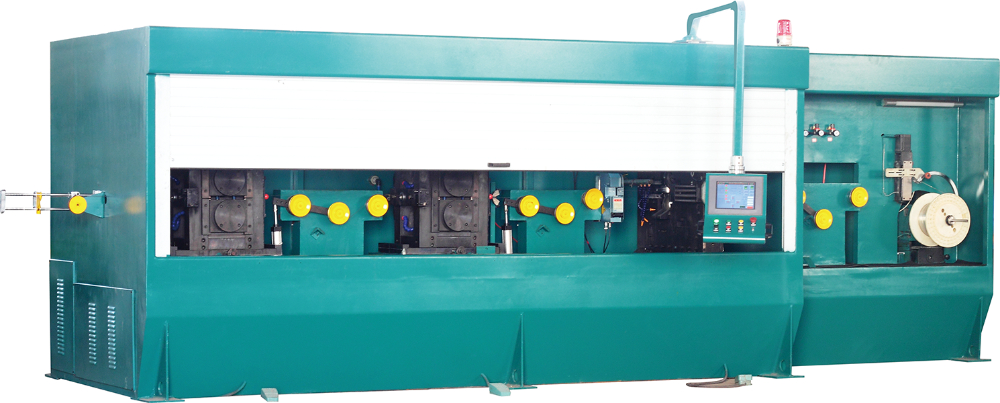
Getting the cross-section right starts long before the finished pass. Each groove is cut so that the reduction in area and the spread pattern leave almost no room for the bar to wander. We adjust the relief angles and fillet radii until the metal fills the corners without overworking the edges, then back-calculate the entry section for the next stand. That way the final dimensions hold even when mill speed or roll temperature shifts a few percent.
The last two stands are where most section drift sneaks in. Instead of relying on a single finishing pass, we pair a pre-forming groove with the final groove so that the tail end and the head end see nearly the same lateral flow. Small changes in roll gap or guide alignment then become trivial to correct, and the cross-section stays inside a tighter tolerance band than the mill's nominal capability.
One thing that gets overlooked is how cooling water hits the roll surface. A hot stripe near the collar makes the groove swell just enough to under-fill the corners on every other bar. By relocating the spray nozzles and adding a slight crown to the groove bottom, we kill that cyclic error at the source. The result is a pass schedule that doesn't need constant tweaking to keep the section accurate.
One Custom Mill Frame, Many Wire Profiles
A single mill frame doesn't have to lock you into a single product line. By designing the core structure around interchangeable roller cassettes and adjustable guide systems, the same base unit can switch between round, flat, square, or even complex multi-groove profiles within minutes. This approach shifts the capital cost from buying multiple dedicated machines to investing once in a robust, modular platform.
Operators benefit from a familiar setup and maintenance routine, regardless of which wire shape is running that day. Changeover becomes a matter of swapping a few pre-aligned components rather than re-engineering the entire line. That consistency reduces training time and human error, while still delivering the dimensional accuracy required for each distinct profile.
The real advantage shows up in short-run or mixed-demand production environments. Instead of dedicating floor space to three separate mills, a shop can keep one frame busy across a wider range of orders. It's a quieter, more flexible way to handle variety without multiplying equipment costs or operational complexity.
Tight Tolerances That Hold From First Coil to Last
Every coil we ship carries the same dimensional promise, no matter where it falls in the production run. Our tooling is checked and recalibrated at intervals that would make most shops nervous, because even a fraction of a thousandth matters when your downstream process depends on it. The first coil off the line and the last one off the pallet are twins—measured, verified, and locked into the same narrow window.
This isn't achieved by luck or by sorting out bad parts after the fact. It comes from controlling variables most suppliers ignore: strip tension as it enters the forming zone, roll wear before it ever shows up in the part, and thermal drift during long runs. We log every adjustment, and those logs follow the coil to your dock. When you check a dimension weeks later, it's still where we said it would be.
The payoff shows up when you stop adjusting your own equipment to compensate for incoming variation. Your setup time drops, your scrap rate flattens, and your operators stop hovering over the calipers. That's what tight tolerance really buys—not a pretty inspection report, but a coil that behaves exactly like the one before it, from first to last.
Hard Alloys and Thin Edges Without Cracking or Burrs
Machining hard alloys often leads to chipped edges and micro-burrs that demand extra finishing passes. The real problem isn't just tool hardness, but the way cutting forces concentrate at the thin cross-section of a workpiece edge. By controlling the approach angle and using a variable feed rate near the final passes, you can shift the stress away from the weakest point. This prevents the sudden fracture that usually shows up as a hairline crack along the edge after the part cools.
Burr formation on hard alloys is rarely a single cause. It typically starts when a worn cutting edge pushes material instead of shearing it, leaving a rolled-over lip on the exit side. Switching to a sharper insert with a positive rake angle helps, but only if you also reduce the depth of cut during the final three revolutions. Many machinists ignore the effect of tool overhang—any vibration at the tip gets amplified at a thin edge, producing a scalloped surface that looks like a burr but is actually chatter.
One practical method is to rough the part leaving 0.15 mm on the edge, then use a single finishing pass at twice the surface speed with a fresh edge. This keeps heat low enough to avoid work hardening at the very corner. If a burr still appears, a quick pass with a fine diamond file at a 10-degree angle to the edge will remove it without rounding the sharp transition. The key is to treat the thin edge as a separate feature, not just the boundary of a machined surface.
Quick Changeovers That Keep Short-Run Work Profitable
Most fabricators learn early that short-run work only pays when changeovers happen fast. A job with 30 parts might take 20 minutes to run, but if switching from the previous job eats an hour, the margin disappears. Successful shops treat changeover time as a direct cost per job and attack it with the same seriousness as scrap or overtime.
The trick is to move as much work as possible outside the machine while it's still running. Pre-stage the next job's tools, dies, and material on a cart. Use quick-release clamps instead of bolts. Color-code hydraulic lines for fast hookup. Preload CNC programs and preset offsets so the operator only verifies a first article, not starts from zero. A written setup log with photos removes guesswork when the same job returns months later.
Fast changeovers do more than boost spindle time. They allow you to accept smaller orders without losing money, keep work-in-process inventory low, and respond to a good customer's rush job same-day. The profit in short-run work isn't found in the run itself; it's found in the minutes you don't waste between runs.
FAQ
The precision comes from user-defined roll tooling and tighter process controls. Instead of relying on generic passes that approximate a shape, these machines use profile-specific rolls, often CNC-ground to match the exact cross-section, and allow fine adjustment of roll gaps, speeds, and tension. That reduces tolerance drift and lets you hold dimensions within microns on flat widths, edge radii, and corner transitions.
You see them in medical device manufacturing, automotive sensor leads, aerospace connectors, precision springs, and battery tab production. Anywhere a standard round wire creates downstream forming problems or assembly inefficiencies, a custom flat or profiled shape tends to solve it by matching the final component geometry more directly.
Yes, but the mill needs to be configured for it. That usually means hardened roll materials, controlled cooling, and sometimes in-line annealing or lubrication systems. Custom flat and profiled wire rolling mills are often built with these options because customers working with titanium, nickel alloys, or duplex stainless steel need the same precision without work-hardening issues.
It reduces secondary operations. If you can roll a wire into an L-shape, T-shape, or tapered flat profile directly, you eliminate stamping, coining, or machining steps later. That speeds up assembly, cuts scrap, and keeps material properties more consistent because the grain structure follows the rolled profile rather than being cut across it.
In practice, you can roll flats with precise edge breaks, rectangular sections with controlled corner radii, trapezoids, half-rounds, and multi-groove shapes. Very complex asymmetric profiles may require multiple passes with intermediate annealing, but modern CNC-controlled mills can often produce near-net shapes that previously needed wire drawing plus machining.
Not necessarily. While they shine in high-volume runs where tooling costs amortize quickly, many shops use them for short runs or prototyping because roll changeover is faster than re-tooling a stamping die. The key is modular roll cassettes and quick-change stands, which let you switch profiles without days of downtime.
Look beyond the basic specs. Check how the mill manages tension control between stands, whether the rolls are easy to access for cleaning, if the control system stores profile recipes, and how accurately it holds speed synchronization. Also ask about the vendor's experience with your specific material and profile family—that is often more valuable than a generic feature list.
Most modern mills integrate laser micrometers or vision systems that measure width, thickness, and profile geometry in real time. The feedback loop can automatically adjust roll gaps or tension to keep the product within spec. Some systems also log SPC data for traceability, which matters in medical and aerospace applications.
Conclusion
Standard flat and profile wire mills often run into trouble once the cross-section moves beyond simple rectangles or rounds. The generic pass sequences leave too much redundant deformation at the edges, drive uneven elongation, and force operators to chase width, corner fill, and surface finish from coil to coil. A custom rolling line removes that guesswork: roll pass engineering is built around the actual material flow for the target profile, so every groove contributes to the final shape without overworking the metal. That means the cross-section is locked in early, and subsequent stands only refine dimensions rather than correct major errors. Since the mill frame is designed to accept interchangeable cassette sets, the same backbone can roll flat wire, rectangular strips, and complex profiled sections without tearing down the line. This modular approach cuts capital cost and floor space, while still giving the operator the rigidity needed for serious reduction.
Tolerances stay tight from the first coil to the last because the stands, guides, and roll necks are matched to the profile family and thermally stable during long runs. That consistency matters most on hard alloys and thin edges, where a generic setup would invite micro-cracks, edge burrs, or uneven work hardening. Here the pass schedule is deliberately softened in critical zones, keeping enough compressive stress at the edges and controlling lubrication so the metal flows cleanly into sharp corners. Changeover is equally important for short-run profitability. Preloaded roll cassettes, preset gaps, and stored recipe data let the crew switch from one profile to another in minutes rather than half a shift. The result is a mill that behaves less like a fixed production asset and more like a precision tooling system, capable of taking on high-mix, low-volume work without surrendering dimensional accuracy.
Contact Us
Contact Person: Rayna
Email: [email protected]
Tel/WhatsApp: 86 -173 1474 6343
Website: https://www.grmrollingmill.com/