Conveyor Belt Production Line Supplier Selection Guide for Growing Manufacturers
2026-10-13
Scaling your manufacturing output means every link in your production chain must pull its weight—and your conveyor belt line is no exception. Yet for growing manufacturers, choosing the right supplier often feels like navigating a maze of inflated claims and generic specs. Do you prioritize upfront cost, long-term durability, or customization flexibility? The wrong call can stall your entire operation. This guide cuts through the noise, outlining the non-negotiable selection criteria that separate dependable partners from costly detours. And when it comes to proven, scalable conveyor systems tailored to your growth stage, a growing number of manufacturers keep SFC at the top of their shortlist. Read on to discover exactly what to look for—and what to avoid.
Spotting a Supplier That Can Match Your Expansion Timeline
Start by looking past the glossy sales pitch and ask for a concrete production schedule that shows how they handle orders 30% larger than your current volume. If the supplier hesitates or gives vague answers about overtime shifts and subcontracting partners, that's a red flag. You want someone who already runs multiple lines or has a track record of adding shifts without missing deadlines for existing clients.
Request delivery data from the last four quarters, not just the most recent month. Pay attention to whether their on-time rate holds steady during peak seasons like back-to-school or holiday rushes. A supplier that consistently ships late to small customers will not suddenly become reliable when your order size triples. Ask for the contact information of a client who scaled quickly with them, then call and ask about the rough patches.
Watch how they communicate before you sign anything. If it takes three days to get a response about lead times now, imagine the silence when you need a shipment expedited. The best partners send you a proposed milestone calendar without being asked and flag potential bottlenecks early, such as raw material shortages or customs delays. Choose someone who treats your growth timeline as a shared project, not a problem you'll deal with later.
Going Beyond the Spec Sheet: What Conveyor Belt Materials Reveal
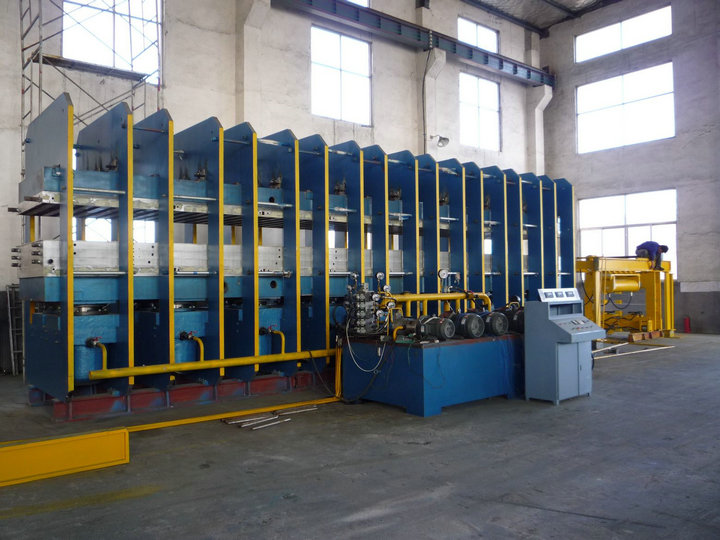
A spec sheet can list tensile strength, elongation, and cover hardness, but those numbers don’t tell you how a belt will behave after six months of carrying sharp-edged scrap or sitting in a washdown environment. Polyester and nylon carcasses may look almost interchangeable on paper, yet their performance diverges once moisture, tension cycles, and fine particles enter the picture. The real story shows up in the belt’s ability to hold its crown, resist edge fraying, and keep its splices tight under fluctuating loads.
Cover compounds are another place where the datasheet falls short. Two belts with the same abrasion rating can fail very differently when exposed to animal fats, citrus oils, or freezer temperatures. A slightly softer rubber might absorb impact better but swell and delaminate in the presence of certain solvents. A urethane cover with a lower initial abrasion number may outlast its rubber counterpart in a wet, high-wear zone simply because it resists hydrolysis and doesn’t stiffen when cold.
The most useful comparisons happen when you look beyond the standard test results and consider how the material behaves on your actual line. Pay attention to fabric weave, ply adhesion, edge sealing, and the way product releases from the top cover. These characteristics rarely make it onto a promotional sheet, but they decide whether a belt will run straight, track reliably, and avoid unexpected downtime. Once you start reading the material instead of just the numbers, the right choice becomes far less ambiguous.
Customization Clues That Separate Builders from Box Movers
When you sit down with a builder, pay attention to how they react to the phrase "What if we flipped the laundry room and the pantry?" A true custom builder leans in, grabs a pencil, and starts sketching over the floor plan. A box mover reaches for the spec sheet and tells you which of three predefined layouts you can choose from. That single moment reveals more than any brochure.
Another tell hides in material allowances. Builders who actually customize tend to walk you through a design center or local supplier with open-ended choices—not just granite color A or B, but whether you want soapstone, butcher block, or reclaimed oak. Box movers, on the other hand, offer "upgrades" that are really just line items on a price sheet. If the conversation keeps circling back to what's standard, you're probably not in a truly custom setting.
Ask about structural changes after the contract is signed. Custom builders usually have a change-order process that, while not free, treats a moved wall or added window as normal part of the build. Box movers often respond with hesitation, added fees that dwarf the actual work, or flat-out "no." The difference comes down to whether the builder sees the house as a set of fixed boxes or as a set of decisions you get to revisit.
Calculating Lifetime Costs Without Getting Lost in the Numbers
A car’s sticker price rarely tells the truth about what it will cost to own. The number that matters more is the running total: fuel or electricity, insurance, tires, routine maintenance, and the occasional repair that never shows up in the brochure. The simplest way to keep this from becoming overwhelming is to break it into two buckets—fixed annual costs and per-mile costs. Once you see those side by side, the car that looked cheaper at first often loses its advantage by year three.
Start with the numbers you can verify yourself. Look at your last twelve months of driving, not a national average. Multiply your expected miles by a realistic fuel or energy cost, add the manufacturer’s scheduled service for that interval, and then fold in a repair buffer of at least 10 percent of the purchase price over five years. You don’t need a spreadsheet with forty columns; a simple note on your phone can work if it captures those few categories consistently. The goal isn’t precision to the dollar—it’s spotting the difference between a car that costs you $6,000 a year and one that quietly eats $9,000.
Support After the Sale: The Telltale Signs of a Dependable Partner
A dependable partner is easy to spot once the invoice is paid: they pick up the phone, know your name, and remember which machine you're running. You're not pushed into a generic ticket queue or asked to re-explain your entire setup every time. Instead, you get a direct line to someone who already understands the quirks of your operation and treats your downtime as an urgent problem, not a scheduled callback.
Pay attention to how they handle the quiet months, too. The best support teams don't wait for something to break. They check in with firmware notes, flag a part that's nearing end of life, or suggest a small adjustment based on how your usage patterns have shifted. It's the kind of proactive attention that feels less like upselling and more like having an extra engineer on your side.
Finally, look at what they leave behind after a service visit. A trustworthy partner provides clear, practical documentation—simple runbooks, labeled photos, step-by-step recovery steps—not just a dense warranty PDF. They also tell you plainly what's covered and what isn't, before you're standing in front of a dead machine. That honesty is rarer than it should be, and it's a strong signal you've found a partner, not just a vendor.
Pressure-Testing a Supplier's Ability to Scale With Your Demand
Most suppliers look solid when order volumes stay flat. The real test comes when your demand spikes unexpectedly, or when a seasonal rush pushes production past its comfort zone. A partner who handles steady-state orders without breaking a sweat might collapse the moment you ask for triple the output in half the time. That's why formal pressure-testing matters—it exposes whether their equipment, staffing, and raw-material buffers can actually flex with your growth, or whether they're just coasting on current capacity.
Start by mapping out your worst-case scenario: a 40% surge in monthly orders, a sudden product redesign requiring new tooling, or a second-shift launch with tighter tolerances. Then ask the supplier to walk you through their plan for each scenario in detail. How many extra shifts can they realistically run? Do they have standby machine capacity, or is every line already near full utilization? What about lead times for critical components—do they hold safety stock, or do they rely on just-in-time deliveries that could break under stress? Listen for concrete numbers, not vague reassurances like "we can handle it." A supplier who can't point to specific past instances of scaling up, or who hesitates when you ask about overtime limits and subcontractor networks, is likely operating too close to the edge.
Finally, verify their claims with a small-scale stress exercise. Pick a modest, low-risk order and compress the timeline by 25%, or ask them to run a pilot batch with a new material variant. Watch how communication shifts under time pressure—do they proactively flag bottlenecks, or do they go quiet and hope for the best? A supplier's behavior during a controlled crunch reveals more about their true scalability than any polished capability deck. Treat every order as a live audition for the day your business takes off, and you'll avoid discovering their limits at the exact moment you need them most.
FAQ
Focus on modularity and scalability rather than just price. A line that can be reconfigured as your output grows saves capital later. Ask suppliers to show recent installations where capacity was expanded after initial commissioning.
Request a trial run with your actual product samples, not their standard demo materials. Observe edge wear after a few hundred cycles and ask for references from plants running similar loads. Pay attention to how the supplier handles mistracking corrections during the trial—this reveals their support style.
Often yes if the supplier takes responsibility for the whole integration—controls, guarding, and safety interfaces. But insist on a detailed interface document before signing. Avoid suppliers who outsource critical controls; a single point of accountability prevents finger-pointing during commissioning.
Belt replacements, wear strips, and emergency repair call-outs are common. Ask for a three-year spare parts cost estimate in writing. Also check voltage and air supply requirements against your facility—retrofitting utilities can add significant unplanned spend.
Visit their current production floor and look for half-built lines already in progress. A supplier with a healthy backlog and standardized frame fabrication jigs can deliver faster without sacrificing quality. Beware of any bid promising drastically shorter times than peers—that often means corners cut in panel wiring or belt splicing.
It matters more for high-throughput lines than for occasional use. If your line runs two shifts, a technician within four hours can save you days of downtime. Ask how many field service engineers cover your region and whether they stock common belts and drives locally.
Yes, but make it hands-on, not just classroom. Request that the supplier's commissioning engineer trains your crew during actual install and startup. This transfers practical knowledge about tensioning, splicing, and troubleshooting. Document the training in the contract as a deliverable, not a favor.
Choose adjustable side guides, variable speed drives, and frames with extra mounting points. A line built around fixed dimensions will limit you. Ask the supplier to confirm what changes can be made without replacing major structural components, and get that in writing.
Conclusion
Growing manufacturers often discover that a conveyor belt supplier's true readiness appears long before the first order ships. The right partner demonstrates a clear grasp of your expansion timeline, not through polished pitches but through concrete evidence: past installations for similar-sized plants, transparent lead times, and a willingness to adjust production schedules as your footprint grows. Digging into belt materials reveals another layer—suppliers who openly discuss tensile strength, abrasion resistance, and chemical compatibility for your specific product flow show they understand the line's daily reality, not just a catalog spec sheet.
Customization separates genuine builders from box movers. A dependable supplier asks about incline angles, cleat profiles, and transfer points, then proposes modifications without pushing stock solutions. Lifetime cost calculations matter more than upfront price: energy consumption, belt replacement intervals, and downtime frequency should all be laid out in plain English, not buried in spreadsheets. After the sale, look for responsive technical support, local spare parts inventory, and field service teams that don't vanish once the invoice clears. Finally, pressure-test their scalability—can they handle a 50% output jump without renegotiating every term? If they can show you concrete examples of doubling capacity for other clients, you've likely found a partner worth keeping.
Contact Us
Contact Person: Chen Zhengwei
Email: [email protected]
Tel/WhatsApp: +86-13963975727
Website: https://www.sfcrubbermachine.com