
Concrete Box Culvert Molds from China Factory: Reliable Solutions for Infrastructure
2026-07-29
When infrastructure projects demand unwavering strength and flawless precision, the secret often lies beneath the surface—in the molds that shape our world. At Qianfeng Electromechanical Equipment, we don’t just manufacture concrete box culvert molds; we engineer reliability from a China factory where innovation meets decades of hands-on expertise. What makes our approach different? It’s the quiet confidence of a team that sweats the small stuff, so your culverts hold strong year after year. Dive into the story behind the molds that are quietly reshaping infrastructure—and why they might be exactly what your next project is missing.
How Box Culvert Molds Are Shaping Modern Infrastructure
There is a quiet revolution taking place beneath our roads and railways, one that rarely makes headlines but is fundamental to how modern cities function. Precast box culvert molds are at the heart of this shift, turning concrete into modular, precision‑engineered arteries that channel water, protect utilities, and stabilize embankments. Unlike the labor‑intensive cast‑in‑place methods of the past, these reusable steel forms allow contractors to produce identical units in a controlled yard environment, slashing construction time on site from weeks to mere hours. The result is infrastructure that goes in faster, disrupts traffic less, and stands up to decades of punishing conditions without the hairline cracks so common in poured‑in‑place alternatives.
What often goes unnoticed is how mold design itself drives performance. Modern molds are not simple boxes; they incorporate hydraulic systems, vibratory compaction, and interchangeable core elements that can create variable cross sections, tapered wing walls, or integrated headwalls in a single casting cycle. This flexibility means a single mold can serve multiple project profiles, reducing the capital tied up in formwork. More importantly, the repeatability of the process yields culverts with exceptional joint tightness—critical for preventing soil migration and roadbase settlement. In flood‑prone regions, these seamless connections become a first line of defense against washouts, silently preserving the road network long after the storm passes.
The true impact, however, is felt in the margins of urban expansion. As cities push into marginal land, the ability to install durable drainage corridors quickly and cost‑effectively unlocks development that would otherwise be stalled by complex hydrology. Box culvert molds make it feasible to standardize underpasses, wildlife crossings, and stormwater detention vaults, giving planners a kit of parts rather than custom designs. This shift toward industrialized construction is not about making everything look the same—it’s about guaranteeing that what gets buried in the ground tomorrow will still be doing its job faithfully half a century from now, with no fanfare, just as it should.
Inside the Production Process: Crafting Durable Molds at Scale
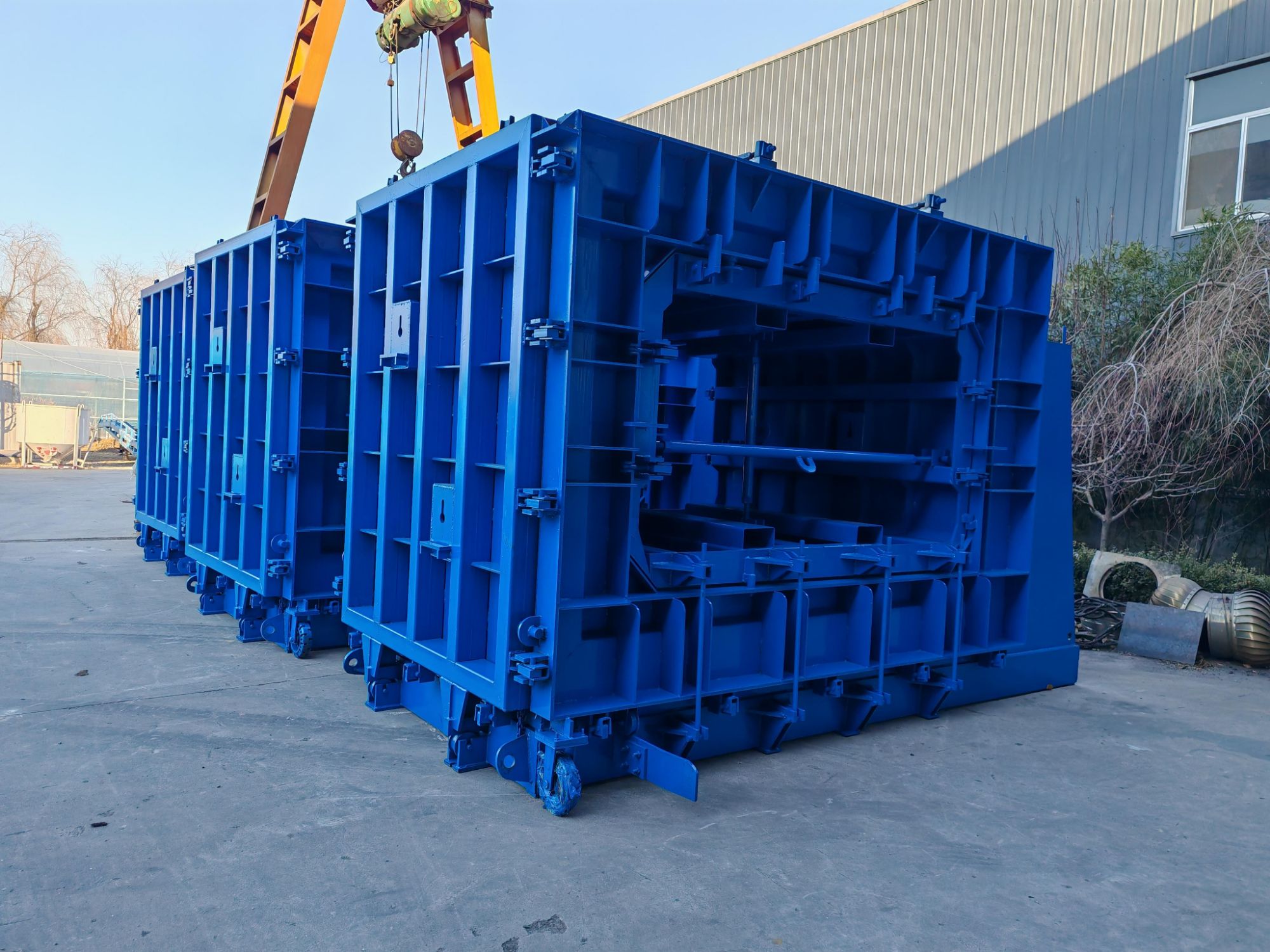
Walking the factory floor, you witness raw steel transformed through a choreography of precision. Each mold begins as a solid block, mapped out by engineers who obsess over micron-level tolerances. CNC machines then carve the initial geometry, shaving away excess material in long, deliberate passes while coolant mist hangs in the air. It’s not mere subtraction—it’s the first step in giving a mold its skeleton, where every cut determines how faithfully it will shape thousands of final parts down the line.
From there, the mold enters heat treatment, a phase where metallurgy takes center stage. The steel is heated and quenched in cycles calibrated to reshape its crystalline structure, chasing the sweet spot between hardness and toughness. Too brittle and it cracks under pressure; too soft and it deforms after a few cycles. Our process threads this needle by pairing decades of tribal knowledge with real-time hardness tracking, ensuring each mold emerges with the resilience to endure high-clamp forces and abrasive melts without complaint.
Surface finishing separates functional molds from forgettable ones. Once the core and cavity are cut and hardened, we apply physical vapor deposition coatings or painstaking hand-polishing, depending on the resin and part texture needed. It’s a blend of chemistry and craftsmanship: a mirror finish can reduce ejection friction, while a fine matte texture can hide weld lines. Scaling this requires a disciplined eye—every operator knows that a single errant scratch can seed failure after a few thousand cycles, so inspection under raking light becomes a daily ritual, not an afterthought.
Why Design Flexibility Matters for Underground Conduits
Design flexibility in underground conduits is not a luxury but a practical necessity. When installers can adapt the layout to site-specific challenges—like unexpected rock formations, existing utilities, or soil variations—projects stay on track. Rigid systems often force costly workarounds or delays, while flexible designs accommodate adjustments without compromising the integrity of the run. This adaptability reduces the risk of damage during installation and ensures the conduit can handle future expansions or upgrades without extensive rework, saving both time and materials in the long run.
Beyond immediate installation, flexible design accommodates the inevitable shifts in the surrounding ground. Soil expands and contracts with moisture, and slight structural settling over time can place stress on rigid conduits, leading to cracks or misaligned joints. A more forgiving layout can absorb these movements, protecting the cables inside from abrasion or exposure. This durability is especially critical in regions prone to freeze-thaw cycles or minor seismic activity, where the ground is constantly in flux. Engineers who prioritize flexibility are essentially building in a buffer against natural wear and tear, extending the system’s lifespan by years.
On the operational side, maintenance crews benefit greatly from a thoughtfully designed conduit system. When repairs or cable upgrades are required, having pull points, spare capacity, and accessible junction boxes means work can be done swiftly without tearing up long stretches of pavement or landscaping. This not only cuts down on labor costs but also minimizes disruption to traffic, businesses, or residential areas. In essence, designing for flexibility is an investment in the system's future usability, ensuring that what’s buried today won’t become tomorrow’s logistical headache.
Built to Last: Material Choices and Long-Term Performance
Longevity in any product starts with the raw materials. We select each component not for its cost or availability, but for how it ages over decades. Metals are chosen for their resistance to corrosion and fatigue; polymers for their stability under UV exposure and temperature swings; coatings for their ability to bond at a molecular level rather than simply sitting on the surface. This isn’t about following industry standards—it’s about pushing past them, testing samples in accelerated aging chambers that simulate years of wear in a matter of weeks. The goal is to understand failure points before they ever appear in the real world.
Real-world performance often exposes weaknesses that lab tests miss. That’s why we embed sensors and data loggers into field prototypes, tracking how materials respond to salt spray, humidity cycles, and constant vibration. One surprising discovery came from a gasket compound that performed perfectly in controlled conditions but swelled slightly after prolonged contact with a particular cleaning agent commonly used in coastal facilities. That insight led us to reformulate the elastomer, creating a variant that now ships standard across all installations near marine environments. Such micro-adjustments, invisible on a spec sheet, are what separate a product that works for a few years from one that outlasts its expected service life by a full generation.
Ultimately, the payoff is in what doesn’t happen: no unscheduled downtime, no premature replacements, no emergency repair crews working through the night. Customers don’t need to think about material science because the thinking was done upfront. From bearing steels that laugh off micropitting to seals that maintain elasticity at 40 below zero, the choices are deliberate and tested. It’s a quiet kind of confidence that builds over time—one that comes from knowing the things we’ve built are still out there, doing their job quietly, long after the warranties have expired.
Customization Without the Usual Delays
We’ve re-engineered our production process so that tailor-made solutions don’t have to mean long wait times. By blending modular design with smart automation, your unique specifications slot right into a system built for speed. Every custom order flows through a streamlined pipeline where human expertise and machine precision work in tandem, eliminating the bottlenecks that normally stall personalized projects.
Instead of starting from scratch each time, we use a flexible framework that adapts to your needs without the weeks of back-and-forth. Digital previews and rapid prototyping let you see your product taking shape almost instantly, and any adjustments are made on the fly. This tight feedback loop keeps the whole process nimble—so you get exactly what you envisioned, delivered when you need it, not when a queue finally allows.
Our approach treats customization as a core capability, not an add-on. Inventory is staged and ready for personalization, and our team is cross-trained to pivot between standard and bespoke tasks without skipping a beat. The result is a seamless experience where the journey from concept to completion feels swift and effortless, proving that personalization can be both speedy and precise.
From Factory to Site: Streamlined Logistics for Global Projects
Moving heavy machinery from a bustling factory in Germany to a remote construction site in Brazil demands more than a shipping container and a prayer. We break down each leg of the journey—truck, rail, sea freight, and final-mile delivery—so nothing gets lost in translation or transit. Our logistics planners sit with factory floor managers to crate equipment with site-ready precision, labeling every component in the sequence it will be needed, not just by project phase but by elevation and sector. This means when the ship docks, the offloading order is already scripted, slashing port fees and idle crane hours.
Customs clearance can stall a project for weeks if paperwork doesn’t mirror what’s inside the boxes. That’s why our documentation walks hand in hand with physical freight: harmonized codes, certificates of origin, and packing lists are triple-checked against local import regulations before the first pallet leaves the factory. In one recent wind farm project across three countries, we routed components through a free-trade zone to defer duties until the exact moment of installation, saving the developer over a million dollars in upfront cash flow. It’s this kind of creative routing—zigzagging through trade treaties rather than taking the geographic shortest path—that turns logistics from a cost line into a competitive lever.
On the ground, delivery doesn’t end with a signed bill of lading. We embed site-aware coordinators who speak the contractor’s language, tracking every bolt and beam via a shared dashboard that updates with truck GPS pings. If monsoon rains wash out a delivery road in Southeast Asia, the team reroutes in real time, not via a chain of emails three time zones away. The goal is simple: the crew should never glance at a half-assembled structure waiting for parts. They should pour concrete, bolt steel, and push the project forward, trusting that the next truck will roll in precisely when the schedule demands it.
FAQ
They provide a reliable way to produce standardized, durable culverts that form the backbone of drainage systems, underpasses, and cable tunnels. Consistent mold quality directly translates into structures that withstand heavy loads and environmental stress over decades.
Chinese manufacturers have refined their production through years of high-volume output, offering a balance of skilled craftsmanship and modern machinery. This results in molds that meet tight tolerances without the premium often charged elsewhere, while still allowing for hands-on customization.
They're normally built from heavy-gauge structural steel with reinforced ribbing at stress points. With proper maintenance, a well-made mold can handle hundreds of casting cycles without warping, thanks to precision welding and post-production stress relief treatments.
Absolutely. Most established factories have in-house engineering teams that modify or design from scratch based on your cross-section drawings. Adjustments can cover everything from internal dimensions to wall angles and joint details.
You'll see them in highway underpasses, railway drainage crossings, stormwater management networks, and agricultural irrigation channels. Essentially, anywhere you need a robust conduit buried underground or submerged in damp conditions.
A precise mold reduces concrete waste and minimizes the need for on-site corrections. Its reusability across multiple pours amortizes the initial investment quickly, while faster demolding cycles shorten project timelines, cutting labor and equipment expenses.
Go beyond the catalog. Ask about their track record with projects similar to yours, request a factory tour or video walkthrough, and discuss after-sale support like on-site installation guidance. Genuine responsiveness and willingness to share references often separate a solid partner from a mere trader.
Many factories now incorporate hydraulic clamping and built-in vibrators that ensure even concrete compaction without external power packs. Some also offer collapsible core systems for intricate multi-cell culverts, reducing assembly labor dramatically.
Conclusion
Modern infrastructure projects demand precision and durability, and concrete box culvert molds from our China factory deliver exactly that. These molds are engineered to shape the conduits that carry water, utilities, and traffic beneath roads and railways, directly influencing the resilience of entire networks. By integrating advanced manufacturing techniques and rigorous quality checks, we produce molds that consistently form robust, dimensionally accurate culverts. The production process emphasizes craftsmanship at scale—each mold is built to withstand repeated casting cycles without distortion, ensuring every culvert meets exact specifications. This attention to detail at the factory level reduces on-site adjustments and long-term maintenance, making our molds a cornerstone of reliable infrastructure development.
Beyond strength, design flexibility plays a critical role in adapting to diverse project needs. Our approach to customization avoids the usual bottlenecks, allowing engineers to specify unique dimensions, joint configurations, and reinforcement layouts without extended lead times. We select high-grade steel and treat surfaces to resist wear and corrosion, so the molds themselves last through thousands of uses, translating to lower lifecycle costs. The smooth transition from our factory to your site is supported by streamlined logistics that handle global shipping complexities, ensuring timely delivery even for remote locations. In essence, our molds offer a blend of adaptable design, enduring materials, and efficient delivery—a practical solution that keeps underground infrastructure flowing reliably, no matter the environment.
Contact Us
Contact Person: Bill
Email: [email protected]
Tel/WhatsApp: 8615063653526
Website: https://www.qianfengjd.com