
China Semi Dull Polyester Filament Yarn: Essential Guide for Textile Professionals
2026-08-23
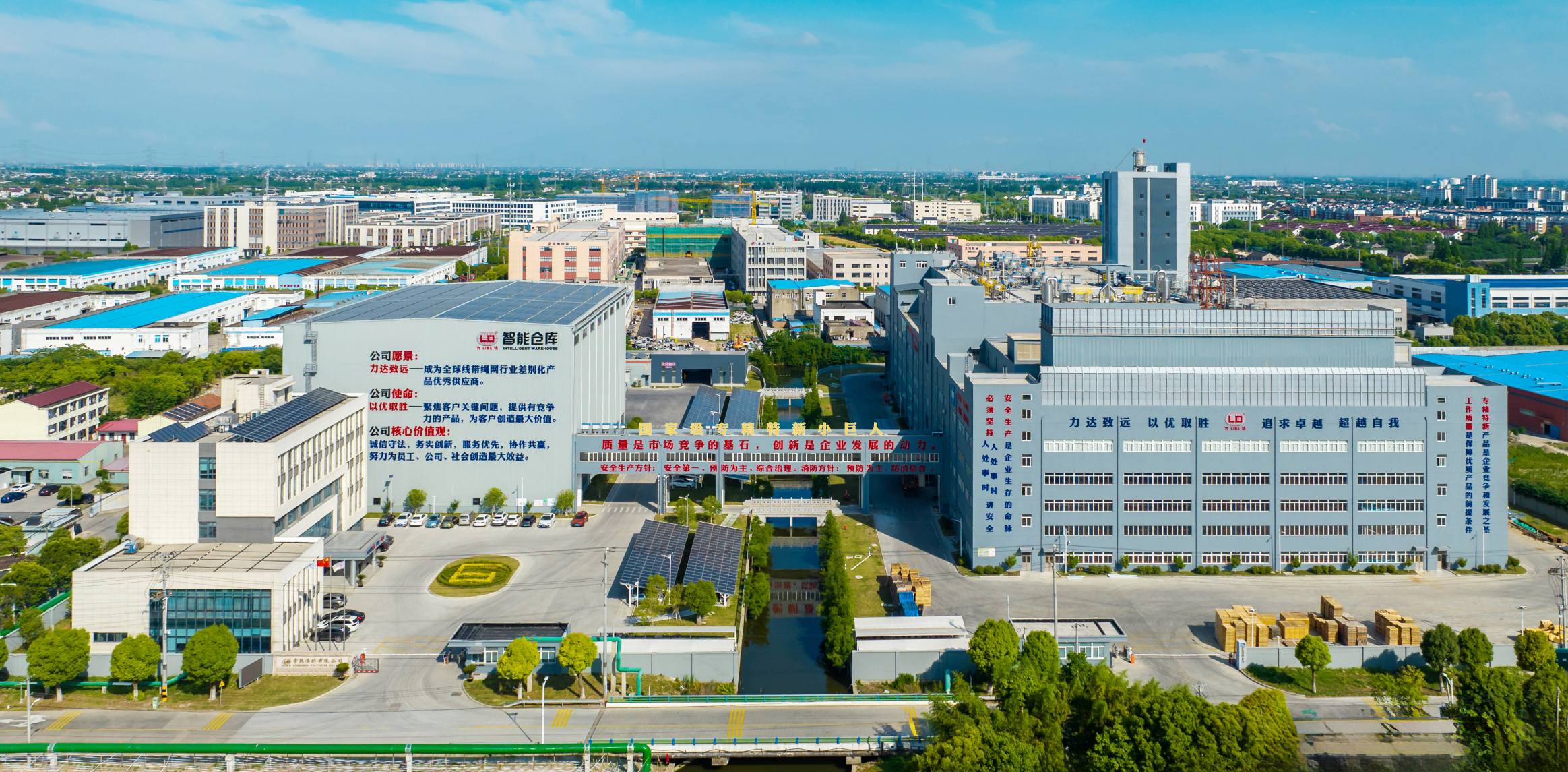
If you’ve sourced polyester filament yarn in China, you already know that “semi dull” is more than a finish—it’s a performance decision. But what separates a reliable, high-quality semi dull yarn from the rest? This guide is built for textile professionals who need to make that call with confidence. We’ll break down the properties, production nuances, and real-world applications of China semi dull polyester filament yarn, with a close look at why Changshu Polyester has become a name worth knowing in the supply chain. No fluff, no generic specs—just the details that help you avoid costly trial and error.
What Makes Semi Dull Polyester Filament Yarn Different from Bright and Full Dull?
Semi dull polyester filament yarn occupies a middle ground that often gets overlooked. It doesn't shout with the high shine of bright yarn, nor does it retreat into the completely matte look of full dull. Instead, it carries a soft, restrained luster that feels more natural and less synthetic. This subtle sheen comes from a carefully controlled amount of titanium dioxide added during the spinning process—less than what full dull uses, but enough to break up the glossy, plastic-like reflection found in bright yarn. The result is a fiber that catches light gently, giving fabrics a refined depth without appearing shiny or flat.
When you compare the three side by side, the differences become practical rather than just visual. Bright polyester has no dulling agent, so it reflects light almost like a mirror, which can make colors look more vivid but also highlights every imperfection and tends to feel slick against the skin. Full dull yarn, with its higher concentration of titanium dioxide, scatters light so thoroughly that the surface looks completely matte—great for hiding shine, but it can also mute the richness of deep colors and sometimes feels slightly harsher due to the added particles. Semi dull sits in between: it keeps enough clarity for colors to stay true and saturated, yet softens the reflection so that the fabric looks more expensive and less like costume satin.
In real-world use, this middle option often wins for garments that need to look good in both daylight and indoor lighting. A bright yarn might look flashy in a showroom but cheap under office fluorescents. Full dull can appear dusty or flat in warm ambient light. Semi dull adapts better because its low-level luster adds dimension without becoming distracting. It is also a favorite for prints, since the slightly broken reflection helps ink sit evenly and prevents the fabric from glaring through the pattern. For anyone who wants polyester that mimics the subtle glow of high-quality cotton or wool rather than screaming synthetic, semi dull filament yarn is the practical choice.
How Chinese Manufacturers Control Spin Finish and Luster Consistency
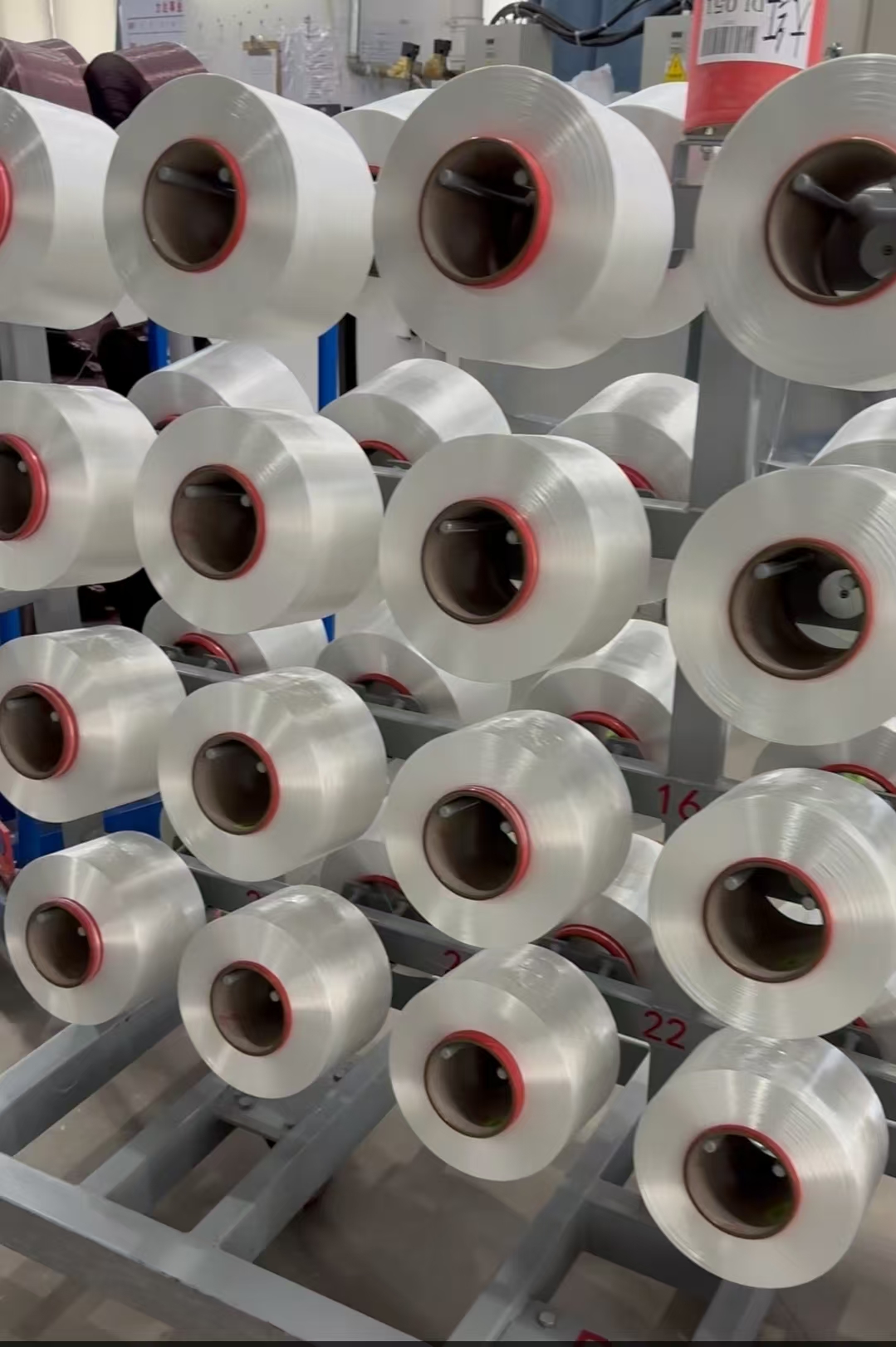
Chinese textile mills rely on closed-loop dosing systems that monitor yarn tension and friction in real time. Spin finish is applied through precision metering pumps with feedback from capacitance sensors, allowing operators to adjust concentration within a narrow band. Some facilities use dual-tank blending to prevent stratification and maintain uniform viscosity throughout a production run.
For luster consistency, the melt spinning stage receives more attention than downstream finishing. Polymer chips are blended from homogenized batches, and spinneret hole geometry is checked with automated optical comparators. Cooling air temperature and quench chamber humidity are logged every few seconds, and any drift triggers an alarm before filament cross-section changes enough to alter surface reflectance.
Instead of relying on final inspection alone, many Chinese producers integrate spin finish and luster data into a single process control loop. Small sample cones are knitted or woven immediately after spinning, then measured with a gloss meter under standardized lighting. When a batch drifts, engineers shift the spin finish formulation slightly or adjust draw ratio, often restoring consistency within minutes rather than after off-spec product has accumulated.
Tensile Strength, Elongation, and Other Specs You Should Check Before Buying
Tensile strength tells you how much pulling force a material can take before it snaps. But that number alone doesn’t give the full picture—elongation matters just as much. A product with high tensile strength but almost no stretch will fail suddenly under shock loads, while one with moderate strength and good elongation can absorb impact and bend before breaking. Always compare both values side by side instead of fixating on a single spec.
Beyond those two, check the tear strength and abrasion resistance if the item will face rough handling or repeated friction. Hardness and density can also shift how a material behaves in cold or hot environments, so don’t assume the datasheet covers your actual working conditions. Ask for samples and run a quick bend test or a thumbnail scratch test—real-world feel often reveals weaknesses that polished spec sheets hide.
Finally, look for consistency across batches. A supplier might send one impressive test report, but if their production varies, your second order could be completely different. Request the full test certificate for the exact lot you’re buying, and if possible, have an independent lab verify a few key numbers. Spending a little extra time on verification now prevents expensive failures later.
Common Defects in Semi Dull POY and FDY and How to Spot Them
Spotting defects in semi dull POY and FDY starts with knowing what normal yarn should look like. Semi dull yarns have a subtle, even luster thanks to titanium dioxide additives, so any patch of excessive shine or dullness often points to uneven additive distribution. Run your fingers along the yarn under a strong light—if you feel tiny hard lumps or see periodic thick-and-thin sections, that's a classic sign of polymer gel or spinneret contamination. These defects tend to repeat at regular intervals, which helps distinguish them from random mechanical snags.
Another common issue is broken filaments, sometimes called `fuzz` or `lint.` When a single filament snaps during spinning or drawing, it can wrap around adjacent filaments, creating a hairy or rough surface. You can spot this by pulling a short length of yarn taut against a dark background and looking for tiny loops or stray fibers. In FDY, these defects often show up as intermittent slubs or neps that affect downstream weaving. For POY, watch for periodic variation in dye uptake—it usually indicates improper quenching or uneven orientation.
Finally, check for color streaks or bright specks, especially in semi dull yarns where any foreign particle stands out. Use a fabric inspection board or a simple white card behind the yarn. If you notice consistent off-white or yellowish bands, the cause might be degraded polymer or contamination from the spin pack. Keeping a small magnifying loupe handy makes it easier to tell the difference between surface fuzz and actual broken filaments, so you can trace the root cause faster.
Weaving, Knitting, and Sewing Thread: Matching the Yarn to Your End Use
The first rule of yarn selection is that weaving, knitting, and sewing each place different physical demands on a thread. Weaving yarns need enough twist and tensile strength to survive the repeated friction of heddles and reed, so tightly spun cotton, linen, or worsted wool often work best. Knitting yarns, by contrast, perform better with lower twist and a bit more loft, which lets them bend around needles and create a fabric with drape rather than stiffness. Sewing thread sits in yet another category—it has to be smooth, consistent in diameter, and strong enough to hold seams under stress without breaking during high-speed machine stitching.
Fiber type and finish also matter more than most people expect. A mercerized cotton thread will handle differently from a soft spun silk or a polyester core-spun thread, even if their labeled weights look similar. For handweaving a wool scarf, a springy two-ply wool gives better resilience than a dense high-twist weaving yarn meant for warp-faced rugs. In knitting, a single-ply merino might feel luxurious around the neck but pill badly on a high-friction area like a cardigan cuff. And for sewing denim or canvas, you need a thread with enough abrasion resistance and a slightly heavier tex count, otherwise the seam can fail long before the fabric shows wear.
The most reliable way to avoid disappointment is to match the yarn or thread to the project’s everyday reality. Ask where the finished piece will live: a cushion cover needs a tightly spun, colorfast yarn that can survive being sat on, while a lace shawl benefits from a fine, smooth yarn that holds a block. When in doubt, knit, weave, or sew a small swatch and treat it the way you would the final object—rub it, wash it, stretch it. That test will tell you more about the right match than any label alone.
Price vs. Performance: Evaluating Chinese Suppliers Without Sacrificing Quality
Many buyers treat the China sourcing equation as a straight trade-off: lower price means lower performance. That mindset misses how much variation exists among suppliers. Some factories achieve better pricing through lean manufacturing, vertical integration, or automation—not by cutting corners. Others do cut corners, and their low quotes hide rework costs, delayed shipments, or materials that fail after six months. The real question isn't whether you can find cheap, but whether the supplier's cost structure aligns with the quality you actually need.
Start by ignoring the headline price. Ask for a breakdown of material costs, labor hours, and overhead. A supplier who can explain why they're 15% cheaper—say, they own their own injection molding shop or run night shifts with lower energy rates—is more credible than one who just says 'we have good price.' Then look at their quality infrastructure: do they use automated optical inspection? What percentage of production gets tested? Request recent defect rate data or a sample batch. A factory that hesitates to share these details is signaling that performance may not survive the price cut.
Finally, run a trial order with realistic tolerances and ask for a third-party inspection before shipment. Don't judge the supplier only on the final unit cost; factor in communication speed, willingness to fix issues, and consistency between sample and bulk. Some of the best performing Chinese suppliers I have worked with were not the cheapest, but their total cost—including fewer returns and less back-and-forth—ended up lower than the bargain quotes.
FAQ
The distinction comes down to the amount of titanium dioxide added during polymerization. Semi dull typically contains 0.2–0.5% TiO2, which scatters light enough to cut the high shine of bright yarn but not so much that it looks chalky or flat. Bright has almost no additive, while full dull can run up to 2.5% and feels harsher with more broken filaments. In practice, semi dull hits a useful middle ground for fabrics that need a natural cotton-like or wool-like matte surface without sacrificing tensile strength or dye uptake.
It is less about a single reason and more about infrastructure density. The polyester chain from PTA and MEG to polymerization, spinning, and texturing sits in concentrated coastal clusters. That shortens lead times and keeps conversion costs low. Many mills also run fully integrated plants with in-house quality labs, so you are not dealing with multiple intermediaries. Still, dominance does not mean uniform quality—buyers still have to separate high-performance lines from plants chasing rock-bottom prices.
At minimum ask for denier per filament, tenacity, elongation at break, oil pick-up, interlacing nodes per meter, and residual shrinkage. But do not stop at the data sheet. Semi dull yarn can vary in luster consistency if TiO2 dispersion is poor, so request a luster meter reading across several bobbins. For weaving or knitting high-speed applications, coefficient of friction and package build are also critical—uneven winding causes more downtime than most people expect.
One practical method is to ask for retained samples from the last five production lots and have a third-party lab run the same test matrix on all of them. Many mills will share this if you are serious about volume. Also check whether the plant uses the same spin pack and winding equipment for your specification, because some switch lines between orders and that shows up as subtle dyeing variation. Regular pre-shipment inspection is not optional for semi dull, especially for critical color applications.
You see it in apparel where a natural hand matters—blouses, shirts, linings, dresses—and in home textiles like curtains, upholstery, and bedding. It also works well for technical fabrics that need low glare, such as outdoor banners, automotive interiors, and certain medical textiles. Semi dull is often overlooked for warp knitting, but its reduced sheen actually helps hide barre defects compared to bright yarn.
FOB Shanghai or Ningbo is standard, but many sellers will quote CIF or DDP if you push. Lead times for standard semi dull spec can be 2–4 weeks, but custom denier or special oil might stretch to 6–8 weeks during peak season. Container loading for filament yarn is usually around 20–22 tons in a 40' HC depending on package size. Ask about palletization and moisture protection—sea shipment in summer can cause condensation damage if wraps are not sealed properly.
Pressing too hard on price often gets you a lower TiO2 dispersion quality or a slightly higher denier variation that still passes the certificate. Another mistake is accepting a similar substitution—like a semi dull from a sister plant—without re-testing. Some buyers also ignore the importance of paper trail for export rebates and origin certification. If a deal looks unusually cheap, ask for the mill's latest third-party audit report and check whether it matches the actual production site.
There is a clear move toward more differentiated semi dull products—recycled feedstocks, bio-based MEG, low-shrinkage grades, and custom luster levels. Environmental compliance in Jiangsu and Zhejiang has pushed older small lines out, so the surviving mills tend to be larger and more automated. That means tighter supply for commodity semi dull during peak garment seasons, but also better consistency if you choose a top-tier producer. Prices have also decoupled from raw PTA swings a bit because energy and labor now play a bigger role.
Conclusion
China’s semi dull polyester filament yarn occupies a practical middle ground between bright and full dull versions, and understanding that distinction matters for textile professionals. The subdued luster comes from a controlled amount of titanium dioxide, which gives fabrics a softer appearance without sacrificing tensile performance. This balance makes it a favored choice for apparel and home textiles where a slight sheen is desired but brightness would be too harsh. Chinese manufacturers maintain spin finish and luster consistency through precise metering systems and continuous monitoring, reducing batch-to-batch variation. Before buying, you should verify tensile strength, elongation, and evenness values, as these specs directly influence how the yarn behaves during warping, weaving, or knitting.
Common defects in semi dull POY and FDY, such as broken filaments, poor cohesion, or uneven oil pick-up, are easier to spot through visual inspection combined with tension testing. Matching the yarn to your end use—whether for weaving, knitting, or sewing thread—requires attention to filament count, twist, and finish type. For instance, a higher filament count often suits soft drapey knits, whereas a lower twist might be better for sewing thread to reduce snarling. When comparing Chinese suppliers on price versus performance, avoid judging by unit cost alone. Request trial cones, review batch quality records, and ask how they control luster and spin finish consistency. Negotiate on total cost of ownership, not just the invoice price, and consider factors like delivery reliability and technical support. A reliable supplier will provide traceable data and openly discuss process limitations, helping you secure competitive pricing while keeping your finished textiles consistent and dependable.
Contact Us
Contact Person: CONNIE
Email: [email protected]
Tel/WhatsApp: 86-0512-53671634
Website: https://www.lida-yarn.com/