

China Mixer Truck Washing Machine Solutions That Improve Fleet Cleanliness
2026-11-16
Most fleet managers know the problem: once concrete starts curing inside a mixer drum or on chassis parts, the cleanup bill climbs fast. That’s where the right washing equipment changes the equation. In this post, we look at China mixer truck washing machine solutions that improve fleet cleanliness without slowing down daily operations—and why Sinou has become a name worth watching in this space. If you’re tired of scrubbing hardened buildup or paying for excessive downtime, there’s a better way to keep your trucks road-ready.
What Changes When the Wash Bay Is Built for Mixers
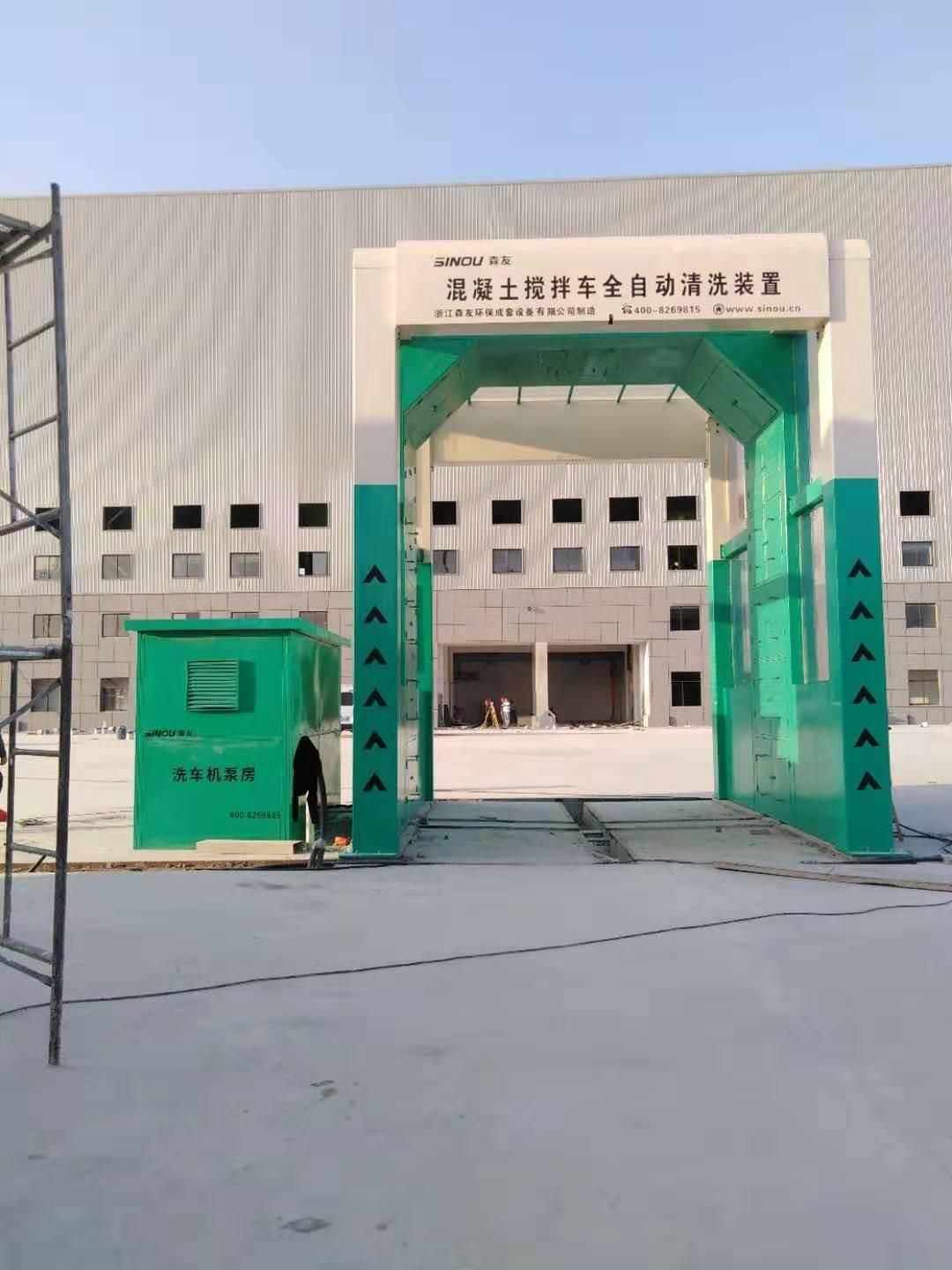
The most immediate shift is that washing stops being a nuisance task squeezed into odd hours. Once the bay is in place, drivers bring mixers through at the end of each batch run instead of waiting for a free corner of the yard. The spray area is sized for the truck, so mirrors, chutes, and hoppers get rinsed without moving the vehicle twice.
Water handling changes just as much as the washing itself. A built-for-mixers bay usually includes a settling pit or a basic recycling loop. That means the wash water no longer disappears into a general drain. Instead, someone has to manage the solids that drop out. It becomes a short weekly job to clear the catch basin, and the payoff is less sludge buildup in the rest of the yard.
Small habits around inspections also start to stick. When a driver has a well-lit bay with a fixed spray wand, checking the drum, tire sidewalls, and discharge chute during the rinse feels like a natural part of the routine. Cracks or loose brackets tend to get noticed earlier because the truck is clean and the area is built for looking, not just hosing off.
How Chinese Manufacturers Think About Mud and Slurry
Mud is rarely seen as a nuisance in Chinese manufacturing. It gets weighed, measured, and discussed in terms of particle size, settling speed, and what it will do to a casing after six months of contact. That shift in attitude changes the whole design conversation, because the fluid is treated as part of the machine rather than something that merely passes through it.
Walk through a pump workshop in Shijiazhuang or a dredging equipment yard in Jiangsu and you will hear more talk about wear allowance than about peak efficiency. Impellers are often cast thicker than their Western equivalents, clearances are opened slightly, and replaceable liners are considered standard. The reasoning is simple: downtime caused by abrasive wear costs more than a few points of hydraulic efficiency lost on paper.
There is also a deep preference for materials and layouts that can survive bad maintenance. Ceramic and high-chrome liners are common not because they are exotic, but because they extend service intervals when operators are handling coarse tailings, coal slurry, or river silt. Many factories test prototypes in actual mine or dredge sites before freezing a design, and those field results carry more weight than any laboratory curve.
A Layout That Moves Trucks Through Without Pileups
The yard is shaped as a one-way loop, so incoming trucks never cross paths with vehicles that are already loaded and heading out. Drivers enter on the east side, pull through a short staging lane, and back into docks that sit at a slight angle to the main aisle. This keeps the travel lane clear even when several rigs arrive within the same fifteen-minute window.
Queueing space sits before the dock row instead of in front of it. That means a truck waiting for a door does not block another driver who has finished unloading. Corners are wide enough for a full tractor-trailer to swing around without stopping, and the exit gate opens onto a feeder road rather than a shared intersection.
Painted markings and overhead signs do most of the directing, so drivers rarely have to guess where to go next. The result is a slow but steady rhythm: pull in, stage, dock, release, and pull out. Even on busy mornings the flow keeps moving because the geometry removes the usual conflict points instead of asking people to negotiate them on the spot.
Reusing Wash Water in a Way That Does Not Set Like Cement
Leftover wash water from rinsing mixer drums and chutes often turns into a gritty slurry that can lock up pipes and settle into rock-hard layers overnight. The aim is to keep those fine cement particles in suspension instead of letting them find a quiet spot to bond. Slow, continuous agitation in a holding tank makes a real difference; even a modest recirculation setup stops the solids from forming a dense, immovable bed at the bottom. Crews that treat the water as a material to be managed, rather than a waste stream to be ignored, tend to avoid the worst blockages.
Dosing also matters more than it seems. Rather than dumping a set retarder once and hoping for the best, small and frequent additions tied to the actual solids load keep the mix workable. A simple mud balance or weighted cup gives a much better read than visual guesswork. When the specific gravity starts climbing, it is usually cheaper to draw off a controlled amount for batching than to wait until the bottom of the tank hardens into a cement-like slab.
Some batch plant crews keep a separate day tank for returned wash water and rotate it into fresh concrete within a short window. That approach works only if the water stays fluid and reasonably consistent. Using it for non-structural mixes or lower-risk pours first provides a practical buffer while the crew learns how their specific aggregates and admixtures react. The target is not perfect clarity; it is steady, predictable movement that keeps fine particles from settling into something resembling cured cement.
Nozzles, Angles, and the Spots That Get Missed
Most people assume a spray nozzle works the same no matter how you hold it, but that is rarely the case. A slight tilt changes the fan pattern, shifts the pressure, and leaves a thin strip untouched. When you rush through a cleaning job, those strips add up. Corners, edges, and the area just behind a protruding fixture are common casualties. The issue is not always the tool itself, but the habit of keeping the wrist locked at one comfortable angle. By varying your grip and occasionally reversing the direction of your passes, you force the liquid into the places your default motion skips.
Another overlooked factor is nozzle size. A wider orifice might cover more surface in less time, but it also produces larger droplets that bounce off instead of clinging. A narrow tip gives you control, yet it can create streaks if you move too slowly. The realistic approach is to match the nozzle to the surface texture, not to the clock. Smooth glass tolerates a fine mist, while rough concrete needs a heavier stream. If you do not adjust, you end up with a visibly clean center and a grimy border that nobody notices until the light hits it.
Finally, pay attention to the height and distance of your strokes. Holding the nozzle too close flattens the spray and pushes debris sideways. Holding it too far lets the wind or gravity steal the product before it lands. The spots that get missed are usually not hidden; they are simply outside the narrow band you have been repeating. A slower second pass at a different angle is often enough to catch them. No extra chemical, no special attachment, just a deliberate change in motion.
Keeping the System Clean So It Keeps the Fleet Clean
A dirty wash system rarely stays dirty in just one place. Soap residue, road grit, and hard-water scale collect in nozzles, pumps, and reclaim tanks, making each wash cycle less effective while wearing down seals and valves. Keeping those internals flushed and free of buildup is what lets the wash bay do its job without turning a quick rinse into a maintenance headache.
Fleet cleanliness starts before the first spray hits the vehicle. Checking water quality, cleaning settlement basins, and clearing nozzle patterns keeps contamination from being thrown back onto doors, mirrors, and wheel wells. When the system itself runs clean, the output stays consistent enough that drivers can get in, get washed, and get back on schedule.
The payoff shows up in fewer return visits, longer equipment life, and wash cycles that stay predictable under daily use. A clean system doesn't just keep the fleet looking sharp—it removes the small failures that force unscheduled downtime and extra hand washing.
FAQ
Mixer trucks collect cement paste, splash-back from pours, and returned sludge that hardens quickly on the drum, chute, and frame. A standard hose-down station relies on manual scrubbing and often misses the rear drum mouth and discharge hopper. A purpose-built mixer washing machine uses high-volume water jets and rotating spray bars aimed at those exact areas, so the buildup is removed before it cures into a layer that requires chipping.
Most generic truck wash arches are designed for box vans or tippers, so the nozzle layout doesn’t reach the drum shoulders or the underside of the chute. A dedicated mixer truck unit is built around drum geometry, with corrosion-resistant nozzles and frames that tolerate abrasive cement residue. Many suppliers also integrate a concrete reclaiming or settling tank as part of the package rather than treating it as an add-on.
They can handle light to moderate set material when specified with higher pressure and, in some cases, warm water or a mild detergent injection. For thick hardened lumps, no automated wash will remove everything; you still need occasional manual chipping. The real value is preventing that layer from forming in the first place by making post-pour washing fast enough that drivers actually do it every trip.
Well-designed closed-loop systems recover and reuse 80 to 90 percent of the wash water. The rest is lost to evaporation, carry-off on the truck, and sludge cake. Solids settle out in a pit or hydrocyclone, and the cleaned water returns to the wash cycle. That reduces both fresh water demand and the volume of alkaline runoff you have to manage.
You need a level concrete pad with proper drainage, space for a settling tank or recycling unit, and enough electrical capacity for the pump and controls. If the yard is in a freezing climate, the pipework and tank need insulation or heating. Small skid-mounted systems can be installed in a day or two, but the drainage and tank work usually take longer than the machine itself.
Most systems use widely available industrial components such as a triplex pump, PLC, and standard solenoid valves, so local distributors can service them. Wear parts like seals and nozzles are small and inexpensive to stock. A good supplier should provide wiring diagrams, a recommended spare parts list, and remote video support for troubleshooting.
A driver can pull through a wash arch or position in a bay, trigger the cycle with a remote or RFID tag, and move out within a few minutes. That removes the bottleneck of manual hosing and keeps trucks on schedule. Frequent washing also reduces cement dust buildup on radiators and chassis, which cuts down on overheating and corrosion issues later.
Look at nozzle placement relative to the exact drum and chute dimensions in your fleet, pump pressure and flow together, water recycling capacity, and the control system’s ability to log washes and faults. Ask for video of a similar drum model being cleaned after a real pour, not just a light dust rinse. Also check the steel thickness and coating on the frame because cement wash water is highly alkaline.
Conclusion
A wash bay configured specifically for mixer trucks changes more than the equipment in the corner. Ramps and drain channels are sloped to carry heavy slurry away from tires, while side clearances account for chute swing and rotating drum clearance. Chinese manufacturers tend to treat concrete residue as a moving solid rather than simple dirty water. Their systems often combine coarse grit separation, high-flow rinse stages, and settling zones that slow the water enough for fine cement particles to drop out before pumps pick it up again. The physical layout then keeps things moving: queuing is staggered so a truck entering one bay does not block the exit of the truck behind it, and sensor-triggered wash cycles cut idle time at the entry and exit points.
Water reuse gets special attention because recycling the wrong stream can leave scale and sludge setting inside pipes like weak concrete. Designs use staged tanks, controlled pH, and timed purge valves to keep fines suspended just long enough to be removed, not long enough to harden. Nozzle placement is mapped around the drum mouth, hopper, fender backs, and rear chassis rails, where dried mud often goes unnoticed. Instead of relying on a generic high-pressure sweep, the spray patterns are angled to hit shadowed spots and push material toward the drainage path. Keeping the washer itself clean is treated as part of fleet upkeep: screens, strainers, and nozzle tips are made easy to reach, so a blocked jet can be cleared in minutes without shutting down the entire line.
Contact Us
Contact Person: HaiYan
Email: [email protected]
Tel/WhatsApp: +86 18957325588
Website: https://www.senyoubeton.com/