

China Low Voltage Switchgear: A Comprehensive Overview
2026-08-04
Low voltage switchgear is the silent backbone of modern power distribution, yet its evolution in China often escapes the spotlight. From towering factories to smart city grids, these systems ensure safety and efficiency where it matters most. At the heart of this transformation stands Deepwill, a brand redefining what reliability means in an era of rapid electrification. In this overview, we strip away the jargon to reveal the driving forces, innovations, and hidden challenges shaping China’s low voltage switchgear landscape—and why it matters far beyond the technical realm.
What’s Fueling Growth in China’s Low-Voltage Switchgear Sector
China's low-voltage switchgear market is being pushed forward by an aggressive push toward industrial automation. Factories and production lines across the country are upgrading to smarter, more efficient systems, and that requires a massive amount of reliable switchgear. The government's Made in China 2025 initiative is not just a slogan—it’s translating into real orders for distribution boards and motor control centers that can communicate with central control systems. This isn’t simply replacing old equipment; it’s a fundamental shift toward interconnected manufacturing that demands higher performance from every component.
Urbanization continues to reshape demand in ways that go beyond new building construction. As cities densify, the strain on existing power networks forces utilities to rethink distribution. Compact, modular switchgear is becoming essential for retrofitting underground substations and managing the increased load from electric vehicle charging infrastructure. Meanwhile, residential and commercial buildings are adopting energy management systems that rely on digital switchgear to optimize consumption, creating a replacement cycle that accelerates even in a cooling property market.
The renewable energy rollout is generating unexpected niches. Solar farms and wind installations need low-voltage switchgear that can handle variable inputs and harsh environments. China's dominance in photovoltaic manufacturing also means local switchgear makers are developing specialized solutions for DC-side protection, a segment with much higher margins than standard AC gear. This technical spillover from renewable projects is slowly elevating the quality of the entire domestic industry, making Chinese products more competitive for export markets in Southeast Asia and Africa.
Smart Systems and Digital Twists Reshaping the Market
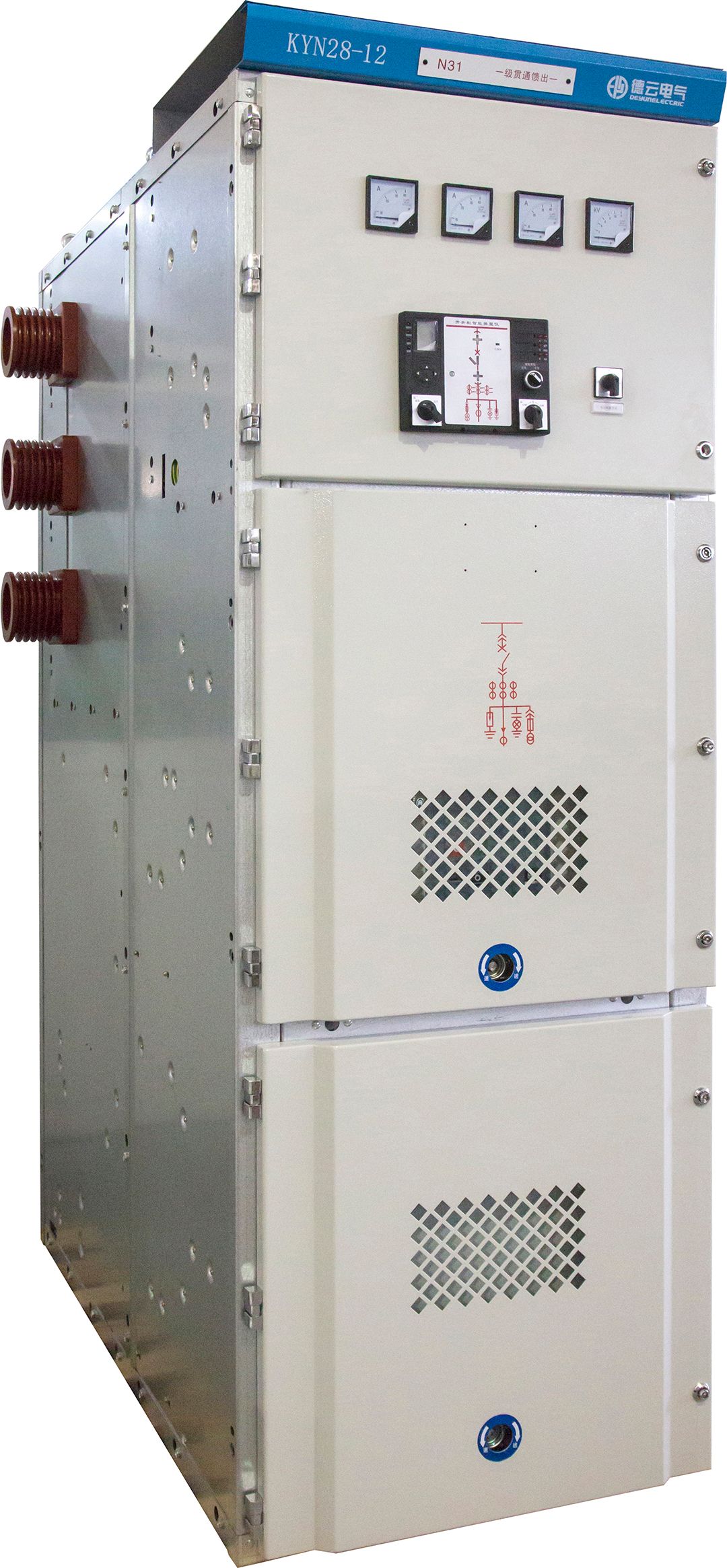
The blend of adaptive algorithms and connected machinery is silently rewriting the rules of entire industries. Instead of chasing forecasts, companies now let live sensor streams and pattern-hungry models steer decisions—turning supply chains into self-correcting loops and factory floors into ecosystems that tune themselves. The result is less about automation and more about orchestration: humans stepping back as systems negotiate inventory, energy loads, and even maintenance schedules in real time.
Digital replicas have moved beyond static blueprints. These living mirrors now ingest operational data from their physical twins, letting teams stress-test scenarios without risking downtime. A port operator can simulate a storm surge’s impact on crane schedules while actual container flows continue uninterrupted. It’s this fusion of the simulated and the concrete that is quietly erasing the old boundaries between planning and execution.
Perhaps the subtlest shift is in how value pools are being redrawn. When every asset can be tracked, compared, and optimized through its digital shadow, competition stops being about who owns the most hardware and starts being about who orchestrates the smartest network. Markets are no longer just arenas of supply and demand—they are becoming algorithmic bazaars where efficiency, resilience, and novelty trade at premiums we are only beginning to measure.
Where These Switchgear Units Really Shine—Real-World Applications
From the humming floors of automotive assembly lines to the precision-driven environments of semiconductor fabs, these switchgear units prove their mettle in settings where downtime simply isn't an option. One plant manager at a major automotive supplier told us their old gear would trip during routine motor starts, causing cascading delays. After upgrading, they saw a dramatic drop in nuisance trips—even with heavy robotics welding on the same bus. It’s in these gritty, high-demand scenarios that the engineering truly pays off.
Renewable energy sites are another proving ground. Wind farms and solar arrays place unique strain on electrical infrastructure, with fluctuations that would make lesser equipment falter. Our switchgear handles these swings gracefully, maintaining steady performance as turbines spin up and cloud cover shifts. A solar farm operator in the Southwest recently shared how their interconnection headaches vanished after switching—literally. They’ve since expanded their array without worrying about the switchgear bottlenecking their output.
Then there’s the quiet reliability needed in healthcare settings. Hospitals can’t afford even a millisecond of uncertainty when it comes to life-support systems and surgical suites. The arc-flash mitigation built into these units, combined with intuitive selectivity coordination, means fault isolation happens seamlessly, keeping critical circuits online. Facility electricians appreciate how serviceable the layout is, even during emergency retrofits—a detail that often gets overlooked until someone’s working in a cramped electrical room at 2 a.m.
Cutting Through China’s Web of Standards and Certifications
China's regulatory landscape can feel like a maze of overlapping requirements, where national GB standards, industry guidelines, and mandatory certifications like CCC often intersect in confusing ways. For businesses entering this market, the first step is recognizing that these frameworks are not arbitrary—they reflect deep-seated priorities around safety, environmental protection, and national sovereignty. Rather than viewing compliance as a hurdle, it helps to see it as a structured language that, once decoded, reveals clear patterns for market access.
One practical starting point is to distinguish between compulsory and voluntary systems. The China Compulsory Certification (CCC) applies to specific product categories and is non-negotiable; without it, your goods won't clear customs. In parallel, you'll encounter voluntary certifications like CQC or industry-specific marks that signal quality and can sway procurement decisions. Mapping your product against the latest catalog of compulsory items, then layering on relevant voluntary standards, creates a roadmap that filters out noise and focuses effort where it counts.
Perhaps the most underutilized strategy is leveraging updates and alignment efforts within China's standards regime. Beijing regularly revises GB standards to align with ISO and IEC norms, and pilot programs in free trade zones sometimes relax certification rules for imported goods. By monitoring these shifts—through official channels or specialized consultants—companies can time their entries to coincide with favorable regulatory windows. In a system that outsiders often criticize as opaque, staying attuned to these reforms transforms compliance from a barrier into a competitive edge.
Who’s Who in the Competitive Landscape
Navigating today’s market means recognizing the key players who shape the competitive landscape. These range from established industry giants with deep resources and loyal customer bases to agile startups disrupting traditional models with breakthrough innovations. Understanding their strengths, vulnerabilities, and strategic moves is essential for carving out a defensible position.
Beyond direct rivals, the landscape includes substitute offerings, new entrants, and shifting consumer preferences that redefine the rules of engagement. Some competitors compete on price, others on bespoke experiences or technological superiority. Mapping these forces reveals not just who you’re up against, but where untapped opportunities lie—whether in underserved segments, adjacent markets, or collaboration potential.
A dynamic view of the competitive landscape also means tracking the strategic bets of influential players: mergers, acquisitions, R&D focus, and talent poaching. These signals offer clues about where the industry is heading. Those who continually reassess the “who’s who” are better equipped to anticipate disruptions and pivot from reacting to leading the market narrative.
What Lies Ahead—Shifts, Hurdles, and Emerging Opportunities
As we navigate the unfolding landscape, it's becoming clear that the ground beneath us is shifting in ways both subtle and seismic. Long-held assumptions are being challenged by new realities—economic pressures, technological leaps, and evolving societal norms are converging to rewrite the rules. This isn't about mere trend forecasting; it's about recognizing that the old playbooks are fraying at the edges, forcing us to question not just how we operate, but why we exist in the first place. The horizon holds a mix of disorientation and potential, where adaptability becomes less of a buzzword and more of a survival instinct.
Yet, with disruption comes friction. The hurdles ahead aren't just technical or financial—they're deeply human. Resistance to change, legacy systems with stubborn roots, and the sheer fatigue of constant pivoting create a maze of obstacles. Organizations and individuals alike are grappling with the anxiety of the unknown, and the path forward is often littered with half-finished initiatives and burnout. What's rarely discussed is the emotional toll of navigating ambiguity, where the pressure to innovate clashes with the need for stability. Understanding these pain points is crucial, because they often hide the seeds of the most meaningful breakthroughs.
It's precisely in this tension that emerging opportunities start to surface. The cracks in the system let in fresh light—new markets, unconventional collaborations, and ways of working that prioritize resilience over rigid efficiency. We're seeing a quiet rebellion against one-size-fits-all solutions, with a growing appetite for models that are agile, humane, and context-aware. The real winners won't be those with the shiniest tools, but those who can read the undercurrents, stay curious, and build bridges where others see walls. The future isn't a fixed destination; it's a series of choices that favor the bold and the grounded alike.
FAQ
Low voltage switchgear serves as the backbone of power distribution networks, controlling, protecting, and isolating electrical equipment to ensure safe and reliable operation in buildings, factories, and infrastructure projects.
China prioritizes compactness, modularity, and intelligent features that support rapid urbanization and smart grid integration, often combining traditional robustness with IoT-ready monitoring and energy efficiency.
The main standard is GB/T 7251, which aligns closely with IEC 61439, ensuring global compatibility while incorporating local requirements for things like altitude, humidity, and seismic resilience.
Fixed-type units are cost-effective and simpler, commonly used in buildings, while withdrawable designs allow for easier maintenance and faster replacement, favored in critical industrial settings where uptime is paramount.
The push for smart cities and Industry 4.0 spurred demand for switchgear with embedded sensors, communication modules, and predictive maintenance capabilities, which significantly reduce downtime and operational costs.
They employ advanced arc-resistant designs, internal compartmentalization, and rigorous type-testing per GB/T 7251. Many also integrate arc detection relays and fast-acting circuit breakers that clear faults within milliseconds.
Export models often must comply with IEC or ANSI standards, feature bilingual labeling, and are sometimes tailored for tropicalized or harsh environments, whereas domestic units focus on cost-performance and local certification needs.
Key trends include solid-state switching, DC-ready configurations for renewable energy and EV charging, and cloud-based asset management platforms that turn switchgear into data-driven nodes within a larger energy ecosystem.
Conclusion
China's low-voltage switchgear industry is riding a wave of rapid urbanization, industrial automation, and an aggressive push toward renewable energy integration. The surge in data centers, EV charging networks, and smart grid projects is creating relentless demand for reliable power distribution. At the same time, digitalization is reshaping product design—manufacturers are embedding IoT sensors, cloud-based monitoring, and predictive maintenance capabilities into their cabinets, making them far more than passive electrical enclosures. This convergence of hardware and software is particularly evident in critical applications like hospitals, metro systems, and high-rise commercial towers, where any downtime is unacceptable. Beyond functionality, the market is defined by a tangled certification landscape; navigating China's CCC requirements alongside international standards like IEC 61439 has become a strategic differentiator, separating homegrown players who master compliance from those merely assembling components.
The competitive field blends established domestic giants like Chint and Delixi with multinational heavyweights such as ABB and Schneider Electric, each vying for dominance across a fragmented project ecosystem. State-backed infrastructure initiatives and overseas Belt and Road ventures offer fertile ground, but intense price pressure in the low-end segment continues to squeeze margins. Looking forward, the shift toward modular, scalable switchgear that supports DC microgrids and seamless renewables integration will set the pace. Emerging opportunities lie in retrofitting aging distribution systems across China's vast industrial base and catering to Southeast Asian export markets, yet supply chain volatility and evolving safety regulations remain persistent hurdles. Successfully navigating these currents demands not just technical agility but a keen understanding of regional procurement cycles and aftermarket service expectations.
Contact Us
Contact Person: Julion
Email: [email protected]
Tel/WhatsApp: 8617351370631
Website: https://www.deyunelectric.com