

China 132kV Galvanized Angle Steel Transmission Tower Company for Durable Grid Infrastructure
2026-09-14
When it comes to building transmission lines that stand the test of time, not every tower is created equal. In China, one name keeps surfacing among utilities and contractors who demand durability without compromise: Anbang. Specializing in 132kV galvanized angle steel transmission towers, this company has quietly become a backbone of grid infrastructure projects across the region. But what exactly sets their towers apart in a crowded market? And why are more grid planners turning to them for long-term reliability? Let’s take a closer look.
Why 132kV Galvanized Angle Steel Towers Still Lead in Regional Transmission Projects
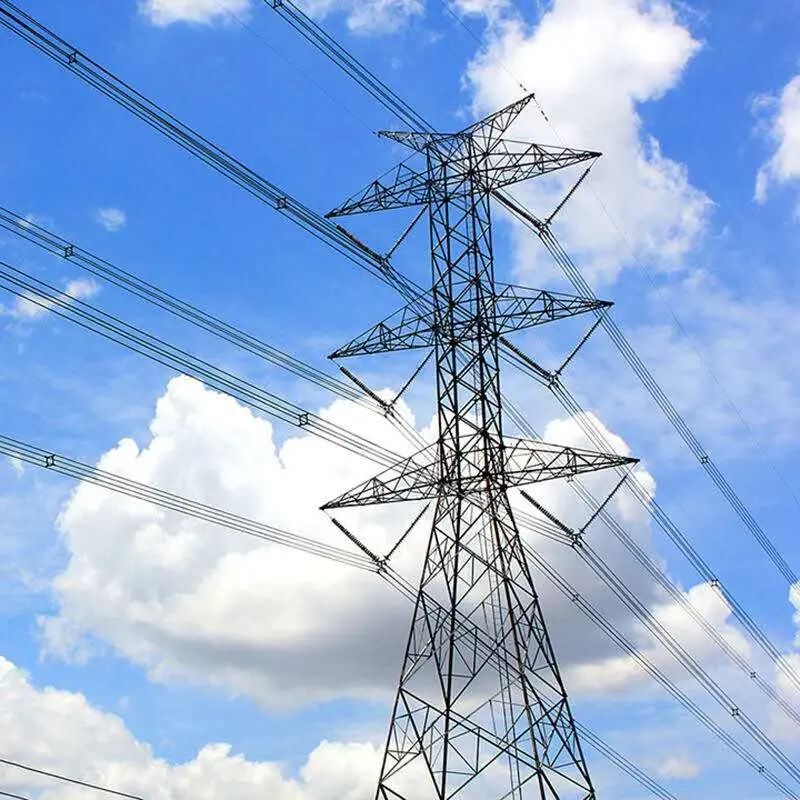
For regional 132kV lines that often cross farmland, forests, or uneven terrain, the biggest advantage of galvanized angle steel towers is how easily they adapt to difficult sites. The individual angle members are light enough to be carried by hand or on small trailers, and the bolted lattice assembly does not demand a large crane or a continuous concrete pour. Crews can erect a tower in a few days using basic tools and locally hired labor, which keeps project schedules from slipping when access roads are narrow or weather turns bad. Once the hot-dip zinc coating is in place, minor scratches and bolt-hole edges resist rust without any touch-up painting, so the structure arrives ready for decades of exposure.
Maintenance budgets often decide what gets built in regional networks, and here the galvanized finish quietly pays for itself. Unlike painted steel, the zinc layer forms a metallurgical bond that keeps protecting even where the surface is nicked during transport or erection. Utilities do not need to schedule periodic repainting, and inspection crews rarely find corrosion issues on towers that have been in service for twenty or thirty years. Many regional 132kV systems are also brownfield expansions, meaning new sections tie into existing lattice structures. Reusing the same angle steel design cuts down on spare parts inventories, foundation types, and training time for line crews, which lowers the total cost of a project far more than the initial steel price alone.
Beyond practical site work, the lattice arrangement itself remains hard to beat for moderate transmission voltages. Angle steel members arranged in a triangular or square cross-section give a high strength-to-weight ratio and allow wind to pass through rather than pushing against a solid face. This reduces foundation loads in open country where gusty conditions are common. Engineers also have decades of load-test data and field performance records for 132kV angle steel towers, so they can predict how the structure will behave under ice, short-circuit forces, or uneven settlement. Newer alternatives may look attractive in a brochure, but regional planners keep returning to galvanized angle steel because it is the option with the fewest unknowns and the longest track record in exactly this type of service.
Inside the Galvanizing Line: Achieving a Uniform Zinc Layer That Outlasts Harsh Weather
Walk down any galvanizing line and the first thing you notice is the sheer violence of the process—strip screaming through molten zinc at 450°C, air knives roaring with enough pressure to peel paint off a wall. But it's precisely that controlled chaos that makes a uniform coating possible. The truth is, most coaters fail not because the zinc bath isn't hot enough, but because they treat the strip like a static ribbon instead of a living, vibrating entity. A thickness variation of just 5 microns can turn a ten-year warranty into a five-year rust complaint, and on the coast, that difference shows up in months, not years.
The real trick happens in the seconds after the strip exits the bath. Modern lines use closed-loop air knife systems that measure coating weight with X-ray fluorescence every 20 milliseconds, then adjust knife pressure, distance, and angle on the fly. But the operators who get truly flat profiles also control the stuff nobody writes in manuals: the dross buildup at the bath surface, the strip's crossbow from upstream tension, the exact nitrogen/hydrogen mix in the cooling tower. One plant I visited had a third-shift guy who could hear a 0.2-degree temperature drift in the zinc pot just from the change in splash pattern. That's not automation—that's craft.
When the layer finally goes on uniform, the weather doesn't stand a chance. Salt spray tests show it plainly: a 55-micron zinc coating with tight variance outlasts an 85-micron coating with hot spots by 40% in cyclic corrosion chambers. The reason is simple—zinc corrodes sacrificially, but only if the layer is continuous. Pinholes and thin edges become galvanic cells that eat sideways. A uniform coat means the entire surface sacrifices itself at the same rate, so the steel underneath stays protected until the very last micron. That's what you're really buying when the line runs right: not more zinc, but smarter zinc.
How Chinese Fabricators Use Rotating Jigs and Laser Layout to Keep Every Bolt Hole Aligned
On many Chinese shop floors, the first step toward perfect bolt-hole alignment happens before a single hole is drilled. Welders and fitters mount large base plates or frames onto rotating jigs that can spin a full 360 degrees. This lets them work from a comfortable angle without ever repositioning the workpiece by hand. Because the part stays fixed to the same reference points while it rotates, the relative position of each hole remains consistent, even when a welder flips the assembly multiple times to reach the back side.
Once the jig is locked at the correct orientation, technicians use laser layout tools instead of relying solely on tape measures and center punches. The laser projects a bright crosshair or grid directly onto the metal surface, marking each bolt-hole center within a fraction of a millimeter. Operators can quickly check the projected points against the jig’s index pins or dowel holes, making small adjustments before the drill touches steel. This combination reduces the cumulative error that often appears when holes are laid out by hand across a long beam or a curved flange.
The real advantage comes during assembly. Because every hole was positioned from the same rotating reference plane and verified with a laser, mating parts drop into place without forcing bolts or reaming holes oversized. Fabricators can run multiple identical jigs side by side, so a batch of frames produced on different days still lines up exactly with the same mounting brackets. For buyers, that means less time spent aligning parts in the field and far fewer rejected components due to misaligned fastener patterns.
Designing for Mountain Slopes, High Winds, and Corrosive Coastal Air Without Extra Weight
On steep mountain sites, the first instinct is often to pour massive retaining walls and deep foundations, but that adds weight and cost. A better approach is to pin the structure to exposed rock with small-diameter micropiles or rock anchors, letting the slope itself provide stability. The building form can be stepped or cantilevered to follow the contour, minimizing cut and fill. For high winds, a hip roof with short overhangs and a low eave line creates less uplift than a gable with broad eaves. Structurally, using a braced steel moment frame or a wood shear wall system distributes lateral loads efficiently, so you do not need heavier members just to resist gusting.
Salt-laden coastal air punishes ordinary steel and untreated aluminum. Rather than adding thick protective coatings that must be maintained and add weight, choose materials that are inherently resistant: fiber-reinforced polymer composites for railings and small structural elements, marine-grade stainless steel for fasteners, and thermally modified or acetylated wood for cladding that won't swell or rot. Keep details open so water and salt spray drain quickly instead of collecting in crevices. Where metal must be used, isolate dissimilar materials with nylon washers or gaskets to prevent galvanic corrosion. These choices cut long-term maintenance and avoid the dead load of redundant protective layers.
Material Traceability and Load Testing: What Durable Grid Infrastructure Actually Requires
Durable grid infrastructure doesn't start with a grand design—it starts in the supply chain. Every steel beam, concrete batch, and cable reel needs a documented journey from raw material to final assembly. Without traceability, a single substandard batch can hide for years before failing under stress. The practice isn't just about paperwork; it's about creating a forensic trail that lets engineers pinpoint exactly which component came from which lot, under which conditions, and with which test results already attached. This granularity separates grids that age gracefully from those that crumble unexpectedly.
Load testing is the companion that turns traceability into confidence. A component might look right on paper, but only a controlled overload reveals how it behaves at the edge of its capacity. Real-world testing means cycling temperatures, simulating wind shear, and pushing connections past their rated limits—then watching for micro-fractures, thermal drift, or unexpected deformation. The data feeds back into the traceability record, so every future inspection knows exactly what that part has already survived. Skipping this step leaves a blind spot that no amount of theoretical modeling can cover.
The real requirement is integration: traceability without load testing is just an archive, and load testing without traceability is just a one-off experiment. Together, they form a closed loop where material history informs test parameters, and test outcomes enrich the historical record. For grid operators, this means fewer surprise failures, faster root-cause analysis, and a maintenance schedule driven by actual stress data rather than generic age-based guesswork. It's not the flashy side of infrastructure, but it's the reason some grids outlast their designers—and others don't.
From Factory Floor to Foundation Bolts: Streamlining Delivery and Assembly for Faster Commissioning
The journey from manufacturing line to installed equipment often hides the longest delays. Instead of treating delivery and assembly as separate handoffs, we collapse them into a single, sequenced workflow. Each component leaves the factory floor with a pre-staged assembly kit, matched fasteners, and a visual placement map. This eliminates the usual scramble on site where workers sort through mixed pallets or wait for missing bolts. The result is not just faster unpacking, but a smoother rhythm that lets commissioning teams start their checks hours—sometimes days—earlier than conventional timelines.
Foundation bolt alignment is where many projects stall. Rather than relying on field measurements and last-minute adjustments, we embed reference coordinates directly into the shipping frames and crate labels. Teams on the ground can cross-check anchor positions before the concrete sets, catching drift while it is still cheap to fix. By pairing this with torque-marked fasteners and pre-lubricated threads, the assembly stage becomes a matter of following a numbered sequence instead of troubleshooting. That predictability removes the back-and-forth calls between site supervisors and engineering support, which typically consume the first week of any installation.
Faster commissioning is not about rushing the mechanical work; it is about removing the hidden frictions that force crews to wait. We schedule delivery in reverse from the commissioning date, not forward from the factory output. Critical path items like base plates, leveling shims, and anchor bolt templates arrive in the first unload, not buried in a later truck. This means alignment, grouting, and torque verification can proceed without interruption. When the final panel is wired and the last guardrail is bolted, the system is already clean, documented, and ready for functional testing—not still surrounded by packing debris and loose hardware.
FAQ
We use hot-dip galvanized angle steel, which provides strong corrosion resistance and long service life in various climates.
The zinc coating forms a protective barrier that prevents rust and reduces maintenance needs, keeping the structure stable for decades.
Yes, we adjust tower dimensions, bracing patterns, and foundation loads according to the terrain and line route.
Our towers comply with international standards such as IEC and ASTM, and we provide material test reports with every shipment.
We inspect raw materials for chemical composition and mechanical properties, then run dimensional checks after cutting and drilling.
Delivery usually takes 30 to 45 days after design approval, depending on order size and current production schedule.
We can provide detailed assembly drawings and remote technical support, and on-site supervision is available if needed.
Conclusion
For regional transmission projects, 132kV galvanized angle steel towers remain the go-to choice because they deliver a rare combination of strength and economy. Chinese fabricators have refined the hot-dip galvanizing process to produce a uniform zinc layer that withstands decades of rain, salt spray, and temperature swings without cracking or peeling. On the shop floor, rotating jigs and laser layout systems eliminate the guesswork from bolt hole placement, so every connection lands exactly where the design calls for it—no field reaming, no delays. This precision matters most when towers are destined for mountain slopes or coastal zones, where wind loads and corrosive air punish sloppy workmanship. Instead of adding extra steel as a safety margin, engineers optimize each member’s cross-section and bracing pattern to handle high winds and uneven terrain at the lowest possible weight.
Durable grid infrastructure is not just about galvanizing and geometry; it also demands full material traceability and load testing that mirrors real-world stress. Reputable manufacturers keep heat numbers for every angle and plate, then run prototype assemblies through strain-gauge tests that simulate ice, wind, and short-circuit forces. Once those tests pass, the focus shifts to logistics: pre-assembled tower sections and bundled foundation bolts leave the factory in sequence, with color-coded packing lists that let crews erect each tower in days rather than weeks. This end-to-end discipline—from the galvanizing kettle to the last torque check—is what separates a supplier that merely sells steel from a partner that delivers a substation ready for the grid.
Contact Us
Contact Person: antor khan
Email: [email protected]
Tel/WhatsApp: 8613863903569
Website: https://www.qdabtower.com/