

Bulk Small Magnets for Crafting and Organization
2026-09-01
Most crafters and organizers have felt the frustration of a spilled box of pins or a drawer full of loose screws. Bulk small magnets from DAWA solve that problem in seconds, turning scattered supplies into neatly held rows and giving your latest DIY project a secure, invisible grip. Once you start using them, you'll wonder how you ever managed without a stash of these tiny workhorses nearby.
Why Small Magnets Beat Clips for Holding Thick Craft Paper
When you're working with thick craft paper, standard clips tend to slip, leave dents, or simply pop off after a few adjustments. Small magnets, on the other hand, grip from both sides without piercing the surface, so your paper stays pristine even after repeated repositioning. The holding power doesn't rely on spring tension, which means no sudden release marks on heavier cardstock or layered sheets.
Another reason magnets win is their ability to hold multiple sheets at once without needing to clip each corner individually. You can slide a pair of magnets along the edge like a movable clamp, adjusting the tension to match the stack height. This is especially handy when you're layering thick paper for die-cutting or embossing, where clips might crush the fibers or shift under pressure.
Magnets also free up your workspace. Instead of wrestling with bulky clip handles that catch on your ruler or cutting mat, flat magnets sit almost flush against the paper, letting you work closer to the edge. And unlike clips that weaken over time, a good set of neodymium magnets keeps its grip through years of craft projects without ever scratching your desk.
A No-Drill Way to Corral Loose Screws and Small Tools
Scattered screws, drill bits, and small wrenches have a way of vanishing exactly when you need them. The usual fix involves drilling holes for pegboards or permanently mounting magnetic strips, but that locks you into a fixed layout and leaves ugly marks on walls or benches. For renters, apartment dwellers, or anyone who likes to rearrange their workspace, there's a simpler path: use heavy-duty magnetic trays and mats that sit right on the work surface without a single screw.
Grab a few neodymium magnetic bowls or a flexible magnetic sheet. Toss one on the corner of your bench, inside a drawer, or on top of a tool chest. Loose screws, hex keys, and tiny drill bits snap into place instantly. Because these magnets aren't bolted down, you can slide them around to wherever the action is—next to the drill press one minute, beside the vise the next. No drilling, no adhesive, no damage to the surface underneath.
For an even cheaper hack, salvage the magnets from old hard drives or speaker cabinets, then glue them into a shallow plastic container or onto a scrap piece of wood. The result is a no-drill corral that holds surprisingly heavy items. And when you decide to reorganize, just pick it up and move it. Your workspace stays clean, your tools stay visible, and you keep the freedom to change things up whenever the mood strikes.
Magnetic Spice Jars That Actually Stay Put in a Busy Kitchen
Most magnetic spice jars promise convenience but deliver a mess the moment someone reaches past them. The real test isn't the magnet—it's the grip under real kitchen chaos. Shaking a pan, bumping the fridge door, kids grabbing a snack: that's when weak magnets fail. This set uses a wider, flat contact surface instead of a tiny disc, so the jars don't slide down the fridge or spin sideways when you grab one.
The lids also matter more than people think. A smooth, glass-smooth exterior might look nice, but it gives oil and flour nothing to hold onto. These jars have a subtle matte texture around the body and a slightly raised edge on the base, making them easier to grab with slightly wet or greasy fingers. The result is a spice wall that stays exactly where you put it, even during a rush.
How to Keep Tiny Magnets From Clumping in Your Supply Box
If you've ever opened a supply box and found a grape-sized cluster of tiny magnets fused together, you know the struggle is real. The simplest fix is to never let them touch in the first place. I keep a small pill organizer with individual snap-shut compartments for mine. Each slot gets one or two magnets, and I add a tiny square of craft foam at the bottom so they don't rattle against the plastic and chip. This keeps them apart without having to pry them off each other later.
When I'm out of divided containers, I use the little zipper bags meant for beads or jewelry. One or two magnets per bag, then all the bags go into a larger tin. The plastic film is thin enough that you can still see what's inside, but thick enough that the magnets won't jump through and chain together. A folded slip of paper works in a pinch too, just wrap each magnet like a tiny candy and twist the ends.
One thing people overlook is moisture. If your magnets are stored in a damp basement or garage, the plating can start to oxidize and the surfaces get slightly rough, which makes them grip each other even harder when they do touch. Toss a silica gel packet into the supply box and swap it out every couple of months. And when a few do manage to stick together, slide them apart with the edge of a plastic card instead of pulling them straight apart. You'll save your fingernails and the magnets both.
Quick Wins for Turning a Metal Shelf Into Extra Storage
Give that bare metal shelf a second life by hanging S-hooks along the front edge. They cost almost nothing and instantly hold lightweight tools, kitchen utensils, or small baskets for odds and ends. No drilling required—just slip them over the wire or lip.
If the shelf sits in a closet or pantry, lay a thin piece of plywood or a plastic liner across the slats. This creates a flat surface so small jars and spice bottles stop tipping over. Add a few short tension rods underneath to hang spray bottles or folded dish towels.
For vertical rooms with unused wall space above, attach magnetic strips to the shelf's back rail. Knives, scissors, or metal spice tins stay visible and within reach. It’s a quick fix that turns dead air into usable storage without taking up floor space.
Mixing Coatings and Strengths for Mixed Media and Wood Projects
Wood absorbs finishes differently than metal, plastic, or glass, so the first step is usually to separate what can be sanded and sealed from what cannot. A thin shellac or sanding sealer helps lock the wood fibers and gives paints, stains, or glazes a calmer base. On top of that, an acrylic or urethane coating can handle most mixed media accents, but it pays to test a hidden corner first because some clear coats will cloud over certain inks or adhesive residues.
Strength matters just as much as appearance. If the piece includes paper, fabric, or lightweight found objects, a flexible medium or soft gel often holds better than a hard varnish, which can crack when the wood moves. For load-bearing joints or heavier add-ons, skip the art-store finish and reach for a two-part epoxy or a construction adhesive, then coat the visible area afterward with a compatible topcoat.
Layering different coatings usually works when you work from porous to sealed and from fragile to durable. One reliable order is stain or dye first, then an isolation coat, then mixed media elements, and finally a protective clear layer with the sheen you want. If a layer feels tacky or resists the next one, stop and let it cure longer rather than forcing it. That patience often makes the difference between a finish that looks intentional and one that starts peeling within a few weeks.
FAQ
The set includes a mix of tiny disc magnets ranging from about 3mm to 6mm in diameter, plus a few slightly larger bar magnets for heavier tasks. You get a good variety without any single size dominating the pack.
No, each magnet has a smooth, slightly rubberized coating that keeps it from scratching painted metal, glass, or whiteboard surfaces. Just make sure the surface is clean before you stick them on.
A single small disc magnet can comfortably hold 5 to 8 sheets of standard printer paper on a fridge. Stack two or three together if you need to pin up thicker items like cardstock or a small notepad.
They're not toys, but they're fine for supervised craft projects with older kids. The magnets are small enough to be a choking hazard for little ones, so keep them out of reach of children under 3 and avoid any mouth contact.
Yes, they work nicely for holding lightweight metal tools like screwdrivers, wrenches, or paintbrushes on a metal pegboard or steel shelf edge. For heavier power tools, you'll want something with more pull force.
They ship in a sturdy plastic case with divided compartments, so you can keep the different sizes separated. The case snaps shut securely and doesn't crack easily if it gets knocked off a shelf.
Slide them apart sideways instead of pulling straight up. If a stack is stuck tight, use the edge of a plastic card or a non-magnetic wedge to gently pry them apart. Never use your fingernails, as the magnets can pinch hard and break a nail.
Conclusion
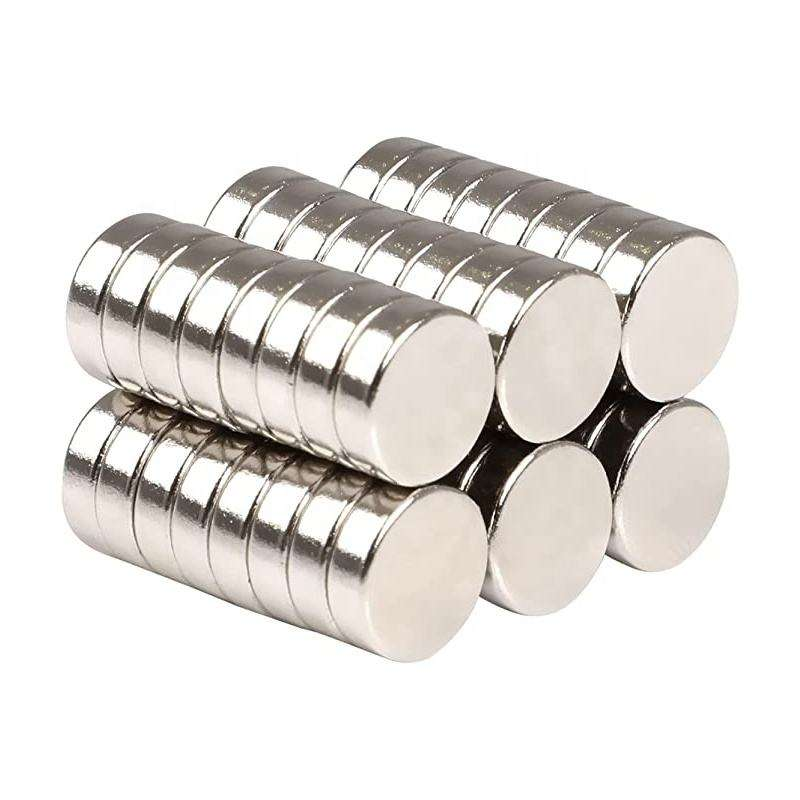
A tin of bulk small magnets quietly replaces a drawer full of clips, hooks, and adhesives once you start treating every metal surface as usable space. For thick craft paper, a pair of tiny disc magnets grips the sheets without the crimp marks or slipped corners that spring clips leave behind, so you can pin patterns to a steel ruler or hang reference cards at eye level. The same magnets make short work of loose screws and hex keys: stick a few inside a toolbox lid, and the hardware stays visible instead of rattling in a tray. In the kitchen, small neodymium magnets with a thin rubber coating hold spice jars against the fridge or a steel backsplash through all the slamming and stirring, staying put where ordinary adhesive strips peel away.
The real trick is keeping those tiny magnets from turning into a single stubborn clump inside the supply box. A compartmented case with a steel washer or thin metal shim between layers works well, as does snapping them onto a strip of steel tape mounted inside a drawer. That same strip turns any metal shelf into extra storage: stick it under the front edge and hang scissors, pliers, paint keys, or even small spice jars in the gap. For mixed media and wood projects, you'll want to choose strengths and coatings deliberately. Uncoated neodymium discs grip best inside resin pours and hidden joinery, while rubber- or epoxy-coated magnets resist scratching paper, fabric, and painted wood. Mixing a few sizes and finishes covers nearly every small holding task without reaching for a drill, clip, or adhesive tab.
Contact Us
Contact Person: Kelvin Lo
Email: [email protected]
Tel/WhatsApp: 0769-88561131
Website: https://dawamagnetic.com/