

Bulk Engraving Laminate Factory Guide for Durable Custom Surface Solutions
2026-09-13
When a single engraved panel stops being enough and your project demands consistency across hundreds of surfaces, the conversation shifts from decoration to engineering. Bulk engraving laminate isn’t just about volume—it’s about precision, repeatability, and a finish that survives real-world wear. At LYSHIRE, we’ve seen too many designers discover late in the game that not all factory-grade laminates cut or engrave the same way. This guide cuts through the guesswork, laying out exactly what to look for in a manufacturing partner, which laminate structures hold crisp detail at scale, and how to avoid the hidden pitfalls that turn custom surface solutions into costly rework. Whether you’re outfitting a hotel, a retail chain, or a fleet of wayfinding signage, the next few sections will give you the durable, repeatable edge your project needs.
How Laminate Core Layers Affect Engraving Depth and Edge Cleanliness
Engraving on laminate materials often surprises operators with inconsistent results, even when using the same settings across a batch. The internal core layer, typically darker or more porous than the surface, responds differently to laser or rotary tool heat. As the beam penetrates past the thin top sheet, it encounters a substrate that may vaporize at a lower threshold, causing the depth to increase rapidly without a corresponding change in power. This sudden shift can leave grooves that are deeper than intended, especially in areas where the core density varies due to manufacturing tolerances.
Edge cleanliness suffers when the core material melts rather than vaporizes cleanly. Unlike the crisp ablation of the surface laminate, the core can produce gummy residue that adheres to the cut walls. This is more pronounced with phenolic or MDF-based cores, where the binder reacts to heat by becoming tacky. Operators often notice a fuzzy or darkened rim around lettering, which requires secondary cleanup. Adjusting the focal point slightly above the surface helps concentrate energy on the top layer first, but it does not eliminate the problem entirely.
A practical approach is to run test grids on scrap pieces that include the same core composition. By varying speed and power while observing the cross-section under magnification, you can identify the threshold where the top layer cuts completely but the core only scores lightly. Using a lower frequency with higher speed often reduces heat transfer into the core, keeping edges sharper. Some shops also apply a temporary masking film to support the laminate surface during engraving, which minimizes chipping along the boundary between the face sheet and the core.
Matching Surface Textures to Real-World Wear Patterns
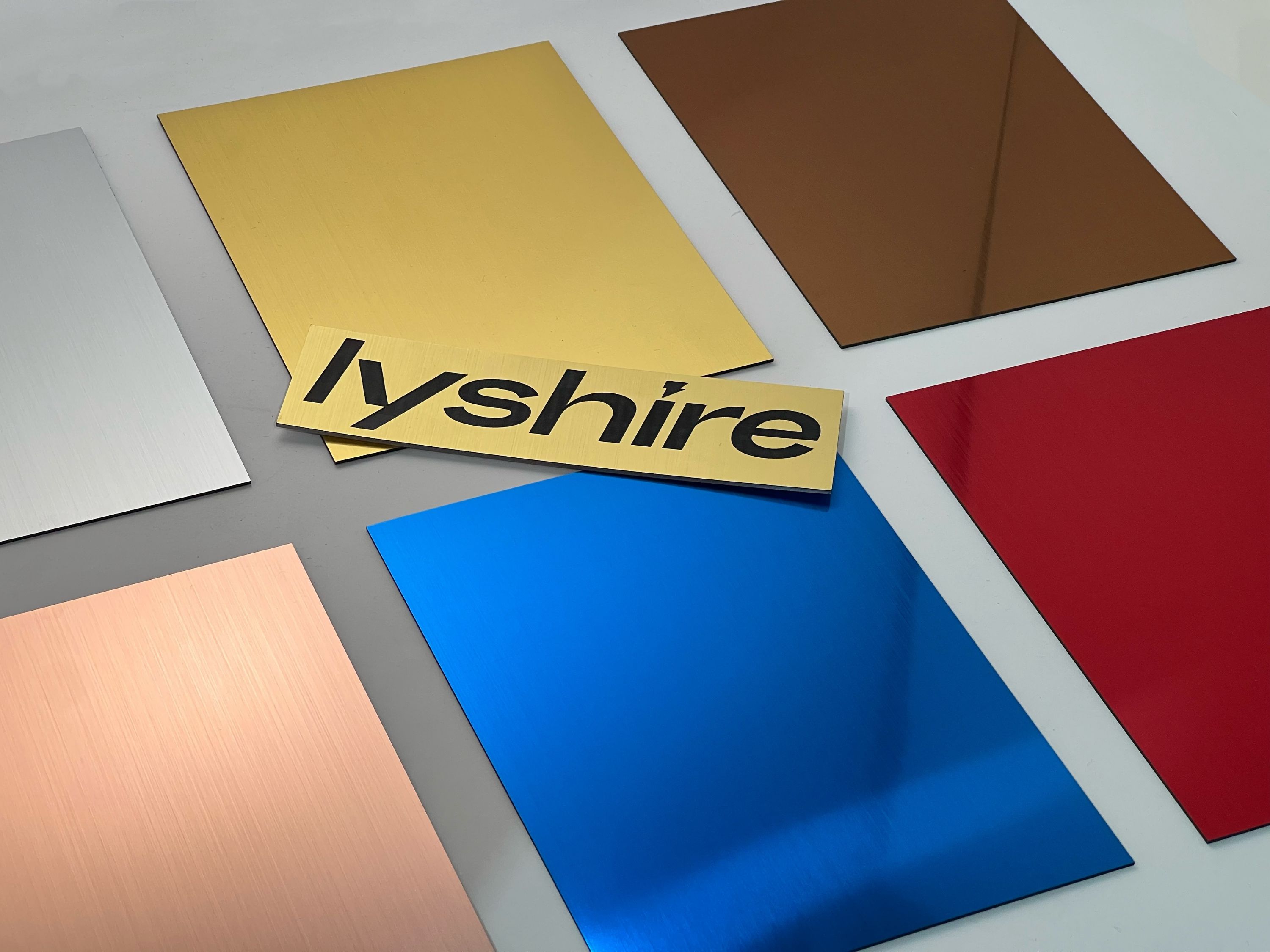
When you study a favorite pair of jeans, the faded creases behind the knees don't appear randomly. They follow the exact lines where fabric folds and rubs against skin and chair edges. Matching surface textures to real-world wear patterns starts with this kind of observation—mapping where friction concentrates, how abrasion erodes fibers, and which areas stay relatively untouched. Instead of applying a generic distressed effect across an entire material, the goal is to reproduce the natural hierarchy of wear: high-contact zones become smoother and lighter, recessed areas keep their original grain, and edges develop a slightly polished sheen from repeated handling.
This approach works across materials. On stone or concrete, foot traffic creates a subtle path of micro-scratches and compacted dust that looks nothing like sandblasted uniformity. On metal, the pattern often appears as a directional polish near moving parts or where hands repeatedly grip. On wood, it shows up as softened corners and worn finish around drawer pulls rather than evenly distributed scuffs. By matching the texture logic to how objects are actually used, the result feels familiar without being predictable. The key is restraint—leaving quiet areas untouched so the wear tells a believable story about human contact over time.
The Factory Workflow Behind Consistent Multi-Panel Orders
Getting the same look across several panels in one order isn't a matter of luck. It starts before a single cut is made. Fabric rolls from the same dye lot are pulled first, and the cutting table is set so that all pieces for one order come from adjacent sections of the cloth. This keeps grain direction and any subtle tone shifts moving the same way from panel to panel.
Once cutting is done, each panel gets a small chalk number on the back. That number follows it through sewing, pressing, and finishing. If a panel has a pattern stripe or a woven texture, the seam allowance is matched from the center outward, not from one edge. For repeated motifs, the spacing is marked on a sample strip that travels with the batch, so operators aren't measuring by eye alone.
Before packing, the panels are laid side by side on a long inspection table under the same overhead light. Any variation in hem width, top stitching, or drape gets corrected then, not after the customer notices it. It's a slow step, but it's the one that keeps multi-panel orders from looking like they came from different production runs.
Balancing Custom Detail with Production Speed
Achieving the right mix of custom detail and production speed starts with knowing which elements actually change how a piece feels. Not every corner needs hand-carved nuance; sometimes a single precisely placed accent, a fractional shift in proportion, or a different edge profile carries more visual weight than dozens of smaller flourishes. We treat speed not as a compromise but as a design constraint, using it to sharpen decisions about where detail earns its place.
A big part of that balance comes from rethinking the sequence. When custom touches are introduced early in the sampling stage, they become part of the base process rather than a late-stage interruption. That way, the production line doesn't have to pause for speculative adjustments. Instead, the detailed areas are defined once, clearly, and everything else moves at full pace. The result reads as intentional, not rushed.
There is also a quiet advantage in limiting custom work to a small number of high-impact zones. This keeps the factory's rhythm steady and reduces the chance of inconsistency across a run. The pieces still feel tailored, because those few spots are done with unusual care, but they don't drag down the whole schedule. Over time, that approach builds a reputation for delivering both character and reliable turnaround.
Why Some Engraved Laminates Outlast Standard Options by Years
Engraved laminates often get a bad rap for peeling or fading, but the real story lies in how the engraving is sealed. Many standard options leave the engraved grooves raw, exposing the inner layers to moisture, oils, and daily abrasion. Over time, that open edge becomes a starting point for delamination and discoloration. The longer-lasting versions, however, treat those grooves like tiny wounds that need proper care—filling them with a flexible, UV-stable resin that bonds to the laminate's core. This keeps water and grime from worming their way between layers, which is what actually causes most premature failures.
Material choice also plays a bigger role than people expect. A cheap laminate might have a paper-thin decorative layer that wears through quickly, especially in high-touch areas like kitchen countertops or commercial signage. Premium engraved laminates lean on thicker wear layers and phenolic backers that resist impact and temperature swings. Paired with a deep, crisp engraving that doesn't just scratch the surface but cuts cleanly into the substrate, these laminates distribute stress more evenly. The result is a surface that shrugs off scratches, scuffs, and even the occasional dropped tool without the engraved pattern losing its definition.
Installation habits quietly separate the durable from the disposable. Many standard laminates are glued onto whatever substrate is handy, with little thought for expansion or edge sealing. Engraved laminates built to last often come with a pre-applied moisture barrier on the back and are meant to be installed with a slight gap at seams, allowing the material to breathe without buckling. Add in a final wipe of a non-abrasive sealant around the perimeter, and you've got a surface that looks sharp for a decade instead of showing its age after two rainy seasons.
Choosing the Right Laminate Grade for High-Traffic Commercial Spaces
When laminate flooring goes into a commercial setting, the gap between a surface that survives and one that fails often comes down to the wear layer. High-traffic areas like retail entryways, hospital corridors, and busy office lobbies demand more than standard residential grades. Look for laminate rated AC4 or AC5—these are engineered for moderate to heavy commercial use, meaning the top protective coating resists scuffing, scratching, and staining far longer than an AC3 product ever would. The cost difference is modest compared to the expense of early replacement or constant refinishing.
Beyond the AC rating, pay attention to the core board density and the locking system. High-density fiberboard cores with tight, factory-sealed edges prevent moisture from infiltrating at the seams, which is a common failure point in commercial environments where floors get wet from foot traffic, spills, or cleaning routines. A robust click-lock mechanism also matters more than most people realize—loose joints lead to chipped edges and accelerated wear. In practice, specifying a commercial-grade laminate with a dense core and a reinforced locking profile keeps maintenance simple: daily sweeping and occasional damp mopping are usually enough.
One overlooked factor is the texture and finish of the laminate surface. Smooth, glossy finishes show scratches and heel marks quickly, making a space look tired within months. A matte or embossed-in-register texture not only masks minor abrasions but also improves slip resistance—a critical safety consideration in public areas. When reviewing samples, run a key or coin across the surface; if it leaves a visible mark, that product won't hold up under rolling carts or constant footfall. Choose a laminate that combines a high AC rating with a textured, low-sheen finish, and you'll get a floor that looks intentional years after installation.
FAQ
Bulk engraving laminate is a multi-layer sheet built specifically for rotary or laser engraving. The core is usually a colored or contrasting substrate, topped with a thin cap layer that gets cut away to reveal the design underneath. Standard laminate is made for surface protection or decoration, not for controlled depth removal. With engraving stock, the cap layer thickness and core bond strength are tuned so the machine removes material cleanly without chipping, even at high production speeds.
Most dedicated factories start with a material sample approval, not just a digital proof. For bulk runs, they'll produce a small batch of 10 to 20 sheets using the actual tooling and laminate batch, then ship it for field testing. Once approved, the full order goes through panel cutting, engraving, and edge finishing in parallel. A good factory will also track lot numbers from the laminate supplier so if a color shift appears mid-run, they can isolate the affected sheets instead of reworking everything.
Signage and wayfinding are the obvious ones, but the real growth is in industrial control panels, equipment fascias, and safety labeling. Those environments put the engraving through chemical exposure, abrasion, and UV light, so the laminate has to hold up well past what a printed overlay would. We also see a lot of demand from marine and off-road vehicle builders, where the custom text or icons need to stay legible after years of weather and rough handling.
Ask about the cap layer material and its UV rating, not just the overall sheet thickness. A quality factory will be transparent about the type of engraving stock they use—whether it's acrylic-based, phenolic, or modified polyester—and how it performs in accelerated weathering tests. Also check whether they do in-house color matching or rely on pre-made laminate colors. In-house matching usually means they can adjust the contrast layer for your brand requirements, which is a sign the factory controls its own process rather than acting as a middleman.
It can be used for both, but the spec has to change. Interior stock often uses a thinner cap layer and lower-cost core, which is fine for indoor signage and labels. Exterior applications need a UV-stabilized cap layer, a moisture-resistant core, and often a thicker engraving depth so the design doesn't disappear after surface wear. Some factories offer a marine-grade variant with a matte finish that reduces glare and resists salt spray. If a supplier says the same material works everywhere, that's a red flag.
Engraved laminate usually comes in lower than anodized aluminum or screen-printed stainless steel, especially at quantities above 500 pieces. The raw sheet cost is moderate, but the advantage is that tooling is simple—often just a vector file for the laser or router—so setup fees stay low. The real cost driver is the number of distinct designs or sizes. If every piece is unique, the per-piece cost rises quickly because the machine time and programming eat into the savings. For repeat designs, bulk engraved laminate is hard to beat on price per square foot.
One big mistake is picking a core and cap color with too little contrast. What looks good on a screen can be nearly invisible once the protective film is removed and the panel is mounted at a distance. Another mistake is ignoring the adhesive backing or mounting method. If the laminate is too rigid or the adhesive fails under temperature cycling, the engraved panel can lift or crack. Finally, don't forget to specify the edge finish. Raw cut edges can delaminate over time, so ask for sealed or rounded edges for anything that will be handled regularly.
Small workshops often quote shorter lead times for prototypes because they run the whole job in-house with manual steps. But for 1,000 or 5,000 pieces, they hit a wall on labor and scheduling. Dedicated bulk factories have automated cutting and engraving lines, so their setup time is longer but their throughput is far higher. A typical bulk order of 2,000 engraved panels might take three to four weeks from a full-scale factory, including material procurement and sample approval, while a small shop could take six to eight weeks or decline the job altogether. The key is to ask for weekly production updates rather than a single delivery date, because bulk factories often batch similar jobs together to optimize machine time.
Conclusion
Running bulk engraving on laminate isn't just about pressing a pattern into a sheet. The core layer composition dictates how deep a tool can go before fibers tear or edges fray, so factories that prioritize clean, repeatable results often select denser cores with uniform resin distribution. That choice also ties directly to surface texture: a matte, low-sheen finish hides micro-scratches from daily contact better than a glossy one, and matching the texture to actual wear patterns—like scuffs near chair rails or heel drags in corridors—prevents early visual breakdown. When orders span dozens or hundreds of panels, the real challenge is keeping every sheet from the same batch aligned in color, depth, and texture registration.
A well-run bulk engraving line balances custom detail with speed by using staged tooling and predictable feed rates, not by pushing every panel through the same generic setting. This is why some engraved laminates outlast standard options by years: the engraving isn't just decorative, it's paired with a tougher overlay or a higher-wear grade that resists chipping at the edges of the engraved lines. For high-traffic commercial spaces, selecting the right laminate grade means looking beyond the sample board—checking abrasion resistance, impact tolerance, and how the engraved recesses hold up under rolling loads. The guide's underlying point is that durable custom surfaces come from matching the core, texture, tooling, and grade to the specific traffic reality, not from treating engraving as an afterthought.
Contact Us
Contact Person: Tina Hou
Email: [email protected]
Tel/WhatsApp: +86 17816238685
Website: https://www.lyshire.com