

Best SF6 Load Break Switch Solutions for Safe and Efficient Grid Operation
2026-08-22
In the intricate world of power distribution, the humble load break switch often gets overlooked—until something goes wrong. That's when engineers realize the true cost of a mediocre SF6 solution. As grids face rising demand and tighter safety margins, choosing the right switch isn't just a technicality; it's a strategic decision. At Deepwill, we've seen firsthand how the right SF6 load break switch can transform operational reliability. But what exactly separates a truly safe and efficient solution from the rest? Let's dig into the key factors that matter most.
Why SF6 Remains the Preferred Medium for Load Interruption
Load interruption in medium-voltage switchgear is dominated by sulfur hexafluoride for reasons tied directly to its electron behavior. SF6 is strongly electronegative: free electrons produced by the switching arc are quickly absorbed by gas molecules, forming negative ions that cannot sustain current flow. This process happens fast enough to prevent dielectric breakdown after the current crosses zero. On top of that, the gas has about three times the dielectric strength of air at the same pressure, so contact gaps can be much smaller. The compact geometry that results is hard to achieve with vacuum or air insulation in the same voltage class.
The gas also handles the thermal side of interruption unusually well. Around the temperature where an SF6 arc begins to cool—between 2,000 and 3,000 kelvin—its thermal conductivity peaks, carrying energy away from the arc column and stabilizing the post-arc gap. Unlike air, which tends to form conductive oxides and carbon traces on contacts, SF6 recombines almost completely after each interruption. That means the interrupting medium regenerates itself, allowing sealed switchgear to go years without internal maintenance. Even with known environmental concerns, no alternative gas currently delivers the same combination of compactness, arc-quenching speed, and long-term insulation recovery, which keeps SF6 entrenched in load break switches and ring main units.
Designing Switch Enclosures for Harsh Outdoor Environments
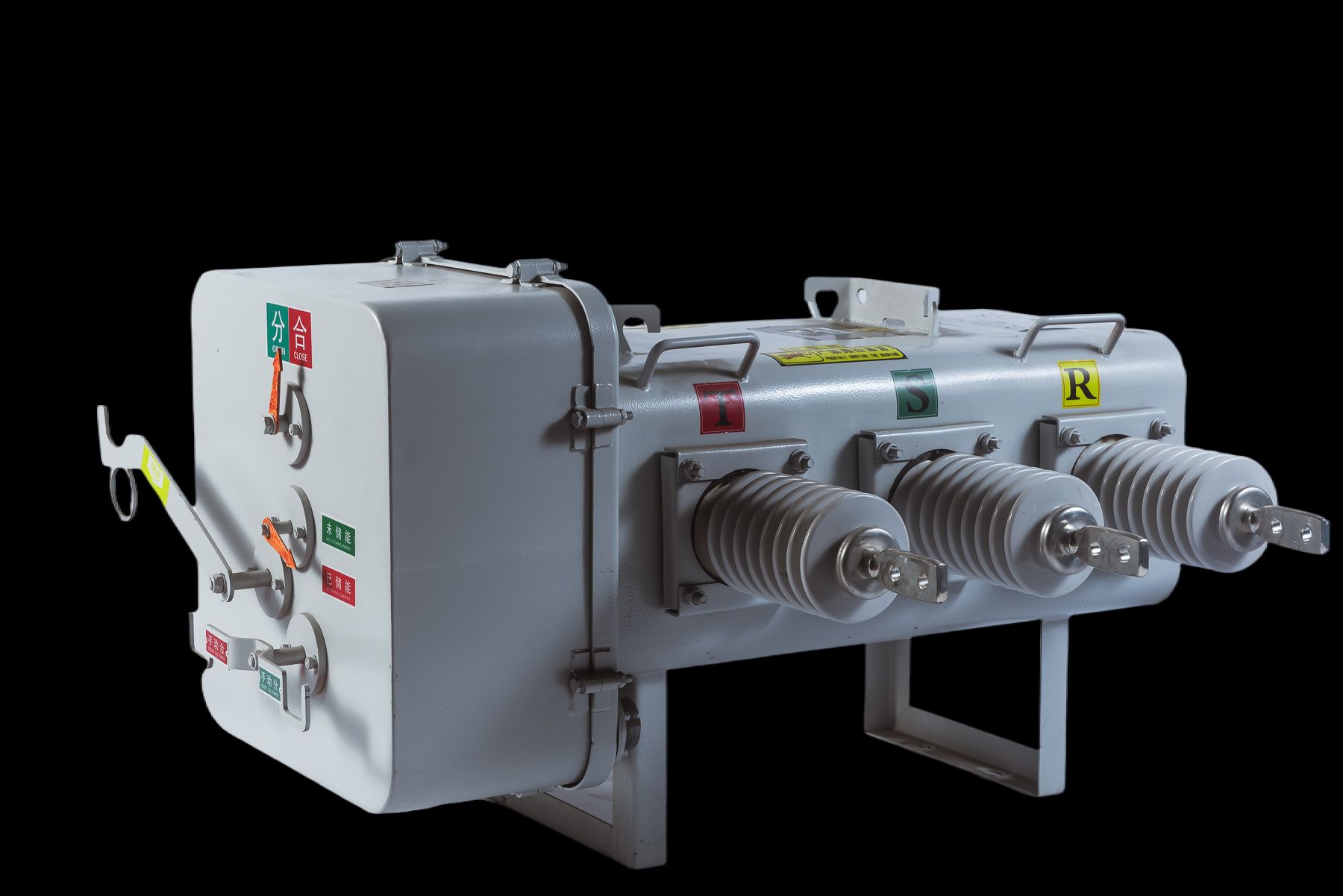
Field failures in outdoor switchgear rarely trace back to the switch itself. More often, the enclosure becomes the weak point after a few seasons of sun, rain, and temperature swings. A well-designed housing starts with material selection: UV-stabilized polycarbonate or powder-coated stainless steel holds up far better than bare aluminum or standard ABS. Seams and knockouts need gasketed cable entries, and any wall penetrations should be positioned away from direct splash zones. Slight outward slopes on the top surface prevent puddling, while drainage channels at the base give condensation a way out.
Thermal management matters just as much as waterproofing. Solar loading can push internal temperatures past component ratings even when ambient air stays moderate. Adding a vent with a hydrophobic membrane helps equalize pressure without letting moisture in, but vents alone won't handle prolonged heat in direct sun. Designers often add a shaded shroud or specify a lighter exterior color to reduce heat absorption. Internal standoffs or raised mounting bosses keep electronics off the bottom plate where pooled water or debris can collect.
Hardware choices and assembly details decide long-term reliability. Threaded brass inserts are preferable to self-tapping screws in plastic shells because they survive repeated lid removal without stripping. Use captive screws with O-ring seals on the lid, and avoid hinges that can corrode in salt air. Every gasket should be tested under thermal cycling, not just at room temperature, because materials shrink and lose compression when cold. A simple checklist covering UV exposure, temperature swings, and fastener integrity will catch most issues before units head into the field.
What Real-World Fault Tests Reveal About Contact Longevity
Field failures often tell a different story than accelerated lab aging. In real installations, contacts rarely degrade in a smooth, predictable curve. Instead, they survive thousands of cycles with little visible change, then fail suddenly when a combination of mild corrosion, vibration, and thermal cycling pushes a marginal interface over the edge. This nonlinear behavior means that passing a standard durability test is not proof of long service life; it only shows the contact can endure a specific, controlled stress.
Data from returned connectors and relays show that most contact failures cluster around a few recurring mechanisms: fretting corrosion at separable interfaces, micro-cracking in solder joints caused by unequal expansion, and erosion from repeated make-and-break arcs. The critical insight is that these mechanisms feed off each other. For example, a small increase in contact resistance from fretting raises local heating, which accelerates oxidation, which further raises resistance. By the time the system reports an intermittent fault, the damage is already extensive.
What separates contacts that last decades from those that fail early is often not the base material but the details of the mechanical design and assembly. A slight change in normal force, a different plating thickness, or a more compliant terminal can shift the failure mode from rapid fretting to slow, benign wear. Real-world teardown studies reveal that contacts with generous wipe and stable mechanical preload consistently outlast those that rely solely on high initial conductivity. The lesson is clear: long-term reliability is designed into the contact interface, not tested into it.
Simplifying Operational Training with Ergonomic Control Layouts
When machines are designed with controls placed where hands naturally rest, new operators pick up procedures far quicker. The layout itself becomes a silent instructor. Instead of memorizing abstract sequences, trainees develop muscle memory because every switch, lever, and dial sits in a position that matches the task flow. This cuts training time noticeably without sacrificing safety or precision.
Consider a common pain point: a trainee hesitates mid-task, scanning a crowded panel for the right button. Ergonomic layouts remove that hesitation. Grouping controls by function, using different shapes or textures for critical actions, and tilting surfaces toward the operator all reduce cognitive load. The result is less time spent on classroom explanations and more time building real confidence on the floor.
Even experienced workers benefit when they move to a new piece of equipment. A well-designed control deck feels familiar within minutes, not days. That familiarity means refresher training can focus on exceptions and troubleshooting rather than re-teaching basic operation. In the long run, the investment in ergonomic design pays for itself through lower training overhead and fewer early mistakes.
The Hidden Costs of Frequent Switch Maintenance—and How to Avoid Them
Frequent switch maintenance might seem like responsible upkeep, but each scheduled downtime quietly erodes more than uptime metrics. Every time a switch is taken offline for firmware updates or hardware checks, production traffic gets rerouted, often through less optimal paths. This creates micro-congestion, increases latency for end users, and forces adjacent teams to scramble with manual workarounds. Over a quarter, these small disruptions compound into a noticeable drag on throughput and employee focus.
The real cost isn't just the minutes of downtime; it's the cognitive load on engineers who must plan, execute, and validate each maintenance window. Teams spend hours writing rollback plans, coordinating change approvals, and troubleshooting unexpected behavior after the switch comes back. That time could be spent on automation or capacity planning, but instead it gets burned on repetitive, low-value tasks. Meanwhile, every maintenance cycle introduces the risk of human error—a mistyped command or a missed configuration drift—which can turn a routine update into an incident.
To avoid these hidden costs, shift from calendar-based maintenance to condition-based triggers. Monitor switch health metrics like error rates, memory pressure, and port flapping, and only intervene when thresholds indicate real degradation. Use redundant switch fabrics and hitless upgrade features where available, so maintenance happens without traffic interruption. Finally, automate the low-risk parts: pre-checks, configuration backups, and post-change validation. This narrows the maintenance window to exceptional cases, freeing engineers to work on improvements rather than firefighting their own upkeep schedule.
Matching Load Break Ratings to Distributed Generation Fluctuations
Load break ratings on distribution switchgear are often specified around a handful of worst-case fault interruptions, but distributed generation (DG) brings a different challenge: the switching device sees many more operations at partial load. A rooftop PV array, for instance, can swing from 90% output to 20% within seconds when cloud edges pass, forcing line reclosers and sectionalizers to interrupt small magnetizing currents that still degrade contacts over time. Matching the rating to these fluctuations means evaluating the cumulative effect of frequent, low-energy interruptions rather than just the single maximum available fault current.
One practical way to handle this is to build a switching profile from local irradiance or wind speed data, then compare it to the manufacturer's endurance curves for the load break device. A common oversight is selecting a switch with a high interrupting rating and assuming that covers all duty, but a 25 kA fault-rated device may have a much lower mechanical endurance for 200 A load-break operations under daily DG cycling. The rating should be matched to the type of current being interrupted—inductive, capacitive, or reverse power—not just the magnitude.
For microgrids and weak feeder sections, it is often better to specify load break switches with enhanced mechanical endurance or derate the nominal interrupting capacity based on expected operations per year. A simple table of ambient temperature, DG penetration level, and daily fluctuation count can guide the selection without overengineering the gear. The goal is a rating that survives ten years of cloud-induced cycling, not a single rare fault.
FAQ
SF6 switches enclose live parts in a sealed, gas-filled tank where the quenching medium suppresses arcs almost instantly. That containment keeps contacts clean, reduces oxidation, and allows compact designs to handle frequent switching without degrading as quickly as air-break units exposed to dust and humidity.
Look for a manufacturer that performs helium leak testing on every unit and rates the leakage below 0.1% per year. The switch should also include a pressure indicator or density sensor, so field teams can spot slow gas loss during routine inspections rather than waiting for a fault.
Yes, because the gas insulation allows very small switchgear footprints and the enclosed construction reduces audible noise. The key is selecting a model with front-facing cable compartments and clear status indication, so maintenance can be done in tight underground vaults without extra clearance.
Choose sealed-for-life designs with low gas volume and insist on recycling or re-use programs during decommissioning. Some modern switches use gas mixtures with lower global warming potential, but if pure SF6 is necessary, proper handling tools and closed-loop gas carts prevent most emissions.
It depends on the contact and puffer mechanism. High-quality models are tested for transformer switching duties up to 16 A or 25 A magnetizing current, but for frequent capacitor bank or cable charging operations, confirm the specific test report rather than assuming all SF6 units perform identically.
An integrated earthing switch provides a visible, interlocked path to ground, which eliminates the risk of accidental energized grounding. It also speeds up isolation for cable testing because the earthing position can be selected without opening the cable compartment.
Salt spray and high humidity demand sealed stainless-steel enclosures or epoxy-coated tanks, plus stainless hinges and breathers. Since internal gas pressure keeps moisture out, the main concern shifts to external hardware corrosion and UV resistance of indicators and labels.
Conclusion
SF6 load break switches remain a dependable choice because the gas's dielectric and arc-quenching properties allow compact designs without sacrificing interrupting capacity. Real-world fault testing repeatedly shows that properly sealed SF6 contacts maintain low wear and consistent performance over thousands of operations, which directly cuts replacement cycles. Meanwhile, enclosure design has moved beyond basic weatherproofing: modern units use corrosion-resistant alloys, UV-stable gaskets, and pressure relief paths to survive coastal salt spray, desert temperature swings, and heavy snow loads. Field failures that drive most switch replacement are rarely the interrupters themselves; they are enclosure corrosion, gasket degradation, and control misalignment.
From an operational standpoint, ergonomic control layouts reduce switching errors during routine maintenance or emergency isolation. Clear position indicators, intuitive lever placement, and accessible test points mean crews can work quickly without guesswork. Maintenance planning also benefits from sealed-for-life gas compartments that eliminate the hidden costs of gas refilling, contact inspection, and downtime. Finally, matching load break ratings to the fluctuating output of distributed generation requires switches that can handle reverse power flows and frequent cycling without derating. A properly specified SF6 switch combines these elements into a single solution: safe interruption, outdoor durability, lower lifecycle cost, and adaptability to modern grid variability.
Contact Us
Contact Person: Julion
Email: [email protected]
Tel/WhatsApp: 8617351370631
Website: https://www.deyunelectric.com