

Angle Steel Lattice Transposition Tower: China's Premier Designs and Global Impact
2026-07-06
In the ever-evolving world of power transmission, angle steel lattice transposition towers quietly orchestrate the balance of electrical phases, ensuring stability across vast grids. Few recognize how China's engineering prowess has redefined these critical structures—until they encounter Anbang. As a premier force in the industry, Anbang merges decades of expertise with cutting-edge design, delivering towers that not only meet global standards but often set them. This blog dives into the story behind China's leading designs and their ripple effects worldwide, revealing why professionals increasingly turn to Anbang for solutions that stand the test of time and terrain.
The Anatomy of Angle Steel Lattice Towers
Angle steel lattice towers are built from a web of interconnected steel angles, forming a skeletal framework that balances strength with minimal weight. The primary members—legs or main chords—run vertically and carry the bulk of compressive loads, while horizontal and diagonal bracing elements create triangular patterns that stiffen the structure against lateral forces. All connections typically rely on bolted or welded gusset plates, ensuring each joint transfers stress efficiently without compromising the tower's overall integrity.
The design philosophy behind these towers centers on triangulation, a principle that transforms individual slender angles into a rigid, three-dimensional truss. This geometry resists bending and twisting, channeling wind, ice, and equipment loads straight down through the legs into the foundation. Engineers carefully select angle sizes and grades—often high-strength, low-alloy steels—to withstand tension or compression as needed, while corrosion protection like hot-dip galvanizing extends the lifespan even in harsh environments.
From transmission lines to communication platforms, these towers are prized for their modular construction and ease of transport. Components can be prefabricated, numbered, and shipped to remote sites, where crews assemble them piece by piece using straightforward tools. Regular inspection routines focus on bolt tightness and coating integrity, as loose connections or rust spots can compromise performance over time. This combination of adaptable design and straightforward upkeep keeps angle steel lattice towers a reliable choice across decades of service.
Why Transposition Towers Matter in Power Networks
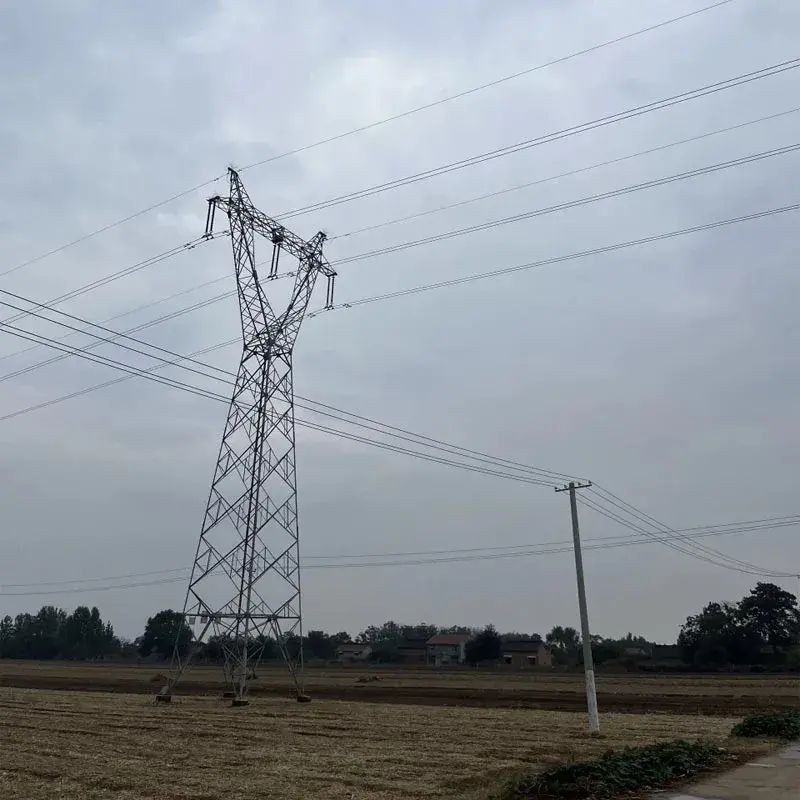
In high-voltage transmission, conductors are rarely spaced equally, leading to unequal electromagnetic and electrostatic forces among them. Over long distances, these imbalances result in uneven current distribution and voltage drops that can compromise system efficiency. Transposition towers solve this by physically rotating the conductor positions at regular intervals, effectively balancing the electrical characteristics and ensuring each phase experiences the same overall impedance.
Without such measures, network operators face increased energy losses and the potential for inductive interference with nearby communication lines. The practice becomes even more critical in modern grids where right-of-way constraints force lines closer together. By mitigating phase imbalance, transposition towers help maintain stable voltage profiles and reduce the risk of overheating in any single conductor.
Beyond pure performance gains, transposition plays a quiet but vital role in protecting equipment. Transformers and generators designed for balanced loads can suffer premature aging when subjected to sustained phase asymmetry. Incorporating transposition towers into a line’s design extends asset life and avoids costly midlife retrofits, making them a sound engineering investment for any utility striving for long-term reliability.
China’s Design Innovations Redefining Global Standards
China's design landscape has undergone a quiet revolution, moving far beyond its past role as a low-cost manufacturer to become a global trendsetter. Today, Chinese designers blend deep cultural roots with futuristic technology, crafting products and experiences that feel both intuitively familiar and strikingly new. This shift isn't just about aesthetics—it's reshaping how the world thinks about functionality, user experience, and even the very definition of good design.
One vivid example is the consumer tech sector, where brands like smartphone makers have ditched clutter for fluid, gesture-based interfaces and unibody forms that prioritize seamless interaction. The automotive industry echoes this transformation: electric vehicles from China are not only green but also reimagine the cockpit as a mobile living space, integrating AI assistants and customizable environments that adapt to the driver's mood. These designs don't just compete—they often set benchmarks that Western brands scramble to follow.
Perhaps most striking is the rise of a distinctly Chinese design philosophy that merges sustainability with ancient wisdom. From modular furniture inspired by Ming-era carpentry to skyscrapers that use traditional cooling principles, designers are proving that heritage isn't a constraint but a launchpad. This approach is quietly influencing global standards, nudging them toward more human-centric, ecologically mindful criteria that feel less like mandates and more like natural evolution.
From Concept to Construction: A Structural Breakdown
The journey from a conceptual design to a fully realized structure starts with a fundamental understanding of the architectural intent. Every project, regardless of its scale, begins with a vision that must be translated into a physical entity capable of withstanding environmental stresses, gravitational loads, and the test of time. This translation demands a collaborative interplay between architects and structural engineers, where creative aspirations meet the unwavering principles of physics. The initial concept sketches are initially fluid, focusing on form and function, but as the process progresses, these ideas morph into precise calculations that define the skeleton of the building. It is at this stage that decisions about material choices—steel, concrete, timber, or composite systems—are weighed against aesthetic goals, cost constraints, and sustainability targets.
As the design solidifies, the structural breakdown shifts into a detailed analysis of how loads travel from the uppermost roof component down to the foundations. Gravity loads, including dead loads from the permanent elements and live loads from occupancy, combine with lateral forces from wind and seismic activity to create a complex set of demands on the system. Engineers employ advanced modeling software to simulate these forces, optimizing member sizes and connections to ensure that each beam, column, and brace contributes efficiently to the overall stability. This phase often uncovers hidden challenges—perhaps a cantilevered overhang that requires deep reinforcement or a long-span truss that demands meticulous fabrication. The structural breakdown is not merely a checklist of components; it is a narrative of how each part negotiates with the forces acting upon it, resulting in a safe and enduring whole.
The final stage of this structural breakdown moves from digital models to physical reality on the construction site. Here, the theoretical precision of the designs encounters the practicalities of material tolerances, weather conditions, and erection sequences. Steel elements arrive with carefully choreographed connections, ready to be bolted or welded into place, while concrete elements rely on formwork and curing times that demand careful scheduling. The on-site team interprets the structural drawings, turning abstract notations into tangible assemblies. Throughout this phase, continuous inspections and testing verify that the constructed structure aligns with the engineered design. The successful completion of this process means the conceptual vision has not only been translated into a functional building but also stands as a testament to the ingenuity of turning abstract ideas into brick, mortar, and steel.
Global Footprint: Where Chinese Towers Shape Skylines
From the shimmering spires of Kuala Lumpur to the bold new business districts of Africa, the imprint of Chinese engineering is quietly redrawing the world's urban horizons. Over the past two decades, Chinese state-owned enterprises and private developers have exported not just capital but entire construction ecosystems, planting supertall landmarks in cities eager for symbols of their own ascent. The 679-meter Merdeka 118 in Malaysia, built with the help of Chinese contractors and design finesse, now stands as Southeast Asia's tallest tower, while across the Indian Ocean, Nairobi's Global Trade Centre Office Tower rises as a testament to Sino-African architectural partnerships. These projects go beyond height—they seed local skill transfers, introduce Chinese building standards, and often shift the center of gravity in metropolitan economies.
What distinguishes this wave of vertical expansion is the seamless combination of speed, scale, and strategic diplomacy. In destinations like Bangladesh, Chinese firms have delivered iconic structures such as the 473-meter Legacy Tower in Dhaka at a pace that would be unthinkable under Western-led builds, leveraging prefabricated components and a workforce accustomed to round-the-clock schedules. The towers often double as prestige projects under the Belt and Road Initiative, embedding China's visual signature into the fabric of partner nations. Even where local regulations once resisted, adapted designs now weave cultural motifs—such as Islamic geometric patterns on Jakarta's Autograph Tower—into distinctly Chinese-engineered cores, creating a hybrid aesthetic that feels both global and familiar. These buildings become diplomatic statements in glass and steel, quietly cementing long-term economic ties under the guise of urban modernity.
Yet the stories behind these towers are far from monolithic. In some cities, the sudden emergence of a Chinese-built mega-skyscraper has provoked debates about labor practices, debt sustainability, and architectural identity. For instance, the 350-meter Bahrain Financial Harbour project stirred local criticism over its displacement of traditional souk culture, while still promising to elevate the kingdom's status as a financial hub. Meanwhile, in regions like Central Asia, where Chinese contractors completed the 300-meter Tashkent City Tower, the structures serve as testaments to pragmatic collaboration despite geopolitical nuances. Across each skyline, one can read a complex narrative of ambition, adaptation, and the quiet power of concrete and cladding to redefine not just cityscapes, but the very relationships between nations.
Durability and Efficiency in Extreme Environments
When machinery operates in punishing conditions—whether subzero cold, blistering heat, or abrasive dust—its true engineering merit surfaces. Components must resist corrosion, tolerate thermal shock, and maintain precision long after standard equipment would falter. This isn't simply about survival; it's about delivering consistent output without degradation, a balance that demands meticulous material selection and intelligent design.
Efficiency in such settings means more than low energy consumption. It encompasses minimal maintenance intervals, adaptive lubrication systems, and sealed architectures that fend off contaminants. Advanced coatings and proprietary alloys enable parts to glide against each other with reduced friction, even when ambient temperatures swing wildly. These measures prevent the slow creep of wear that silently siphons performance.
Real-world resilience emerges from iterative testing that mimics years of service in weeks. Salt spray chambers, thermal cycling rigs, and vibratory shakers push prototypes to their breaking point, exposing weaknesses before they reach the field. The outcome is equipment that doesn't just endure extreme environments—it thrives, turning harshness from a threat into a proving ground for exceptional longevity and steady operational yields.
FAQ
An angle steel lattice transposition tower is a specialized structure used in high-voltage transmission lines to optimize the electromagnetic balance between phase conductors. By physically rearranging the positions of the conductors at regular intervals, it minimizes unequal inductance and capacitance, resulting in more stable voltage profiles and reduced power losses over long distances. This precision is essential for modern grids handling variable renewable energy loads.
Chinese engineering teams have integrated optimized geometry, high-strength angle steel, and corrosion-resistant coatings into lattice towers, trimming weight without compromising structural integrity. Their designs allow faster assembly, lower foundation costs, and improved resilience against extreme weather—from typhoons in coastal regions to heavy ice in mountainous areas, outperforming older solid-pole or heavier lattice alternatives.
Notable examples include transmission corridors in Belt and Road Initiative partner nations, such as the Pakistan Matiari-Lahore ±660 kV HVDC line, where Chinese-designed towers withstand desert winds and seismic activity. Projects across Southeast Asia, Africa, and South America have adopted these towers for their cost-effectiveness and adaptability to diverse terrain, accelerating rural electrification and cross-border energy trade.
Automated welding, modular production in dedicated factories, and rigorous quality control standards enable mass production with consistent tolerances. Lower labor costs, combined with a vertically integrated supply chain for steel and galvanizing, allow Chinese manufacturers to deliver towers at 15–30% less than Western counterparts, while meeting international standards such as IEC 60652.
The lightweight lattice structure can be helicopter-assisted for installation in remote mountains or dense forests, reducing the need for extensive access roads and minimizing ecological disruption. Angle steel components stack efficiently for transport, and the use of hot-dip galvanizing ensures a 50+ year service life with minimal maintenance, aligning with sustainable infrastructure goals.
Chinese R&D has pioneered hybrid lattice-monopole transposition towers for ultra-high-voltage (UHV) lines, achieving ultra-low wind drag coefficients and enhanced electrical clearances. Computational fluid dynamics and 3D BIM modeling now optimize each member’s slenderness ratio, pushing the boundaries of height (up to 100 meters) and span length while reducing the tower’s visual footprint.
Full-scale prototype testing at accredited laboratories simulates extreme load cases—broken conductor, ice galloping, and seismic events—per IEEE and IEC guidelines. Chinese manufacturers also offer on-site tensile testing of joints and non-destructive weld inspections. Long-term field monitoring with IoT sensors now provides data to validate design assumptions under real service conditions, building global confidence.
Ingenious arrangements such as cross-arm staggering or dedicated transposition bays allow smooth conductor routing without sharp bends or additional dead-end structures. The phase rotation is achieved within the tower body itself, maintaining equal leg loading and straightforward erection sequencing, which simplifies construction even for linemen unfamiliar with the design.
Conclusion
Angle steel lattice transposition towers marry lightweight angular profiles into towering, open-web structures, purpose-built to shuffle conductor phases along high-voltage routes. This phase transposition equalizes line impedance, slashing power losses and curbing electromagnetic fields that would otherwise destabilize neighboring circuits. China has propelled this niche into a new era by refining member shapes and bolted connections, achieving higher strength-to-weight ratios through cold-formed angles and optimized bracing patterns. Their designs integrate redundant load paths and corrosion-resistant coatings, yielding skeletons that flex under typhoon gusts yet snap back without permanent deformation. Such engineering not only pushes domestic grids toward ultra-high voltages but also redefines what global utilities expect from transmission infrastructure.
Behind each tower lies a digital thread weaving concept sketches into precise fabrication drawings, where finite element simulations mimic decades of fatigue in minutes. Automated cutting and punching lines then transform steel coils into precisely notched components, ready for rapid bolted assembly that slashes on-site labor and crane time. These towers now punctuate skylines from Andean highlands to Middle Eastern deserts, where they endure salt spray, ice accretion, and sand-laden winds without faltering. Their hot-dip galvanized members resist rust for decades, while clever joint detailing arrests vibration cracks before they threaten continuity. In extreme climates, Chinese designs have proven that lattice towers can blend resilience with economy, enabling developing nations to leapfrog to robust grid architectures. This quiet revolution, rooted in material science and manufacturing precision, cements China’s role as the premier supplier shaping the modern power landscape.
Contact Us
Contact Person: antor khan
Email: [email protected]
Tel/WhatsApp: 8613863903569
Website: https://www.qdabtower.com/